UnitedHealth Says Most Home Health Diagnoses Were Supported After Internal Review
What's Happening
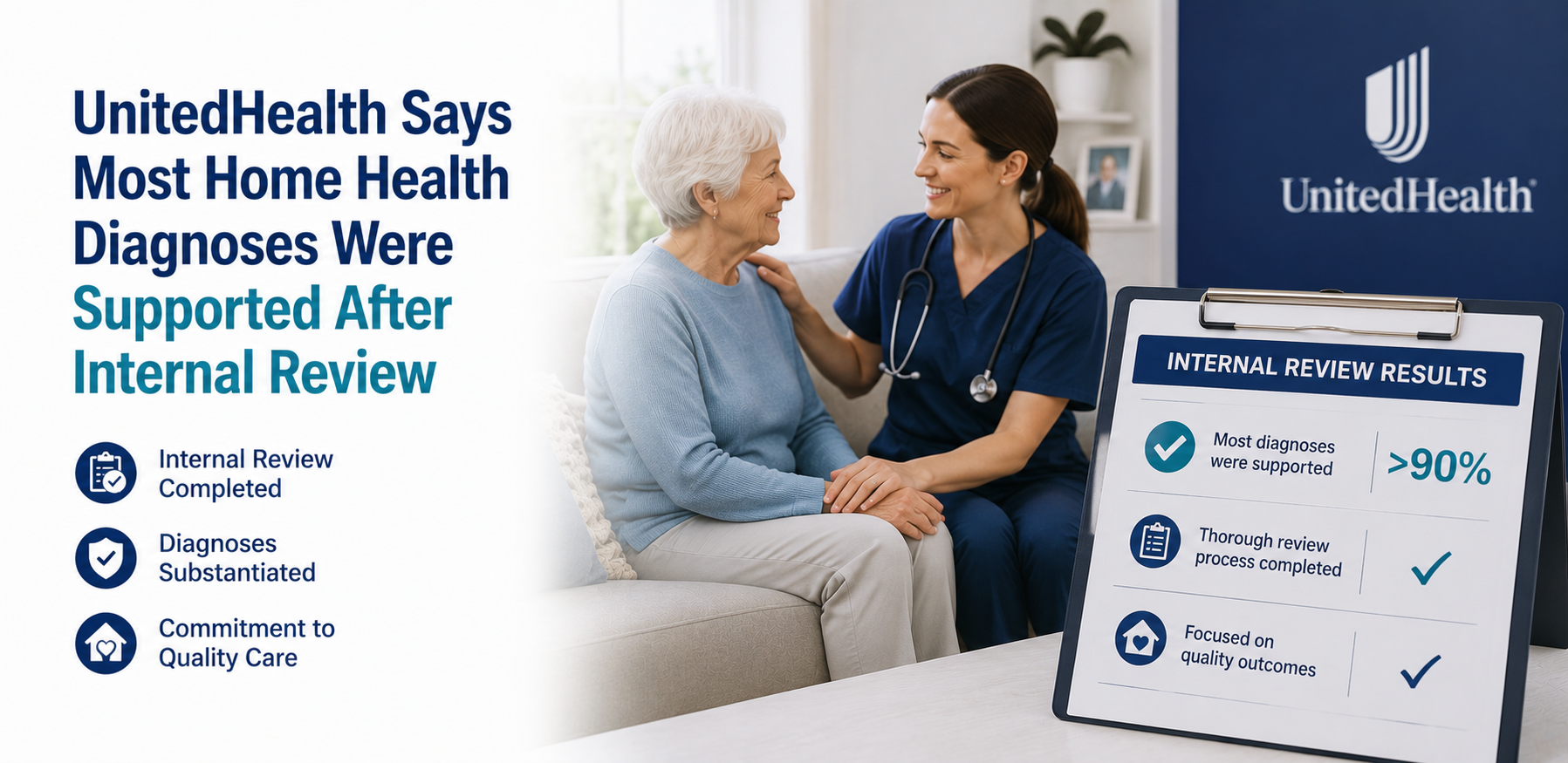
UnitedHealth Group said that the vast majority of diagnoses submitted through its home health assessment program in 2025 were supported by medical documentation, responding to ongoing scrutiny over how Medicare Advantage insurers assess patients' health conditions.
The company disclosed that an internal review found that most diagnoses recorded during home health visits were backed by clinical evidence, countering allegations that insurers routinely document unsupported medical conditions to increase Medicare payments. The announcement comes amid continuing government investigations and public debate over Medicare Advantage risk adjustment practices. (reuters.com)
UnitedHealth said it conducted the review after concerns were raised about whether certain diagnoses identified during in-home health assessments were sufficiently supported by patients' medical records. The findings are significant because diagnosis coding directly influences how much Medicare pays private insurers participating in the Medicare Advantage program.
What Is Medicare Advantage?
Medicare Advantage is an alternative to traditional Medicare in which private insurance companies administer Medicare benefits on behalf of the federal government. These plans often provide:
- Hospital coverage
- Physician visits
- Prescription drug coverage
- Preventive care
- Vision and dental benefits
- Care management programs
The federal government pays insurers a monthly amount for each enrolled member. However, those payments vary depending on each patient's overall health status. Patients with more serious or multiple medical conditions generally require more healthcare services and therefore generate higher reimbursement.
What Is Risk Adjustment?
Medicare uses a system called risk adjustment to determine how much insurers receive for each patient. The goal is to ensure that health plans caring for sicker patients receive higher payments than plans serving healthier populations.
Every year, physicians and other healthcare professionals document patients' medical conditions using standardized diagnosis codes. Those diagnoses are converted into Hierarchical Condition Categories (HCCs), which help estimate expected healthcare costs. Examples of conditions that may increase Medicare payments include: diabetes with complications, congestive heart failure, chronic kidney disease, chronic obstructive pulmonary disease (COPD), cancer, and multiple chronic illnesses. The more complex a patient's documented medical conditions, the higher the expected healthcare costs, and the larger the payment Medicare provides to the insurer.
What Are Home Health Assessments?
Many Medicare Advantage insurers offer optional in-home health assessments. During these visits, clinicians evaluate patients in their homes to:
- Review medications.
- Assess chronic conditions.
- Identify previously undiagnosed health issues.
- Evaluate fall risk.
- Screen for depression.
- Assess overall health needs.
Supporters argue these visits improve preventive care by identifying medical problems that patients may not otherwise discuss during routine office appointments. They can also help connect patients with appropriate follow-up care.
Why Have These Assessments Become Controversial?
In recent years, government agencies, researchers, and lawmakers have questioned whether some diagnoses identified during home health visits are sufficiently supported by ongoing medical care. Critics argue that:
- Some diagnoses may not be confirmed through subsequent treatment.
- Additional diagnoses can increase Medicare payments.
- Financial incentives could encourage more aggressive coding.
Federal investigators have examined whether certain insurers documented conditions that were not adequately supported by medical evidence. Insurers, however, maintain that home assessments identify legitimate medical conditions that might otherwise go undetected, particularly among older adults who have limited access to regular healthcare. The debate centers on whether diagnosis coding accurately reflects patients' true health status.
What Did UnitedHealth Find?
According to UnitedHealth, its internal review concluded that the majority of diagnoses documented during 2025 home health assessments were supported by clinical documentation. The company said the review evaluated medical records to determine whether diagnoses met established documentation standards.
UnitedHealth argues that the findings demonstrate its home assessment program identifies genuine medical conditions rather than generating unsupported diagnoses solely to increase reimbursement. The company also emphasized that accurate diagnosis coding helps ensure patients receive appropriate care while allowing Medicare to fairly compensate insurers caring for medically complex populations.
Why Accurate Diagnosis Coding Matters
Diagnosis coding influences several important aspects of healthcare. Accurate coding helps guide treatment decisions, coordinate care across providers, measure disease burden, allocate healthcare resources, and determine Medicare payments. However, inaccurate coding can create significant problems.
If diagnoses are understated, patients may not receive needed care and health plans may receive insufficient funding. If diagnoses are overstated, Medicare may overpay insurers, healthcare spending may increase unnecessarily, and public confidence may decline. Because of these financial implications, diagnosis coding remains an important focus of federal oversight.
Ongoing Government Scrutiny
Federal agencies continue increasing oversight of Medicare Advantage plans. Areas receiving particular attention include risk adjustment coding, prior authorization practices, quality reporting, payment accuracy, audit compliance, and home health assessments. The Centers for Medicare & Medicaid Services (CMS) regularly audits diagnosis coding and continues refining policies designed to improve payment accuracy while protecting taxpayer funds. Healthcare insurers have responded by strengthening documentation requirements, expanding compliance programs, and conducting more internal audits.
Industry Impact
- Health Insurers: Medicare Advantage organizations continue investing in compliance and documentation to demonstrate the accuracy of diagnosis coding.
- Healthcare Providers: Clinicians performing home assessments face increasing expectations for complete and accurate documentation.
- Regulators: CMS continues strengthening oversight of Medicare Advantage payment practices.
- Patients: Home health assessments remain an important tool for identifying unmet healthcare needs, although policymakers continue evaluating how these visits affect reimbursement.
Why This Matters
The debate surrounding home health diagnoses reflects one of the most important policy discussions affecting Medicare Advantage today. Risk-adjusted payments help ensure insurers caring for sicker patients receive appropriate funding. However, maintaining confidence in the system depends on accurate documentation and transparent oversight. UnitedHealth's internal review seeks to reassure regulators, investors, and the public that its diagnosis coding practices are supported by medical evidence. At the same time, federal investigations and audits are likely to continue as policymakers work to balance fair reimbursement with responsible stewardship of Medicare spending. The outcome of these discussions could influence future payment models, compliance requirements, and oversight across the Medicare Advantage industry.
Key Takeaways
- UnitedHealth reported that most diagnoses identified during its 2025 home health assessments were supported by medical documentation.
- Diagnosis coding plays a central role in determining Medicare Advantage payments through risk adjustment.
- Home health assessments help identify chronic conditions but remain under increasing regulatory scrutiny.
- Accurate documentation is essential for both appropriate patient care and proper Medicare reimbursement.
- Federal oversight of Medicare Advantage coding practices is expected to remain a major healthcare policy priority.
What This Means for Healthcare Marketers
UnitedHealth's announcement highlights the growing importance of data accuracy and clinical documentation within value-based healthcare. As reimbursement increasingly depends on patient risk profiles rather than the volume of services provided, insurers and healthcare organizations are investing heavily in technologies and processes that improve coding accuracy, compliance, and care coordination.
For healthcare marketers, this reinforces that clinical documentation has become a strategic capability rather than simply an administrative function. Organizations supporting providers, payers, and home health agencies have opportunities to demonstrate how their solutions improve documentation quality, regulatory compliance, population health management, and risk adjustment accuracy while maintaining high standards of patient care.
For healthcare intelligence teams, continued scrutiny of Medicare Advantage coding practices provides valuable insight into evolving payer priorities. Monitoring CMS audits, regulatory guidance, coding policies, and insurer responses can help organizations anticipate changes affecting reimbursement strategies, compliance programs, and healthcare analytics.