U.S. Government Rescinds $10 Billion Funding Freeze Affecting Five Democratic-Led States
What's Happening
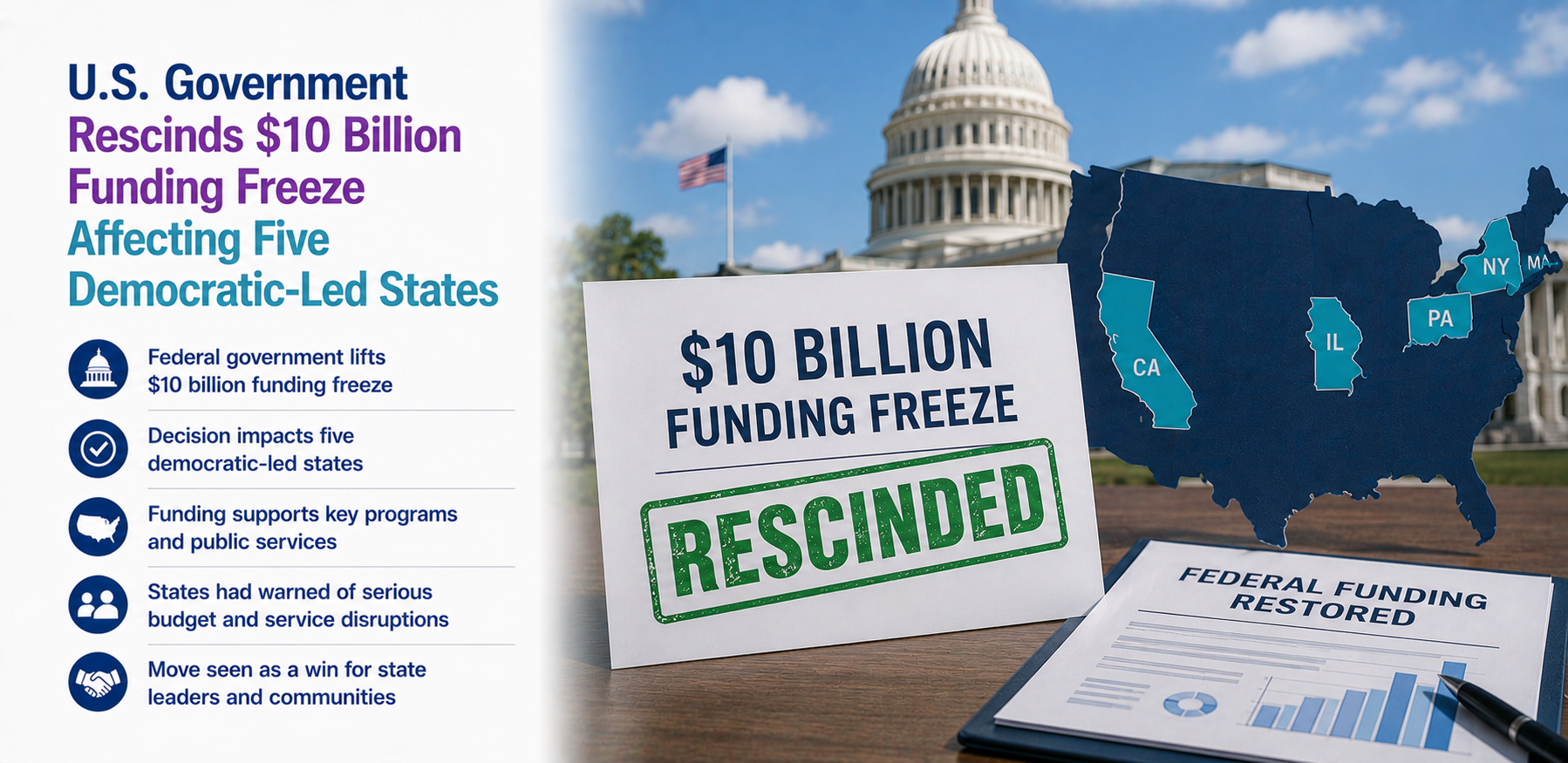
The U.S. Department of Health and Human Services (HHS) has officially rescinded a $10 billion freeze on federal funding for five Democratic-led states: California, Colorado, Illinois, Minnesota, and New York. This action follows legal challenges brought by the affected states, which successfully argued against the restricted drawdowns.
The administration had initially halted the funds—comprising roughly $7 billion for Temporary Assistance for Needy Families (TANF), $2.4 billion for the Child Care Development Fund, and $870 million for social services grants—citing concerns over fraud and lack of cooperation with federal oversight plans. By terminating the mechanism used to enforce these restrictions, the federal government has restored access to these essential resources.
What Was the Funding Freeze?
The proposed funding freeze targeted federal payments that help states operate programs serving low-income families and vulnerable populations. These funds support a variety of critical healthcare and social services, including:
- Primary care initiatives.
- Child care support for working parents.
- Services for children at risk.
- Support for individuals with disabilities.
Because states depend heavily on these federal grants, the administration's move to withhold them created significant uncertainty for healthcare providers, insurers, and the millions of beneficiaries who rely on these programs.
Why Was the Freeze Reversed?
The decision to rescind the freeze comes after legal obstacles, including a federal judge's earlier intervention that blocked the move for the duration of the states' lawsuit. While the administration had alleged "massive amounts of fraud" in public-assistance programs, specifically pointing to a large-scale scandal in Minnesota, it struggled to provide evidence of sweeping, similar fraud schemes in California, Colorado, Illinois, and New York.
The reversal effectively terminates the data requests and information requirements associated with the January 2026 letters that originally triggered the funding pause.
Why Federal Healthcare Funding Matters
Federal funding is a foundational pillar of the U.S. healthcare safety net. Programs like Medicaid and various social service grants help finance care for those who are most at risk, including:
- Low-income families.
- Children and pregnant individuals.
- Older adults needing long-term care.
- Individuals with disabilities.
Stable funding ensures that hospitals, community health centers, and nursing facilities can continue their operations without sudden gaps in reimbursement, which is vital for maintaining population health.
Potential Impact on Healthcare Providers
Healthcare organizations operate on tight margins and rely on predictable, timely reimbursement to deliver consistent care. Unexpected funding disruptions, such as the one recently rescinded, can jeopardize:
- Hospital operations and staffing.
- Community clinic service delivery.
- Rural healthcare accessibility.
- Provider reimbursement cycles.
By restoring this funding, the federal government has eased the immediate financial pressure on providers who were facing potential revenue shortfalls due to the state-level budget uncertainty.
Why Healthcare Funding Decisions Receive Close Attention
Funding decisions are deeply intertwined with political and regulatory priorities. Recent trends, such as the "Comprehensive Regulations to Uncover Suspicious Healthcare" (CRUSH) initiative and stricter program-integrity enforcement, have intensified scrutiny on state Medicaid and social service spending. Because these decisions directly impact state budgets, provider stability, and patient access, stakeholders monitor every shift in federal posture to anticipate future budgetary or operational risks.
Industry Impact
- State Governments: Affected states can now resume standard administration of federal programs without the administrative burden of the previous freeze.
- Healthcare Providers: Hospitals and clinics regain financial stability as the flow of federal grant money is secured.
- Patients: Beneficiaries are protected from potential disruptions in essential health and social services.
- Policymakers: The outcome highlights the tension between federal program-integrity enforcement and the operational needs of state-led health systems.
Why This Matters
The reversal of the $10 billion freeze serves as a reminder of how federal actions can have immediate, cascading effects on the U.S. healthcare delivery system. While the administration maintains a focus on curbing fraud, this episode demonstrates that policy enforcement must be balanced against the necessity of stable funding for essential services. As healthcare costs rise, maintaining a steady financial pipeline remains a top priority for protecting both public health and institutional viability.
Key Takeaways
- The U.S. government rescinded a $10 billion funding freeze that impacted California, Colorado, Illinois, Minnesota, and New York.
- The move follows a federal judge’s intervention and ongoing legal challenges from the states.
- Restored funding covers TANF, child care subsidies, and social services essential for low-income families.
- The reversal alleviates immediate financial risks for healthcare providers and beneficiaries.
- The administration cited fraud concerns, though evidence of widespread fraud was not established for all affected states.
What This Means for Healthcare Marketers
This event underscores the importance of monitoring federal policy as a key driver of healthcare market stability. For marketers and intelligence teams, this highlights that regulatory and funding environments are subject to rapid, politically-driven shifts. Understanding the financial health of public programs is essential for organizations that serve Medicaid-heavy populations or rely on federal grant funding. Proactive tracking of program-integrity initiatives and state-federal litigation can help organizations better predict revenue cycles and navigate the increasingly complex intersection of healthcare finance and government policy.