U.S. Appeals Court Rejects FDA Rule Requiring Graphic Cigarette Warnings
What's Happening
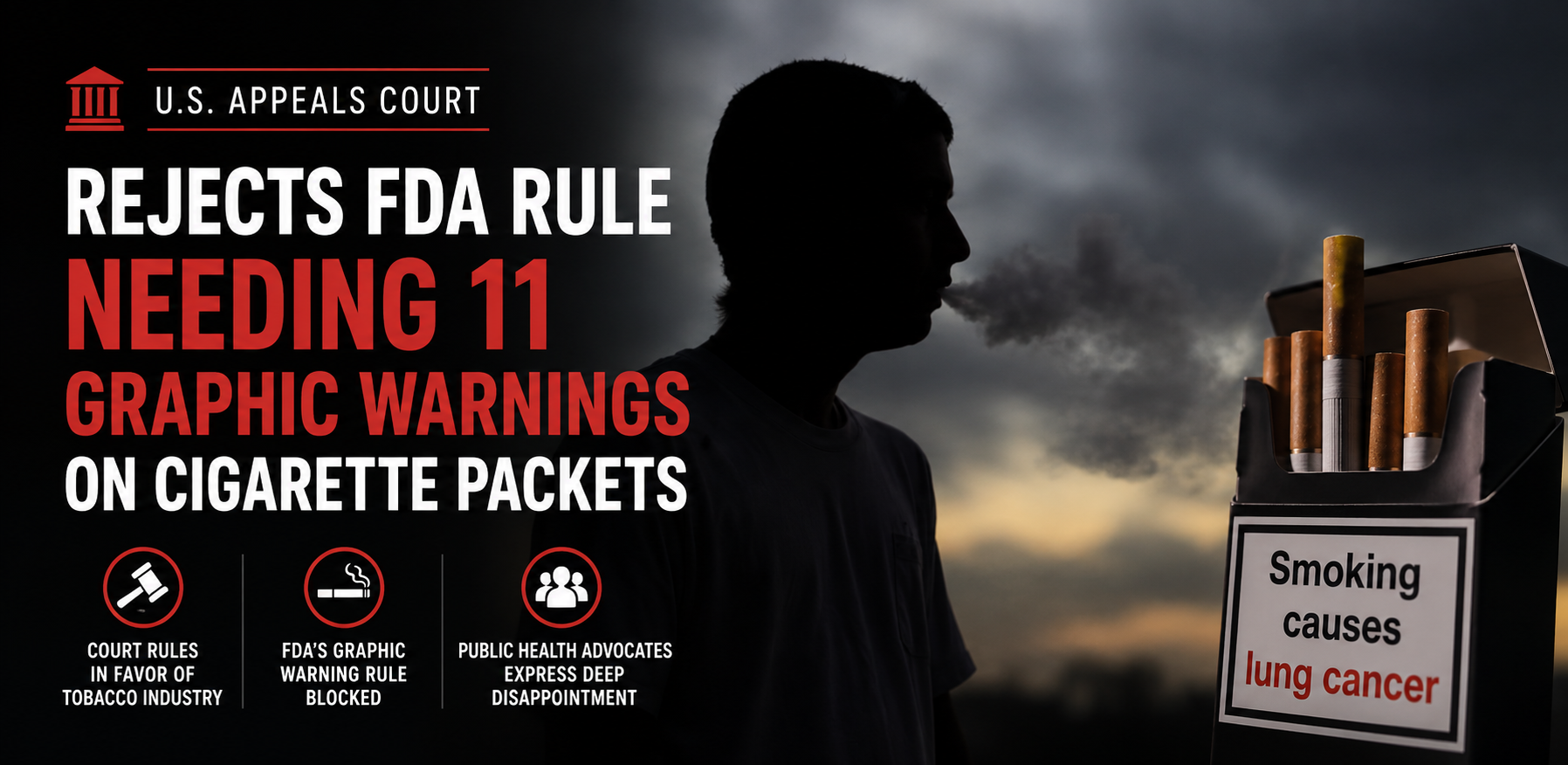
A federal appeals court has rejected the U.S. Food and Drug Administration's attempt to require 11 graphic health warnings on cigarette packages and advertisements. The 5th U.S. Circuit Court of Appeals ruled that the FDA exceeded the authority Congress gave it under the 2009 Family Smoking Prevention and Tobacco Control Act, noting that the law specifically identifies nine warnings and does not authorize the FDA to unilaterally add more.
What the FDA Wanted
The FDA's proposed warnings were designed to visually communicate the health consequences of smoking rather than relying only on text. The 11 proposed images illustrated conditions such as lung disease, bladder cancer, head and neck cancer, Type 2 diabetes, cataracts, and fetal harm, aimed at making health risks more noticeable to consumers.
What the Court Decided
The court's decision focused strictly on statutory authority rather than scientific justification. Judges concluded that because Congress specified nine warnings in the 2009 law, the FDA is limited to those mandates and cannot expand the list independently. This ruling prevents the FDA's new 11-warning requirement from taking effect.
Industry Impact
- FDA and Federal Regulators: The ruling limits the agency's ability to expand cigarette-labeling requirements without further authorization from Congress.
- Tobacco Companies: Major industry players, including R.J. Reynolds and ITG Brands, successfully challenged the FDA's mandate.
- Public Health: Health organizations remain focused on making smoking risks visible, while the ruling disrupts current implementation strategies.
- Healthcare Organizations: Medical groups supporting tobacco-control measures may now look to lobby Congress for clearer legislative authority.
Looking Ahead
The ruling does not eliminate the FDA's existing authority to enforce the nine warnings originally required by Congress, but it effectively halts the addition of new graphic warnings. This long-standing regulatory dispute could continue through further litigation or future efforts to amend federal tobacco law.
Why This Matters
Tobacco remains a critical public health challenge, and labeling is a primary tool for communicating risks. The decision highlights the boundaries federal health regulators face when attempting to enact public-health requirements that exceed the explicit authority granted to them by Congress.
Key Takeaways
- A federal appeals court rejected the FDA's rule requiring 11 graphic cigarette warnings.
- The court determined the FDA exceeded its statutory authority.
- Congress's 2009 tobacco law only specifies nine mandated warnings.
- The decision blocks the additional graphic warning requirements from taking effect.
- This is the latest outcome in a regulatory conflict spanning more than a decade.
What This Means for Healthcare Marketers
This ruling is significant for organizations working in public health, tobacco cessation, preventive medicine, and healthcare policy. It illustrates how regulatory and judicial decisions can directly constrain communication strategies and consumer education initiatives. For healthcare marketers, this landscape requires a focus on navigating policy limitations while developing compliant, impactful outreach strategies in tobacco control and preventive care.