What's Happening
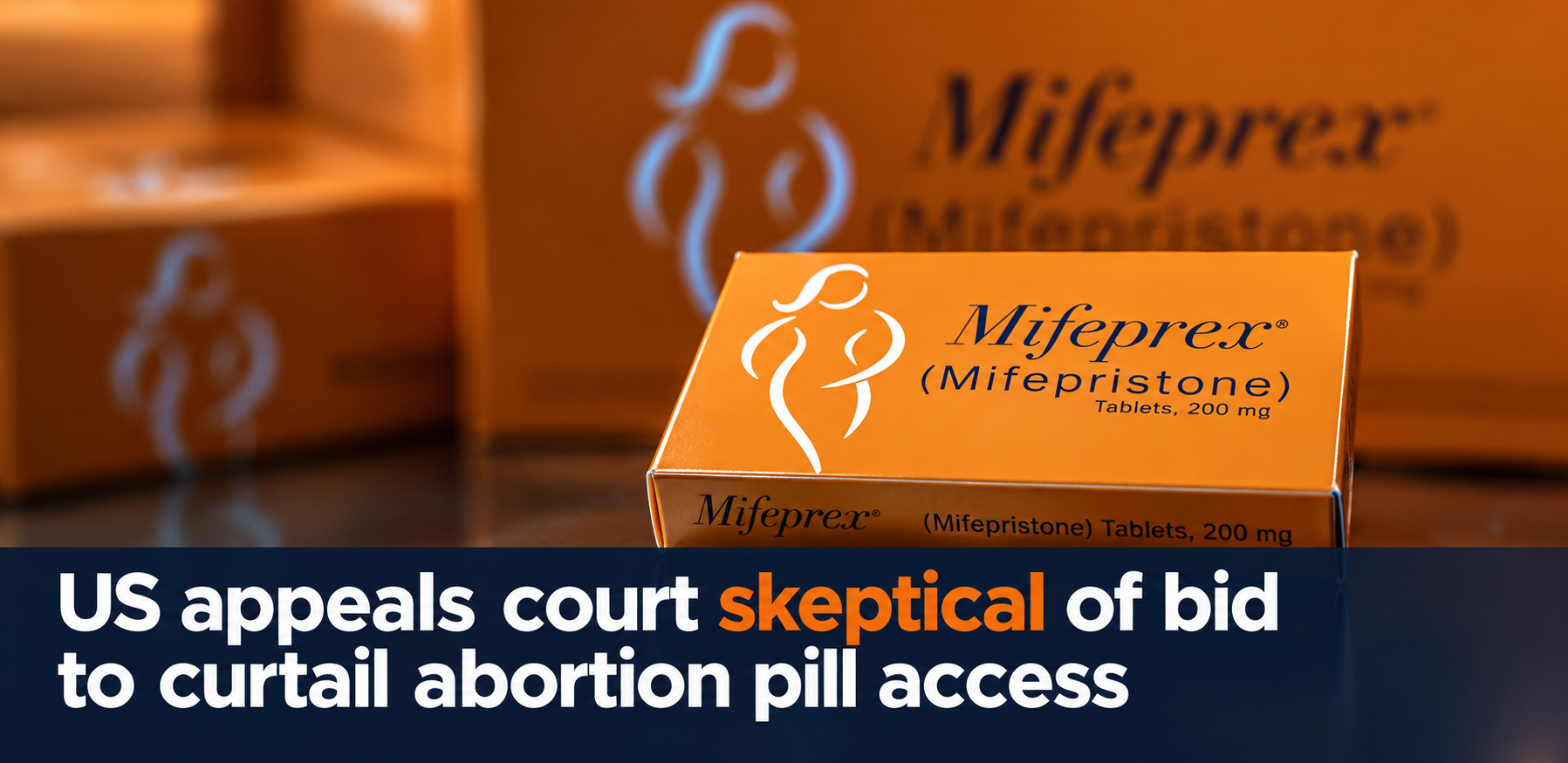
A federal appeals court on Wednesday appeared skeptical of Louisiana's effort to restrict access to the abortion medication mifepristone, with judges questioning whether the state has the legal right to challenge the U.S. Food and Drug Administration's 2023 decision that expanded access to the drug.
A three-judge panel of the 5th U.S. Circuit Court of Appeals in New Orleans heard arguments over Louisiana's request to block an FDA rule that allows mifepristone to be prescribed through telemedicine and dispensed by mail nationwide. (Reuters)
Louisiana argues that the federal rule undermines abortion restrictions adopted by the state and other Republican-led states. But judges on the panel repeatedly questioned whether Louisiana could demonstrate that the FDA's rule itself caused the abortions occurring in the state. (Reuters)
The hearing is the latest development in a long-running legal battle over whether states can use federal courts to challenge the FDA's regulation of mifepristone.
Louisiana Wants the 2023 FDA Rule Blocked
The dispute centers on mail and telemedicine access
The FDA changed the rules governing mifepristone in 2023, removing the requirement that the medication be dispensed in person at a medical facility.
That allowed doctors to prescribe the drug through telemedicine appointments, after which it could be shipped directly to patients. (Reuters)
Louisiana is asking the court to overturn that 2023 rule.
The state argues that the FDA failed to adequately consider the risks of serious complications, including sepsis and hemorrhaging, when it expanded access. (Reuters)
Louisiana Says the Rule Contributes to Abortions in the State
The state claims 1,000 abortions a month result from mailed pills
Louisiana Solicitor General Ben Aguinaga told the court that approximately 1,000 abortions a month in Louisiana result from mifepristone being mailed into the state. (Reuters)
The state's argument is essentially that because Louisiana has enacted abortion restrictions, the federal government's decision to allow mailed mifepristone interferes with the state's ability to enforce those restrictions.
That argument faces a significant legal hurdle: Louisiana must establish that it has standing, meaning it has suffered a legally recognizable injury that allows it to bring the case.
Judges Questioned Louisiana's Legal Standing
The panel focused heavily on causation
Two judges on the three-member panel questioned whether Louisiana could actually connect the FDA's 2023 decision to the abortions taking place in the state.
U.S. Circuit Judge Stephen Higginson said there were too many independent actors involved to conclude that the federal government's assessment of mifepristone safety was itself responsible for Louisiana's reported monthly abortions. (Reuters)
U.S. Circuit Judge Dana Douglas similarly questioned whether Louisiana could establish that the abortions were occurring because of the specific FDA rule being challenged rather than other factors. (Reuters)
That issue could be decisive.
Even if Louisiana strongly disagrees with the FDA's policy, disagreement by itself does not necessarily give a state the legal right to bring a federal lawsuit.
The 5th Circuit Has Already Been Involved in the Mifepristone Fight
The court previously blocked the rule temporarily
This is not the first time the 5th Circuit has considered the federal government's mifepristone rules.
Earlier this year, another 5th Circuit panel temporarily blocked the 2023 rule. But the U.S. Supreme Court lifted that order in May, allowing mifepristone to continue being prescribed through telemedicine and dispensed by mail. (Reuters)
That Supreme Court intervention was repeatedly noted during Wednesday's hearing.
Judge Higginson also pointed out that the 5th Circuit had previously been reversed by the Supreme Court in 2024, when the justices unanimously rejected a separate challenge by anti-abortion groups and doctors seeking to roll back FDA rules that had eased access to mifepristone. (Reuters)
The history makes the current case particularly significant because another ruling restricting access could once again lead to Supreme Court involvement.
The Supreme Court Has Already Allowed Access to Continue
Mifepristone remains available by mail
The Supreme Court's May decision means the FDA's current rules remain in place while this litigation continues.
Patients can therefore continue to obtain mifepristone through telemedicine and mail under the existing federal framework. (Reuters)
The appeals court hearing does not itself change those rules.
Any eventual ruling could, however, create another legal pathway for restricting access.
Mifepristone Is Central to Medication Abortion
More than 60% of U.S. abortions involve medication
Mifepristone is the first drug in the standard two-drug medication-abortion regimen, followed by misoprostol. (Reuters)
Medication abortion has become increasingly important since the Supreme Court's 2022 decision overturning the constitutional right to abortion.
Nearly half of U.S. states have since banned or severely restricted abortion, increasing reliance on medication abortion in areas where access to in-person abortion services is restricted. (Reuters)
According to data cited by Reuters from the Guttmacher Institute, a reproductive-health research organization, medication abortion accounts for more than 60% of abortions in the United States. (Reuters)
That means any nationwide change to mifepristone rules could affect a very large share of U.S. abortion care.
The FDA's Safety Review Is Still Underway
The agency is currently reassessing the drug
The FDA approved mifepristone in 2000.
The Trump administration is now conducting another review of the medication's safety. The federal government asked the district court to pause Louisiana's litigation while that review continues. (Reuters)
At Wednesday's hearing, Justice Department attorney Daniel Winik said the review is still ongoing and that he does not know what regulatory action the FDA might eventually take. (Reuters)
His argument was that questions about the drug's safety should ultimately be addressed by the FDA, rather than through a court order that preempts the agency's ongoing regulatory process.
The Drugmakers Defended Mifepristone
GenBioPro and Danco remain involved in the case
The two companies that manufacture mifepristone, GenBioPro and Danco Laboratories, have intervened to defend the drug and the FDA's regulatory decisions.
Their lawyers argued that the FDA's 2023 decision was strongly supported by available evidence and that the agency adequately assessed the medication's risks. (Reuters)
GenBioPro's attorney John Elwood told the judges that the FDA's decision was well supported.
The manufacturers therefore have a direct financial and commercial interest in preserving the current regulatory framework.
A Republican-Led State Is Challenging Federal Drug Regulation
The case is about more than abortion policy
The legal conflict also raises a broader issue about the relationship between state governments and the FDA.
Drug approval and regulation are generally handled at the federal level.
Louisiana's lawsuit asks the federal courts to intervene against an FDA decision that applies nationwide.
If Louisiana succeeds, the ruling could have implications beyond abortion because it could affect how states challenge federal regulatory decisions involving prescription drugs.
The case therefore involves both reproductive policy and a larger question of federal regulatory authority.
Another Legal Challenge to Mifepristone Is Already Pending
Multiple lawsuits seek to limit access
The Louisiana case is one of several lawsuits seeking to limit access to the drug.
The broader litigation has produced repeated clashes between Republican-led states and the federal government over whether the FDA properly handled mifepristone's approval and later changes to its distribution rules. (Reuters)
A federal district judge in April paused Louisiana's case while the Trump administration's safety review proceeded. The latest appeals-court hearing concerns whether that challenge can continue and whether the state can establish the legal basis necessary to pursue it. (Reuters)
The FDA Says Mifepristone Remains Safe and Effective
The agency has defended the medication
Despite the ongoing political and legal disputes, the FDA has continued to describe mifepristone as safe and effective.
The agency says its periodic reviews have not identified new safety concerns and notes that the drug has been used by millions of American women. (Reuters)
That position puts the FDA at odds with the states challenging the medication's expanded access.
The court is therefore being asked to evaluate legal questions surrounding an FDA regulatory decision while the agency itself is still reviewing the underlying safety issues.
The Panel Also Asked About Emergency-Room Visits
Judges questioned the evidence behind Louisiana's concerns
The panel's Republican-appointed judge, Priscilla Richman, repeatedly asked about whether women were being admitted to emergency rooms more frequently and whether those complications could have been avoided if the patients had seen physicians in person. (Reuters)
Those questions reflect the medical and factual issues underlying Louisiana's argument.
The state contends that removing the in-person dispensing requirement creates additional safety risks.
The drugmakers, meanwhile, argue that the FDA adequately evaluated those risks when it made the 2023 regulatory change. (Reuters)
The Court Has Not Yet Ruled
The hearing does not immediately change access
The judges' skepticism does not amount to a final decision.
The appeals court still needs to issue its ruling on Louisiana's challenge.
Until then, the current federal rules allowing mifepristone to be prescribed through telemedicine and dispensed by mail remain in effect as a result of the Supreme Court's May intervention. (Reuters)
If Louisiana loses, it could ask the full 5th Circuit to reconsider the case or appeal to the Supreme Court. (Reuters)
Why This Matters
This case matters because mifepristone is central to abortion care in the United States, and the legal dispute could potentially affect access nationwide.
It is also important because the appeals court is not simply deciding whether abortion should be restricted. It is considering whether a state has the legal authority to challenge a federal agency's nationwide drug-regulation decision.
The court's focus on standing could become the key issue.
If Louisiana cannot demonstrate that the FDA rule itself caused a legally recognizable injury, the case could fail without the court ever resolving the state's broader claims about mifepristone's safety.
At the same time, the ongoing FDA review means the regulatory status of the medication could still change independently of this lawsuit. (Reuters)
Looking Ahead
The 5th Circuit will issue its ruling in due course
The immediate next step is the 5th Circuit's ruling on Louisiana's challenge.
If the panel rejects the state's case, Louisiana could request review by the full 5th Circuit or seek Supreme Court intervention. (Reuters)
The FDA's separate safety review is another major development to watch because its conclusions could affect the regulatory status of mifepristone regardless of the outcome of the litigation.
For now, mifepristone remains available under the current federal rules, including telemedicine prescribing and mail dispensing.
The ultimate outcome could determine not only the future of mifepristone access but also how state governments can challenge nationwide FDA decisions.
Key Takeaways
- A 5th U.S. Circuit Court of Appeals panel appeared skeptical of Louisiana's effort to restrict mifepristone access. (Reuters)
- Louisiana wants to block the FDA's 2023 rule allowing mifepristone to be prescribed through telemedicine and dispensed by mail. (Reuters)
- Louisiana claims roughly 1,000 abortions a month in the state result from mifepristone being mailed there. (Reuters)
- Judges Stephen Higginson and Dana Douglas questioned whether Louisiana has legal standing to challenge the FDA rule. (Reuters)
- The Supreme Court lifted an earlier 5th Circuit order blocking the rule in May, allowing mail and telemedicine access to continue. (Reuters)
- The Supreme Court also unanimously rejected a separate challenge to mifepristone regulations in 2024. (Reuters)
- Medication abortion accounts for more than 60% of U.S. abortions, according to Guttmacher Institute data cited by Reuters. (Reuters)
- The FDA's safety review of mifepristone remains ongoing. (Reuters)
- The FDA continues to describe mifepristone as safe and effective and says periodic reviews have not identified new safety concerns. (Reuters)
- GenBioPro and Danco Laboratories are defending the drug in court. (Reuters)
- The appeals court has not yet issued a ruling, so current access rules remain in place for now.
What This Means for Healthcare Marketers
This is another example of how regulatory litigation can create immediate uncertainty around an established healthcare product.
For pharmaceutical companies, telehealth providers, pharmacies and reproductive-health organizations, the central signals are the interaction between FDA policy, court decisions and state-level restrictions.
The commercial impact can extend beyond the drug itself. Changes in dispensing rules can affect telehealth demand, pharmacy workflows, provider networks, patient acquisition and geographic access.
For healthcare marketers, the key is to follow the sequence closely: court challenge → regulatory review → FDA decision → possible access changes. Each stage can alter the market before a final nationwide policy is established.