U.S. Appeals Court Upholds AstraZeneca Victory in Cancer Drug Patent Dispute with Pfizer
What's Happening
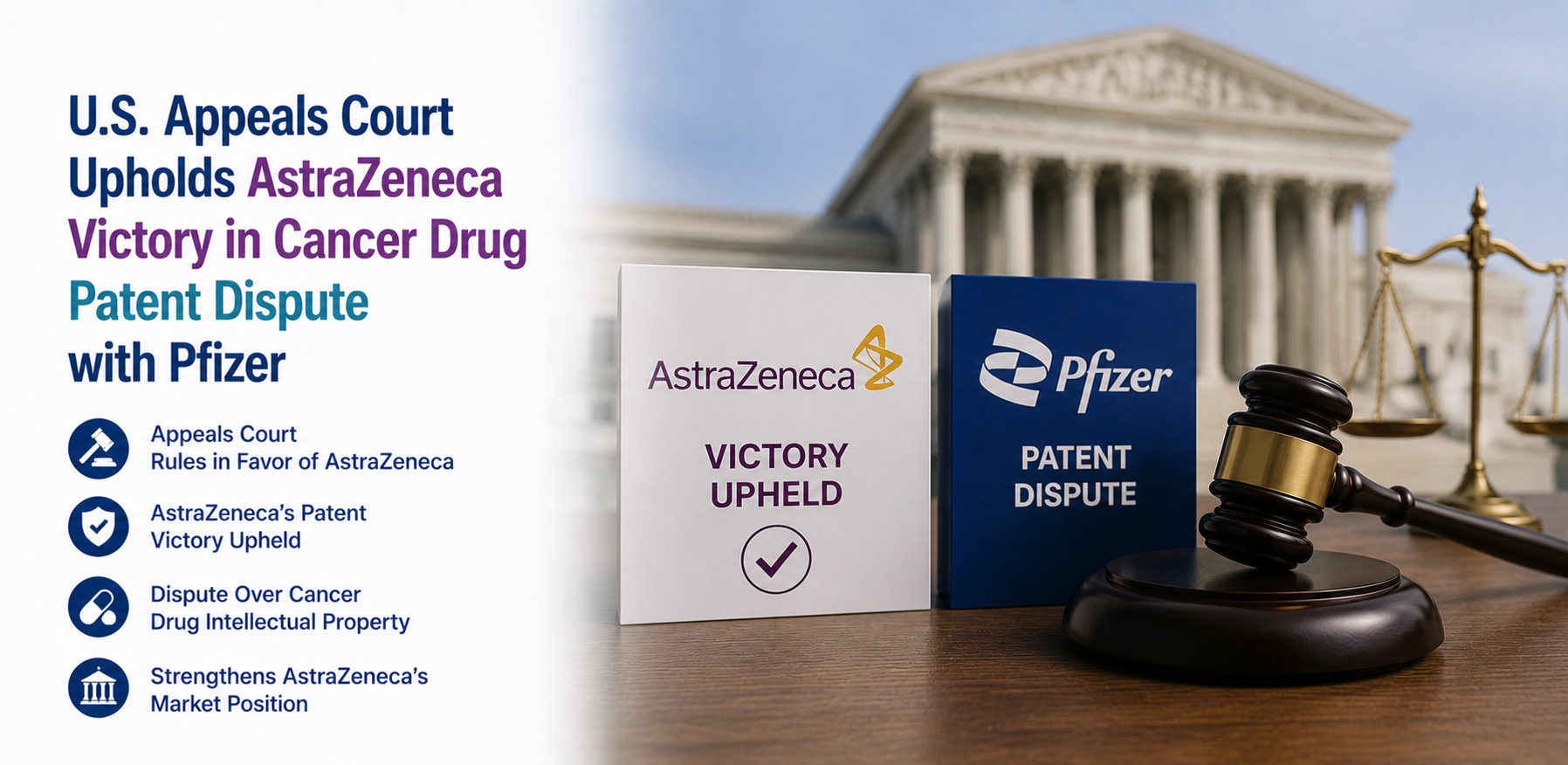
A U.S. federal appeals court has upheld a lower court ruling in favor of AstraZeneca in a patent dispute with Pfizer involving AstraZeneca's blockbuster lung cancer drug Tagrisso (osimertinib). The decision preserves AstraZeneca's patent protections and prevents Pfizer from challenging key intellectual property rights related to one of the company's most important oncology medicines. (reuters.com)
The ruling is significant because Tagrisso is one of the world's leading targeted cancer therapies and generates billions of dollars in annual revenue for AstraZeneca. By affirming the earlier decision, the appeals court strengthens AstraZeneca's ability to maintain market exclusivity for the drug while delaying potential competition from generic or competing versions based on the challenged patent.
Patent disputes like this are common in the pharmaceutical industry because they can determine how long innovative medicines remain protected before lower-cost alternatives enter the market.
What Is Tagrisso?
Tagrisso (generic name osimertinib) is a targeted cancer therapy used to treat certain forms of non-small cell lung cancer (NSCLC). Unlike traditional chemotherapy, Tagrisso specifically targets cancer cells carrying mutations in the epidermal growth factor receptor (EGFR) gene. Doctors prescribe the medicine for eligible patients whose tumors contain these genetic mutations, allowing treatment to be tailored to the biology of the cancer rather than using a one-size-fits-all approach.
Tagrisso has become a standard treatment for many patients because it has demonstrated improvements in:
- Progression-free survival
- Overall survival
- Control of brain metastases
- Disease recurrence after surgery in certain patients
The drug represents an important example of precision oncology, where genetic testing helps identify the most effective treatment for individual patients.
Why Are Drug Patents Important?
Developing a new medicine typically requires more than a decade of research, extensive laboratory studies, multiple phases of clinical trials, regulatory review, and billions of dollars in investment. Patents provide pharmaceutical companies with temporary exclusive rights to market their inventions. During this period, competitors generally cannot manufacture or sell identical versions of the protected drug without authorization. This exclusivity allows companies to recover research and development costs while continuing to invest in future innovation. Once patent protection expires, generic manufacturers may enter the market, often leading to lower prices and broader patient access.
Why Do Patent Disputes Happen?
Pharmaceutical patent litigation is common because blockbuster medicines generate substantial revenue. Generic drug manufacturers or competing pharmaceutical companies may challenge patents by arguing that:
- The invention was not sufficiently novel.
- The patent should never have been granted.
- The patent is legally invalid.
- The claimed invention is obvious based on previous scientific knowledge.
Patent holders, meanwhile, argue that their inventions represent genuine scientific advances deserving legal protection. Courts evaluate scientific evidence, patent law, and technical details before determining whether the patents remain valid.
Why This Case Matters
Tagrisso has become one of AstraZeneca's most valuable medicines and is widely used to treat patients with EGFR-mutated lung cancer around the world. Maintaining patent protection allows AstraZeneca to:
- Continue commercializing the drug without generic competition.
- Generate revenue to support future research.
- Invest in developing additional oncology therapies.
For competitors, successful patent challenges could shorten the period of market exclusivity and accelerate access to lower-cost alternatives. Because of the financial importance of major cancer medicines, patent disputes often have significant commercial implications.
The Growing Role of Precision Oncology
Tagrisso reflects the broader shift toward precision medicine in cancer treatment. Instead of treating all lung cancers identically, physicians increasingly perform molecular testing to identify specific genetic mutations. Targeted therapies are then selected based on those results. This approach can improve treatment outcomes while reducing unnecessary exposure to therapies that may be less effective. Precision oncology has become one of the fastest-growing areas of cancer research, with pharmaceutical companies investing heavily in targeted medicines and companion diagnostic tests.
Balancing Innovation and Competition
Patent protection plays an important role in encouraging pharmaceutical innovation, but it also raises broader questions about healthcare affordability. Supporters of strong patent protection argue that it rewards scientific innovation, encourages investment in research, and supports the development of future medicines. Others emphasize the importance of generic competition, which can reduce prescription drug costs, expand patient access, and lower healthcare spending. Patent litigation often sits at the center of this balance between rewarding innovation and promoting affordability.
Industry Impact
- Pharmaceutical Companies: The ruling reinforces the importance of intellectual property protection for high-value oncology medicines.
- Healthcare Providers: Patent decisions generally do not affect current prescribing practices but may influence future treatment availability and pricing.
- Patients: Eligible patients will continue accessing Tagrisso as approved, while future generic competition will depend on patent timelines and additional legal developments.
- Investors: The decision protects one of AstraZeneca's most commercially important oncology assets and provides greater certainty regarding future revenue from the product.
Why This Matters
The appeals court decision highlights the critical role intellectual property plays in modern pharmaceutical innovation. As cancer therapies become increasingly targeted and personalized, companies invest substantial resources in developing treatments that address specific genetic mutations. Patent protection helps support those investments by providing a period of market exclusivity. At the same time, legal challenges remain an important mechanism for determining whether patents meet the legal standards required to maintain that protection. The ruling reinforces AstraZeneca's position in the oncology market while illustrating the continuing importance of patent litigation in shaping competition, innovation, and long-term patient access to advanced medicines.
Key Takeaways
- A U.S. appeals court upheld AstraZeneca's victory in its patent dispute with Pfizer involving the lung cancer drug Tagrisso.
- The decision preserves key patent protections for one of AstraZeneca's leading oncology medicines.
- Tagrisso is a targeted therapy used to treat certain patients with EGFR-mutated non-small cell lung cancer.
- Pharmaceutical patent disputes help determine how long innovative medicines remain protected before generic competition emerges.
- The ruling strengthens AstraZeneca's commercial position while reinforcing the importance of intellectual property in drug development.
What This Means for Healthcare Marketers
The ruling underscores how intellectual property remains one of the most valuable assets in the pharmaceutical industry. For innovative therapies, particularly in oncology, patent protection provides the commercial foundation that supports years of research, clinical development, and future investment. Major patent decisions can influence competitive strategy, pipeline planning, licensing opportunities, and long-term market positioning.
For healthcare marketers, oncology continues to evolve toward precision medicine, where treatments are increasingly tailored to patients with specific genetic mutations. Successfully commercializing these therapies requires educating healthcare providers not only about clinical benefits but also about biomarker testing, patient selection, and evolving treatment pathways. Strong patent protection allows companies additional time to build clinical evidence, physician familiarity, and market adoption before facing generic competition.
For healthcare intelligence teams, patent litigation offers valuable insight into future market dynamics. Monitoring intellectual property disputes, patent expirations, and court decisions can help organizations anticipate competitive changes, pricing shifts, and opportunities for new entrants across high-value therapeutic areas such as oncology.