What’s Happening
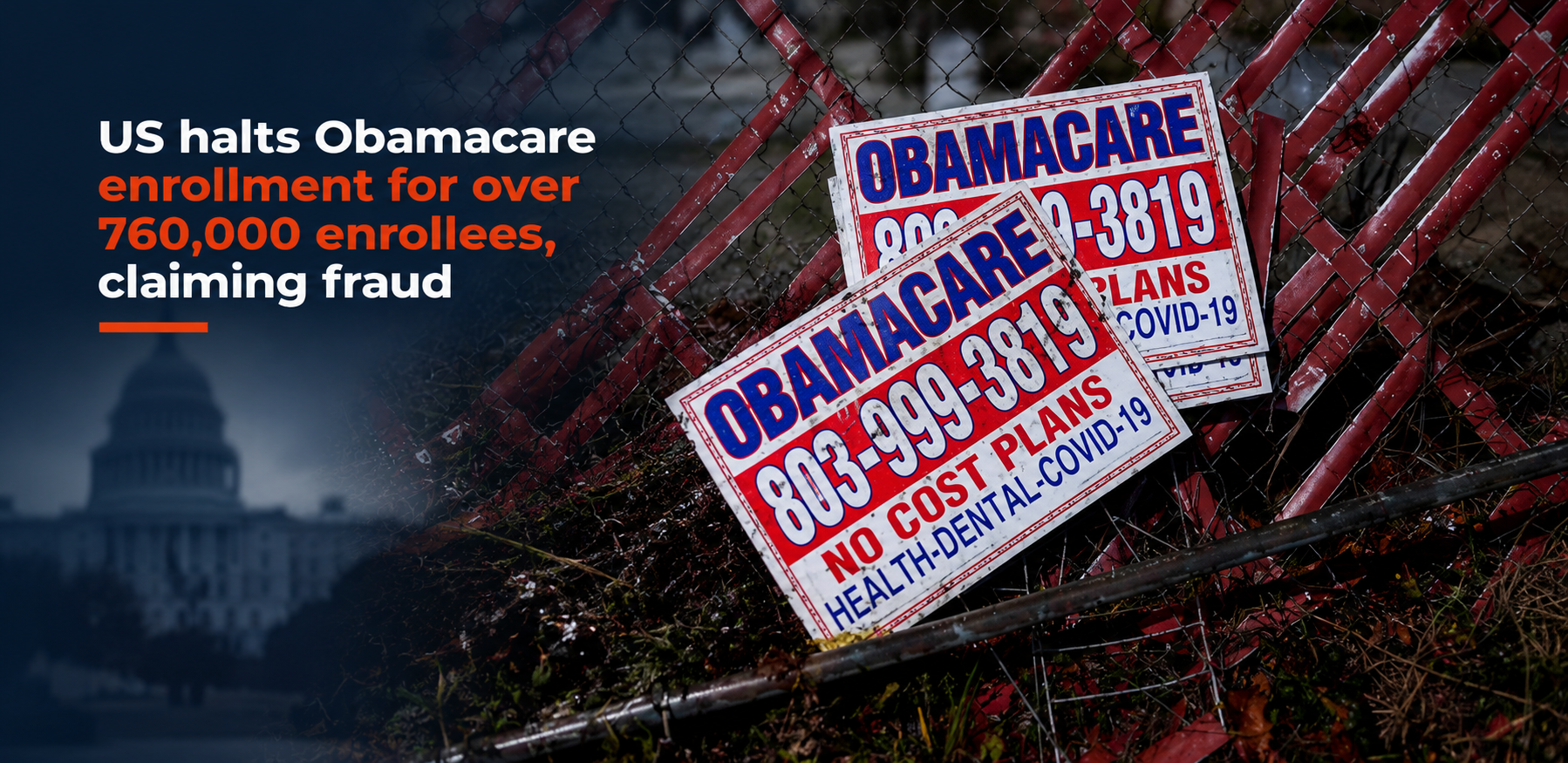
The U.S. government has canceled 315,000 Obamacare health plans covering about 760,000 people, saying the plans may have involved improper or fraudulent enrollments.
The cancellations were carried out in August by the Centers for Medicare & Medicaid Services (CMS).
The agency said it found problems including unverified citizenship or immigration information and applications that appeared to contain questionable information.
The action is part of a broader effort by the U.S. government to check whether people enrolled in Affordable Care Act, or ACA, health plans are actually eligible for the coverage and the government subsidies that help pay for it.
The Affordable Care Act, commonly called Obamacare, allows people who do not receive health insurance through an employer or another government program to purchase insurance through healthcare marketplaces.
Why Is the Government Investigating These Plans?
The government says some people may have been enrolled in Obamacare plans without their knowledge or permission.
CMS also said some insurance brokers may have changed people's plans without authorization, used inaccurate information or created questionable applications in order to receive commissions.
Insurance brokers help consumers compare health plans and enroll in coverage. Because brokers handle a large number of applications, the government is examining their activity as part of the investigation.
CMS said it identified 569 brokers that submitted unusually high numbers of applications that were missing important information, including Social Security numbers.
The agency said brokers who did not complete the required 2026 registration process will be affected by a freeze on new registrations until February 1, 2027.
How Much Money Could Be Involved?
The government says improper Obamacare enrollments could lead to significant federal spending because eligible consumers can receive premium tax credits that reduce the amount they pay for health insurance.
CMS estimates that unauthorized enrollments could result in as much as $6.6 billion in improper federal spending during the 2026 plan year.
The administration estimates that its actions could save taxpayers approximately $2.2 billion.
The government has also said that another 419,000 to 450,000 people could face additional checks to determine whether they meet requirements related to legal residency and income.
What Is Obamacare?
Obamacare is the common name for the Affordable Care Act, a U.S. healthcare law passed in 2010.
One of its major features is the creation of health insurance marketplaces where people can purchase individual health plans.
For people who meet certain income requirements, the government provides financial assistance that can reduce the cost of their insurance.
This means that changes to Obamacare enrollment can affect several groups at the same time:
- People who rely on ACA plans for health coverage
- Health insurance companies
- Insurance brokers
- Healthcare providers
- The federal government
- Companies that provide services to these organizations
What’s Changing / Business Impact
The government is now taking a more aggressive approach to verifying Obamacare enrollment information.
CMS has introduced an emergency rule that immediately freezes new registrations for certain Obamacare brokers instead of following the normal process of giving advance notice and allowing public comments.
The government says the stronger checks are necessary because improper enrollments can result in federal subsidies being paid for people who should not receive them.
However, the changes could also affect legitimate consumers.
The National Association of Benefits and Insurance Professionals, which represents insurance agents and brokers, has criticized the broad freeze.
The organization argues that a blanket restriction could hurt legitimate brokers instead of focusing only on those involved in improper activity. It has called for more targeted enforcement while maintaining consumers' access to licensed insurance professionals.
This creates a challenge for the government: it wants to reduce fraud while also making sure that legitimate consumers can continue to access health insurance.
Why This Matters
Obamacare provides health coverage to millions of Americans, so changes to the program can have a broad effect on the U.S. healthcare system.
If people lose coverage or decide not to enroll because of higher costs or difficulties accessing the marketplace, health insurers could see changes in their membership.
Healthcare providers can also be affected.
People without insurance may be less likely to seek medical care because they have to pay more out of pocket. This can influence how hospitals, doctors and other healthcare organizations manage their patient populations and finances.
The issue also highlights the importance of accurate healthcare data and eligibility verification.
Government agencies and insurers need reliable information to determine who qualifies for coverage, who qualifies for financial assistance and whether applications are legitimate.
Looking Ahead
CMS is expected to continue reviewing Obamacare enrollments and investigating applications that it considers questionable.
The agency will also continue examining the activities of insurance brokers and agents involved in ACA enrollment.
Hundreds of thousands of additional people could face eligibility reviews as the government checks residency, income and other requirements.
The impact on overall Obamacare enrollment will become clearer as these reviews continue and as consumers make decisions about their health coverage.
The government will need to balance its efforts to prevent improper spending with the need to make sure that people who are legitimately eligible for Obamacare can still obtain coverage.
What This Means for Healthcare Marketers
For healthcare marketers, changes to Obamacare enrollment can create important shifts in the U.S. healthcare market.
Marketers working with health insurers, brokers, healthcare providers and healthcare technology companies should pay attention to changes in:
- Insurance enrollment
- Member eligibility
- Government subsidies
- Broker activity
- Health plan participation
- Consumer acquisition
- Healthcare spending
Enrollment changes can affect the size and makeup of a health plan's customer base.
For example, if fewer people enroll through brokers, insurers may need to change how they reach and acquire new members.
Healthcare companies may also need better ways to identify eligible consumers, verify information and prevent improper enrollments.
For healthcare marketers, these developments are useful signals because changes in regulation and enrollment can create new business needs.
Tracking those changes can help marketers understand which organizations may be adjusting their strategies, investing in new capabilities or looking for solutions to manage changing market conditions.
Key Takeaways
- The U.S. government canceled 315,000 Obamacare plans covering about 760,000 people in August.
- CMS cited unverified citizenship or immigration information and suspected improper enrollments.
- The agency identified 569 brokers that it says submitted unusually high numbers of questionable applications.
- CMS estimates improper Obamacare enrollments could result in up to $6.6 billion in federal spending during 2026.
- The administration estimates its actions could save about $2.2 billion.
- Another 419,000 to 450,000 people could undergo additional eligibility checks.
- The government says it is trying to reduce fraud while critics of the broad broker restrictions warn that legitimate consumers and brokers could also be affected.
- For healthcare marketers, changes in enrollment, eligibility, subsidies and broker activity can signal shifts in healthcare organizations' needs and market opportunities.