
U.S. Citizen in Congo Tests Positive for Ebola, CDC Says No Risk to the American Public
What's Happening
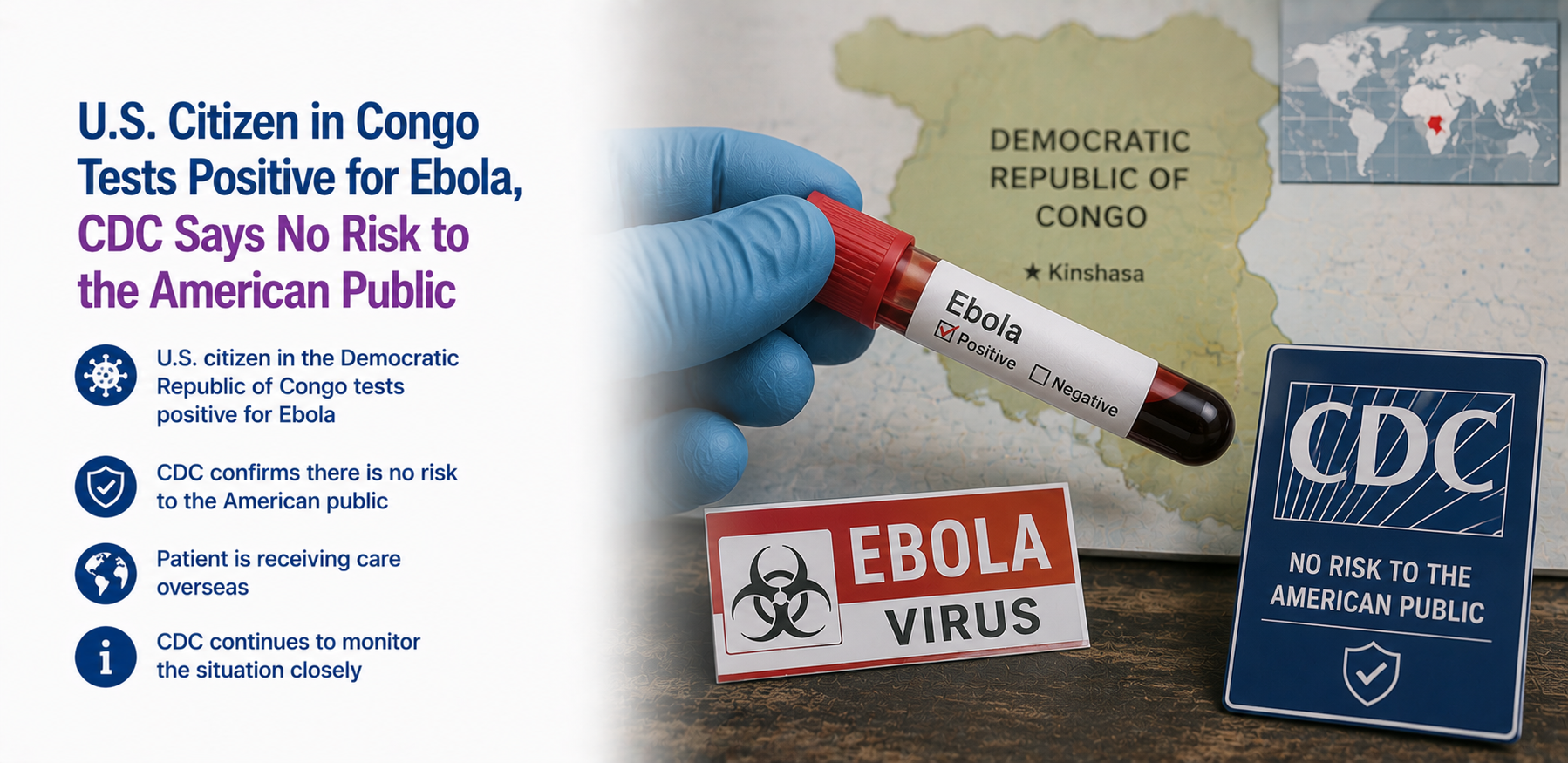
A U.S. citizen working in the Democratic Republic of Congo (DRC) has tested positive for Ebola virus disease, according to the U.S. Centers for Disease Control and Prevention (CDC). The individual remains in Congo and is receiving medical care there. Health officials emphasized that there is no evidence the person traveled while infectious or exposed anyone in the United States, and the CDC said the case does not pose a public health risk to Americans. (reuters.com)
The case is linked to the ongoing Ebola outbreak in the Democratic Republic of Congo, where public health authorities continue monitoring infections and implementing measures to prevent further spread. The CDC is working closely with international health partners and Congolese officials to monitor the situation while continuing routine surveillance for Ebola-related cases.
What Is Ebola?
Ebola virus disease (EVD) is a rare but serious viral illness that can cause severe disease in humans. The virus is primarily transmitted through:
- Direct contact with the blood or bodily fluids of an infected person.
- Contact with contaminated objects such as needles or medical equipment.
- Exposure to infected animals in certain regions.
Ebola is not spread through the air like influenza or COVID-19. People become contagious only after symptoms begin.
What Are the Symptoms?
Symptoms typically appear 2 to 21 days after exposure. Early symptoms include fever, severe headache, muscle pain, weakness, fatigue, and sore throat. As the disease progresses, patients may develop vomiting, diarrhea, abdominal pain, rash, and internal or external bleeding in severe cases. Early diagnosis and supportive medical care significantly improve the chances of survival.
Why Isn't This a Threat to the U.S.?
Although the patient is a U.S. citizen, the CDC emphasized that:
- The individual remains in the Democratic Republic of Congo.
- There is no evidence they traveled while contagious.
- No exposures have been identified within the United States.
- Routine public health monitoring remains in place.
Because Ebola spreads through direct contact rather than casual interaction, isolated cases do not automatically create broader public health risks. The CDC continues monitoring travelers and maintains preparedness plans for responding to imported infectious diseases if necessary.
How Ebola Outbreaks Are Contained
Public health agencies use several strategies to stop Ebola outbreaks. These include:
- Rapid diagnosis.
- Isolation of infected patients.
- Contact tracing.
- Testing exposed individuals.
- Infection prevention in healthcare settings.
- Community education.
- Vaccination of eligible contacts during outbreaks.
These measures have significantly improved outbreak control compared with earlier Ebola epidemics. International cooperation between local governments, the World Health Organization (WHO), and public health agencies remains essential to limiting transmission.
How Prepared Is the United States?
The United States has established protocols for identifying and managing patients with Ebola. Hospitals designated to treat highly infectious diseases maintain specialized isolation units, trained healthcare teams, strict infection-control procedures, personal protective equipment (PPE), and laboratory testing capabilities. The CDC also works with state and local health departments to monitor travelers when necessary and respond quickly to suspected cases. These preparedness measures help reduce the likelihood of domestic transmission.
Why Ebola Continues to Be Monitored
Although Ebola outbreaks are typically limited to specific regions of Africa, global travel means public health agencies remain vigilant. Monitoring imported cases helps detect infections early, prevent secondary transmission, protect healthcare workers, and support international outbreak response. Rapid communication between countries has become an important part of global infectious disease surveillance.
Industry Impact
- Public Health Agencies: The CDC and international health organizations continue monitoring Ebola outbreaks and coordinating response efforts.
- Healthcare Providers: Hospitals remain prepared to identify and safely manage suspected Ebola cases if necessary.
- Researchers: Continued outbreaks support ongoing research into vaccines, antiviral treatments, and outbreak response strategies.
- Travelers: The CDC continues providing travel guidance for regions experiencing Ebola outbreaks while emphasizing that risk to the general U.S. public remains very low.
Why This Matters
The reported case demonstrates how global public health agencies continue monitoring infectious diseases even when the immediate risk to the United States is low. Rapid identification, international communication, and coordinated response efforts help prevent isolated cases from becoming larger public health threats. The announcement also illustrates the importance of maintaining strong infectious disease surveillance systems. As international travel and global health challenges continue evolving, collaboration between countries remains essential for detecting outbreaks early and protecting public health. The CDC's statement that there is no current risk to the U.S. public should help reassure Americans while highlighting the effectiveness of modern disease monitoring and outbreak response systems.
Key Takeaways
- A U.S. citizen in the Democratic Republic of Congo tested positive for Ebola virus disease.
- The individual remains in Congo, and the CDC said there is no risk to the American public.
- Ebola spreads through direct contact with infected bodily fluids and is not transmitted through the air.
- Public health agencies continue monitoring the outbreak while supporting containment efforts in Congo.
- The case highlights the importance of global infectious disease surveillance and international public health cooperation.
What This Means for Healthcare Marketers
The case underscores the importance of global disease surveillance and rapid public health response. Although the immediate risk to the United States is low, infectious disease monitoring remains a critical component of healthcare preparedness. Public health agencies, healthcare providers, and international organizations rely on coordinated surveillance systems to detect outbreaks early and prevent wider transmission.
For healthcare marketers, infectious disease preparedness continues to be an important area of innovation. Organizations involved in diagnostics, laboratory testing, vaccines, therapeutics, infection prevention, and public health technologies have opportunities to demonstrate how their solutions strengthen outbreak detection and response capabilities. Timely, evidence-based communication is particularly important during emerging infectious disease events to provide accurate information while avoiding unnecessary public concern.
For healthcare intelligence teams, international outbreaks remain valuable indicators for monitoring emerging health risks and future research priorities. Tracking developments in infectious disease surveillance, vaccine deployment, global health partnerships, and outbreak response can help organizations anticipate evolving public health needs and identify opportunities for innovation in preparedness and disease prevention.