What's Happening
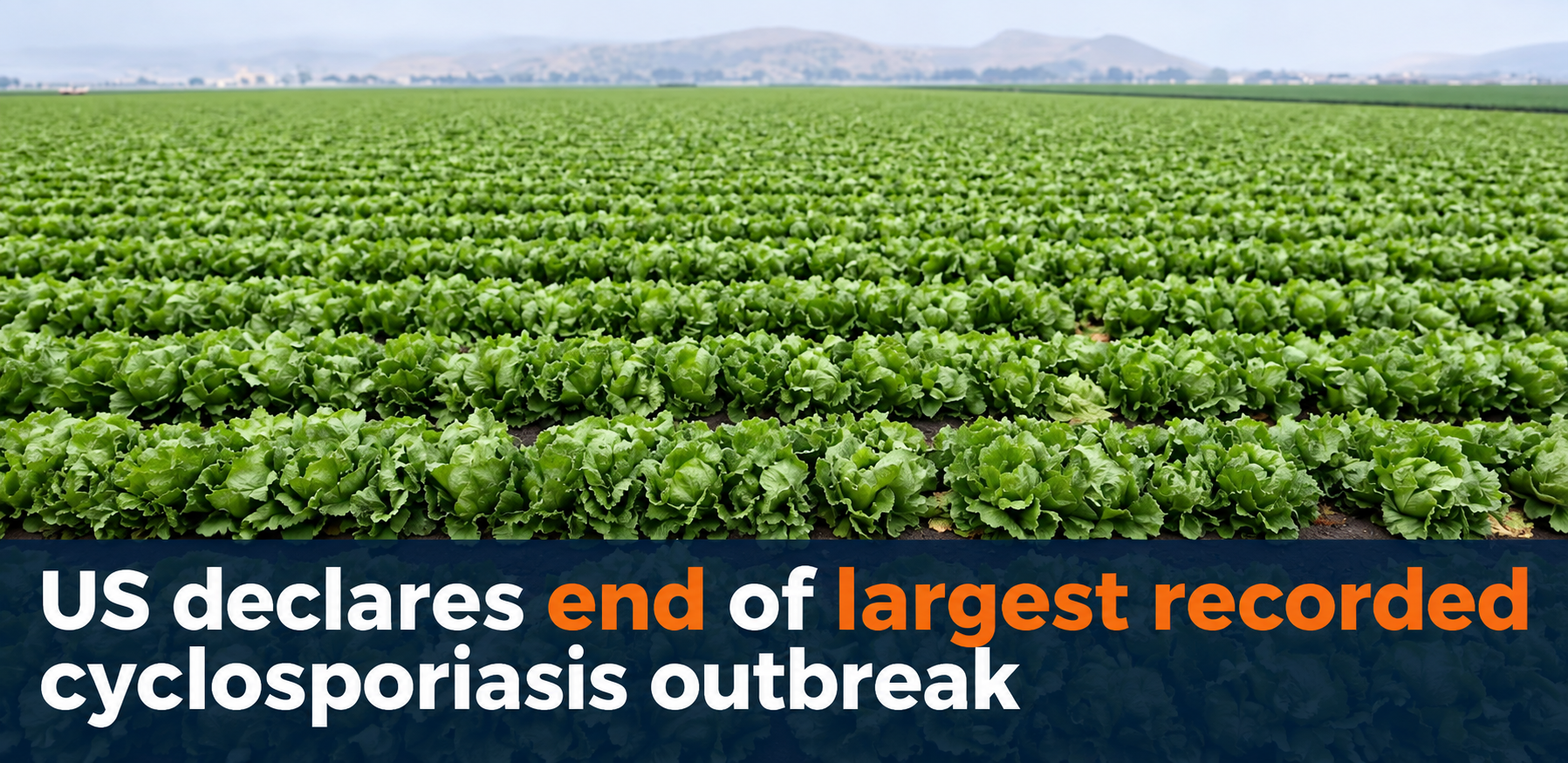
U.S. health authorities have officially declared an end to the country's largest recorded multistate outbreak of cyclosporiasis, after contaminated iceberg lettuce sickened 12,883 people across 21 states.
The outbreak resulted in 570 hospitalizations and two deaths, according to the latest Centers for Disease Control and Prevention data. It accounted for more than half of the 19,595 laboratory-confirmed U.S. cyclosporiasis cases reported since May 1, 2026. (Reuters)
Federal officials said there is now no current risk of contracting cyclosporiasis from the lettuce linked to the outbreak because the recalled products have passed their best-by dates and are no longer available in stores or restaurants. (Reuters)
However, the FDA is still investigating how the Cyclospora parasite entered the food supply, meaning the outbreak has been declared over even though the underlying contamination source has not been fully explained. (Reuters)
The Outbreak Was Linked to Iceberg Lettuce
Taylor Farms was the identified supplier
Federal investigators linked the outbreak to iceberg lettuce sourced from central Mexico by Taylor Farms.
Taylor Farms recalled all iceberg lettuce sourced from central Mexico on July 17, after federal investigators connected the produce to illnesses across multiple states. (Reuters)
The recall became one of the largest food recalls in recent years because the lettuce had entered a broad restaurant and food-service network.
The Outbreak Has Now Been Declared Over
Contaminated products are no longer on the market
The FDA said it is confident that all recalled iceberg lettuce connected to the outbreak has been removed from commerce.
The CDC also said the best-by dates for all products tied to the outbreak have passed, meaning the affected lettuce should no longer be available in restaurants or stores. (Reuters)
As a result, federal officials say there is currently no risk from the implicated lettuce.
That is the key reason the agencies were able to declare the outbreak over.
Infections Have Fallen Dramatically
New cases dropped sharply in August
At the height of the outbreak, more than 1,000 infections were reported in a single day.
By August, the CDC said new infections had fallen to fewer than two per day on average. (Reuters)
That dramatic decline indicates that removing the suspected source from the food supply significantly reduced ongoing exposure.
2026 Has Been a Record Year for Cyclosporiasis
The outbreak alone was larger than previous records
Before this year, the largest U.S. cyclosporiasis season on record was 2019, when approximately 4,700 illnesses were reported nationwide.
The 2026 outbreak alone produced 12,883 illnesses, nearly three times the previous annual record. (Reuters)
And the outbreak-linked cases represent only part of the national total.
Since May 1, the United States has recorded 19,595 laboratory-confirmed cases, making 2026 by far the worst year on record for the parasite-borne illness. (Reuters)
Michigan Was the Hardest-Hit State
More than 14,000 cases were reported
Michigan experienced the largest impact from the outbreak, recording more than 14,000 cases and both of the deaths associated with the parasite. (Reuters)
Ohio and Missouri also recorded thousands of illnesses associated with contaminated Taylor Farms lettuce. (Reuters)
Michigan's unusually high reported total was partly attributed to a large backlog of case reports that were processed in August.
That means the state's numbers do not necessarily represent infections occurring only during the month in which they were reported.
The Public-Health System Came Under Significant Pressure
Case backlogs and resource constraints affected reporting
Michigan's backlog illustrates one of the larger lessons from the outbreak.
The state's public-health system had to process an unusually large volume of illness reports while simultaneously conducting investigations, tracing potential exposures and coordinating with federal agencies.
The accumulated reporting backlog meant that large numbers of cases were entered into official statistics later than the date when patients actually became ill. (Reuters)
Reuters noted that the Michigan experience highlighted strain on a public-health system weakened by federal funding cuts under the Trump administration. (Reuters)
The FDA Investigation Is Not Finished
Officials still do not know exactly how contamination occurred
Even though the outbreak has been declared over, the FDA is still investigating the point at which Cyclospora entered the food supply.
The agency has completed on-site inspections and collected samples from lettuce farms and the processing facility in Mexico. Analysis of those samples is still pending. (Reuters)
The FDA said it will continue working with U.S., Mexican and state authorities as the investigation proceeds.
This distinction is important: The outbreak is over from a public-exposure perspective, but the food-safety investigation is not over.
What Is Cyclosporiasis?
Understanding the parasite and transmission
Cyclosporiasis is an intestinal infection caused by the Cyclospora parasite.
People can become infected by eating food, particularly raw fruits and vegetables, or drinking water contaminated with fecal matter. (Reuters)
Because fresh produce is often eaten without cooking, contamination can move directly from the food supply to consumers.
That makes produce safety and supply-chain controls especially important for preventing large outbreaks.
The Outbreak Affected Consumer Behavior and Restaurants
Confidence in fresh produce and dining out took a hit
The outbreak did not only affect people who became sick. It also changed how some consumers behaved.
Reuters reported that the outbreak rattled consumer confidence, with some shoppers avoiding raw fruits and vegetables and some consumers dining out less frequently. (Reuters)
Restaurant chains such as Taco Bell, Sweetgreen and Chipotle were affected by the contamination concerns, which hurt restaurant foot traffic as some consumers became more reluctant to dine out. (Reuters)
For restaurants, this creates a difficult communication challenge to remove potentially affected products quickly while reassuring customers.
Why This Matters
The end of the outbreak is good news for consumers, but the episode raises important questions about food-safety surveillance, supply-chain traceability and public-health capacity.
The outbreak sickened nearly 13,000 people directly through the implicated lettuce supply chain, while nearly 20,000 laboratory-confirmed U.S. cases have been recorded since May 1. (Reuters)
It also demonstrated how quickly a contaminated ingredient can move through a national restaurant network and affect consumers across dozens of states.
The fact that the FDA still does not know exactly how the parasite entered the food supply means there are unresolved food-safety questions even after the immediate public-health risk has passed.
Looking Ahead
Next steps for federal agencies, public health and industry
The immediate outbreak is over, but the FDA will continued investigating the contamination pathway through inspections and sample analysis in Mexico. (Reuters)
The broader lesson for public-health officials will be how quickly future foodborne outbreaks can be detected, investigated and reported.
For Michigan in particular, the large reporting backlog highlighted the importance of having enough public-health personnel and laboratory resources to maintain timely surveillance.
For food companies and restaurants, the focus will remain on traceability, supplier controls and consumer confidence.
Key Takeaways
- U.S. health authorities have declared the largest recorded multistate cyclosporiasis outbreak over. (Reuters)
- The outbreak caused 12,883 illnesses across 21 states, resulting in 570 hospitalizations and two deaths. (Reuters)
- The outbreak was linked to contaminated iceberg lettuce sourced from central Mexico by Taylor Farms, which recalled the implicated lettuce on July 17.
- The CDC says all products linked to the outbreak are now past their best-by dates and no longer available in stores or restaurants. (Reuters)
- New infections fell from more than 1,000 in a single day at the outbreak's peak to fewer than two per day on average in August.
- The outbreak accounted for more than half of the 19,595 laboratory-confirmed U.S. cyclosporiasis cases reported since May 1. (Reuters)
- Michigan was the hardest-hit state, with more than 14,000 cases and both deaths associated with the outbreak.
- Ohio and Missouri also experienced thousands of cases linked to the contaminated lettuce.
- The 2026 outbreak surpassed the previous U.S. record from 2019, when about 4,700 illnesses were recorded. (Reuters)
- The FDA has completed inspections and collected samples from Mexican farms and a processing facility, but analysis is still pending.
- The outbreak hurt consumer confidence in fresh produce and restaurant dining. (Reuters)
- The episode exposed pressure on public-health infrastructure, particularly in Michigan, where reporting backlogs became substantial.
What This Means for Healthcare Marketers
This is a strong example of how an outbreak lifecycle creates different market signals at different stages.
At the beginning, rising case counts and hospitalizations signal increasing healthcare demand. During the peak, testing capacity, public-health staffing and geographic spread become important indicators. After a recall, falling infection rates and reduced exposure provide signals that the immediate demand surge is beginning to end.
For healthcare marketers, the key lesson is that the end of an outbreak does not mean the end of its market impact. Public trust, restaurant behavior, food purchasing patterns and healthcare utilization can continue changing after the formal emergency has passed.
The outbreak also reinforces the value of tracking real-time case reporting, hospitalizations, supply-chain events and consumer behavior together rather than looking at any single metric in isolation. (Reuters)