
U.S. Doctor Released After Ebola Monitoring in Czech Republic
What's happening
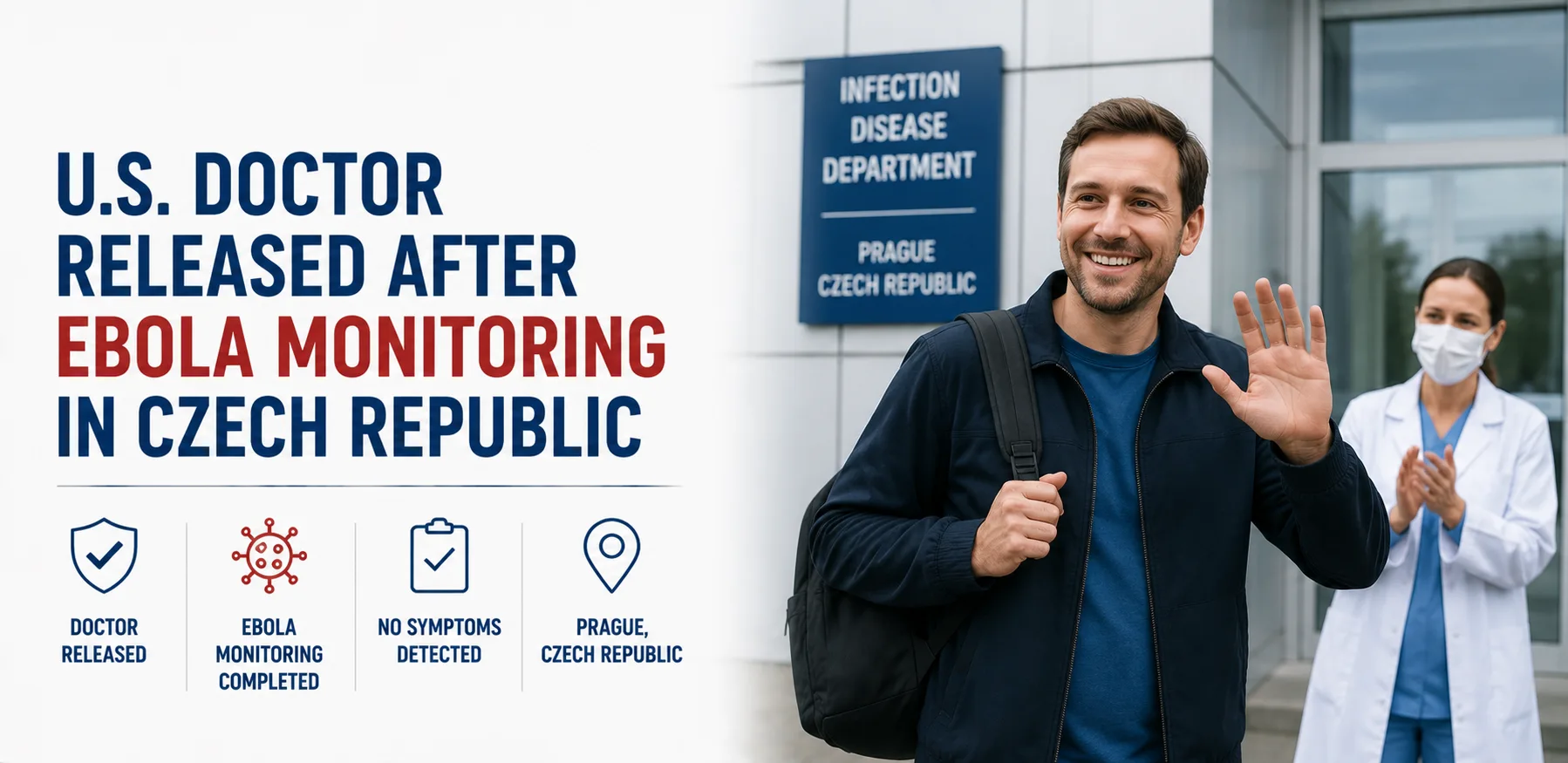
An American physician, Dr. Patrick LaRochelle, has been discharged from Prague's Bulovka University Hospital and cleared to return home after successfully completing a mandatory three-week quarantine. The doctor had been placed in a high-security bio-isolation unit on May 21, 2026, following direct clinical contact with an Ebola-infected patient in East Africa.
The precautionary transfer to the Czech Republic was executed via a specialized medical transport flight following an official request from the U.S. government, leveraging the facility's renowned global expertise in managing highly infectious diseases.
What's changing / Business impact
This successful discharge underscores the clinical and operational viability of international biosecurity networks during active health emergencies. Amid a surging Central and East African outbreak involving the rare Bundibugyo strain, western public health bodies are relying heavily on cross-border logistics partnerships to isolate high-risk medical personnel without disrupting local care infrastructure.
For health systems and humanitarian organizations, these protocols demonstrate how strict regional border controls, re-routed air corridors, and specialized quarantine hubs can successfully mitigate domestic exposure risks while ensuring high-quality, continuous monitoring for frontline clinical staff.
Why this matters
The term "Ebola isolation" frequently triggers widespread public alarm, yet global containment strategies are intentionally built around proactive, asymptomatic monitoring. Dr. LaRochelle remained entirely symptom-free throughout his 21-day incubation stay, proving that strict quarantine frameworks are designed to isolate potential risk variables rather than confirm actual clinical infections.
Maintaining rigorous, transparent data tracking and clinical observation pipelines is vital to stabilizing international supply chains and supporting ongoing medical missions in high-risk zones, reinforcing public trust in institutional containment systems.