U.S. Employer Healthcare Costs Expected to Rise 9.5% in 2027
What's Happening
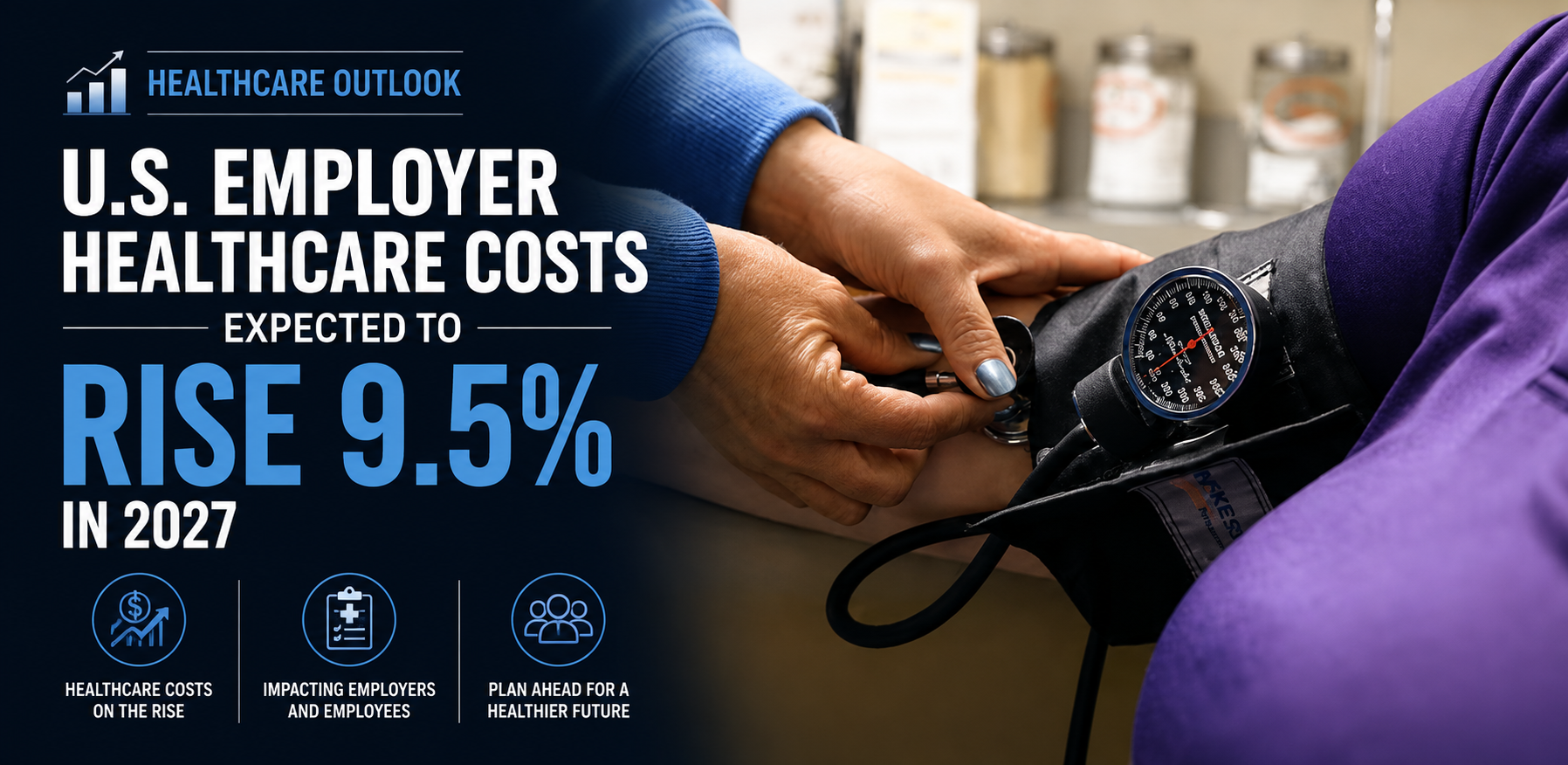
Healthcare costs for U.S. employers are expected to increase 9.5% in 2027, pushing the average annual cost of healthcare benefits above $19,000 per employee, according to insurance broker Aon. This marks the fourth consecutive year of near-double-digit increases, driven by greater healthcare utilization, rising chronic conditions, more high-cost claims, and increasing spending on expensive specialty medicines.
Why Costs Are Rising
Aon points to several primary factors behind the continued cost growth, including increased utilization of medical services across employee populations, a higher prevalence of chronic health conditions, a growing volume of high-cost medical claims, and surging expenditures on specialty and high-priced prescription drugs.
Impact on Employers and Employees
For businesses, rising healthcare expenditures place immediate pressure on compensation and benefits budgets, leading organizations to consider higher employee contributions, plan design adjustments, and expanded preventive-care programs. For workers, these increases frequently translate into higher premiums, deductibles, or out-of-pocket expenses, alongside potential shifts in offered health benefits.
Industry Impact
- Employers: Organizations face mounting pressure to control healthcare spending while preserving competitive, attractive benefits packages to recruit and retain talent.
- Health Insurers: Insurers must actively manage rising utilization and expensive claims while attempting to keep employer-sponsored plans sustainable and affordable.
- Healthcare Providers: Increased utilization can drive higher demand for services, while buyers place greater strategic emphasis on clinical outcomes, value, and overall cost management.
- Pharmaceutical Companies: Growing spending on specialty drugs focuses heightened market attention on pricing structures, utilization management, and the proven value of new advanced therapies.
Looking Ahead
Aon anticipates that healthcare costs will remain elevated as utilization rates, chronic disease prevalence, and specialty-drug spending continue to climb. Employers are expected to heavily prioritize solutions and strategies designed to rein in expenditures without restricting access to necessary clinical care.
Why This Matters
Because employer-sponsored insurance covers a vast majority of Americans, sustained increases in corporate healthcare spending directly impact both business profitability and long-term healthcare affordability for millions of workers, underscoring broader structural challenges across the U.S. healthcare system.
Key Takeaways
- U.S. employer healthcare costs are projected to rise 9.5% in 2027.
- Average annual healthcare costs are anticipated to exceed $19,000 per employee.
- This represents the fourth consecutive year of near-double-digit growth.
- Higher utilization, chronic illnesses, high-cost claims, and specialty drugs are the main drivers.
- Employers and insurers are intensifying their focus on cost-containment strategies.
What This Means for Healthcare Marketers
The projected cost surge drives strong market demand for solutions focusing on cost management, benefits navigation, specialty-drug oversight, preventive care, and employee wellness. Employers, insurers, health navigation firms, pharmacy-benefit organizations, and healthcare technology providers continue investing heavily in tools that demonstrate measurable improvements in cost and utilization. For healthcare marketers, targeting organizations involved in benefits management, cost containment, and corporate health solutions represents high-intent opportunities for strategic B2B engagement and value-driven communications.