What's Happening
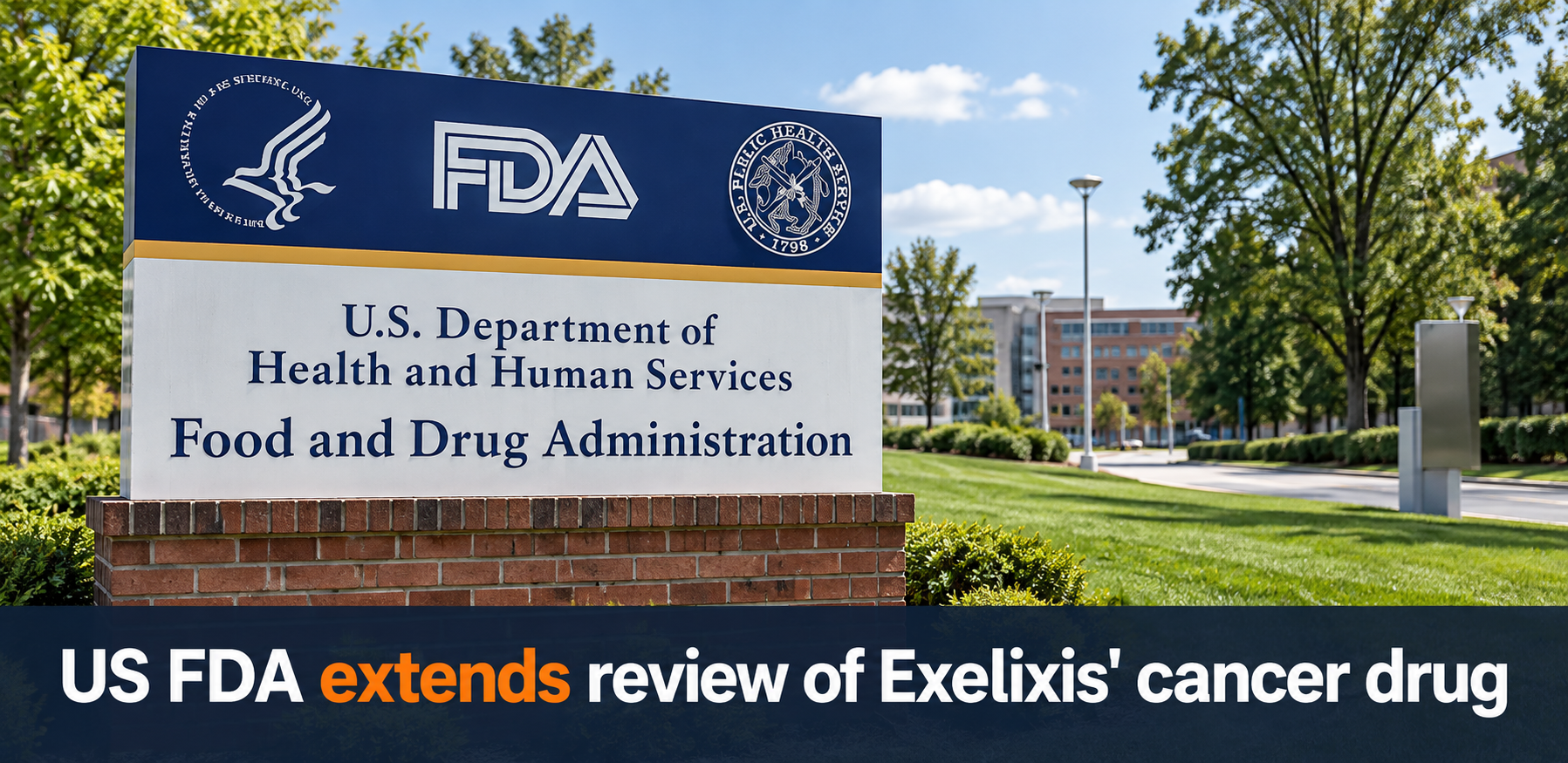
The U.S. Food and Drug Administration (FDA) has extended its review of Exelixis' experimental cancer drug zanzalintinib by three months.
The drug is being developed in combination with Roche's immunotherapy Tecentriq (atezolizumab) for certain adults with metastatic colorectal cancer (mCRC) whose cancer has already been treated with multiple standard therapies.
The FDA was originally expected to make a decision by December 3, 2026. The new regulatory deadline is March 3, 2027. (Reuters)
The extension does not mean the FDA has rejected the drug or determined that it is unsafe or ineffective. Instead, Exelixis submitted updated safety and efficacy information after receiving an information request from the agency. The FDA classified those new materials as a major amendment to the application, which gives regulators additional time to review them. (PublicNow)
Why the FDA Extended the Review
Additional safety and efficacy data triggered the extension
The extension was triggered by additional information requested by the FDA.
Exelixis provided updated safety and efficacy data in response. Because the submission was considered substantial enough to be classified as a major amendment, the FDA extended the review timeline by three months.
This type of extension gives regulators more time to evaluate new information before reaching a final decision. It therefore should not automatically be interpreted as a negative regulatory signal. (Reuters)
What Is Zanzalintinib?
A next-generation targeted oncology drug
Zanzalintinib is an oral tyrosine kinase inhibitor (TKI) designed to interfere with proteins involved in tumor growth and progression.
Exelixis is positioning it as a next-generation oncology drug that could eventually become a major commercial product across several cancer types.
The colorectal cancer application combines zanzalintinib with atezolizumab, an immune checkpoint inhibitor marketed as Tecentriq. The goal is to combine targeted cancer treatment with immunotherapy to improve outcomes for patients whose disease has progressed after earlier treatments. (Reuters)
The Colorectal Cancer Opportunity
Addressing a significant unmet need in late-line treatment
The FDA application covers patients with previously treated metastatic colorectal cancer, particularly those whose tumors are not classified as MSI-high.
These patients have already gone through multiple lines of treatment, including chemotherapy-based regimens, and continue to have a significant unmet need for effective options.
Exelixis estimates that the U.S. market for third-line-and-later metastatic colorectal cancer could represent roughly $1.5 billion in 2026, with approximately 23,000 patients in that treatment setting. (Exelixis, Inc.)
That makes a successful zanzalintinib launch potentially important not only for patients, but also for Exelixis' future growth.
Clinical Trial Results Behind the Application
STELLAR-303 trial outcomes and subgroup analysis
The FDA application is based largely on results from the STELLAR-303 Phase 3 trial.
The study compared zanzalintinib plus atezolizumab with regorafenib, another treatment used for previously treated metastatic colorectal cancer.
In the overall trial population, the combination demonstrated a statistically significant improvement in overall survival compared with regorafenib. The benefit was seen across several prespecified patient groups, including differences in geographic region, RAS status, liver involvement and previous anti-VEGF treatment. (Exelixis, Inc.)
However, the results were more complicated in a specific subgroup.
STELLAR-303 also had a separate primary endpoint looking at patients who did not have active liver metastases. In the final analysis of that subgroup, the combination showed a trend toward longer overall survival, but the result did not reach statistical significance.
Median overall survival was:
- 15.9 months with zanzalintinib plus atezolizumab
- 12.7 months with regorafenib
The hazard ratio was 0.83, with a 95% confidence interval of 0.66 to 1.05 and a p-value of 0.1185. (Exelixis, Inc.)
This means the broader trial result supported the application, while the more narrowly defined subgroup result was less definitive.
Why Zanzalintinib Is Important to Exelixis
Building a second major franchise beyond Cabometyx
Zanzalintinib is particularly important because Exelixis is trying to build a second major oncology franchise beyond its established cancer drug Cabometyx (cabozantinib).
Cabometyx is already an important source of revenue for the company, particularly in kidney cancer and neuroendocrine tumors. In the second quarter of 2026 alone, the Cabometyx franchise generated about $573 million in U.S. net product revenue. (Exelixis, Inc.)
That makes the development of zanzalintinib strategically significant. A successful launch could give Exelixis another major commercial product rather than leaving the company heavily dependent on the existing cabozantinib business.
The company has also been expanding its gastrointestinal oncology sales organization in preparation for potential future zanzalintinib indications. (Exelixis, Inc.)
Zanzalintinib Is Being Studied Beyond Colorectal Cancer
A broad clinical pipeline across multiple solid tumors
The colorectal cancer application is only one part of Exelixis' broader development strategy.
The company is studying zanzalintinib in multiple solid tumors, including:
- Kidney cancer: Exelixis is working with Merck on studies combining zanzalintinib with other cancer treatments for advanced renal cell carcinoma.
- Neuroendocrine tumors: The company is also developing zanzalintinib in neuroendocrine cancers, building on Exelixis' existing oncology expertise.
- Other cancers: Additional development programs are examining zanzalintinib in areas including lung cancer, prostate cancer and recurrent meningioma. Exelixis has described a broader program involving several pivotal studies designed to determine how widely the drug could eventually be used. (Exelixis, Inc.)
This broader pipeline matters because approval in colorectal cancer could provide the first commercial entry point for a drug that Exelixis hopes will eventually serve multiple tumor types.
Market Reaction
Investors react to the delay
Investors reacted negatively to the regulatory delay.
Exelixis shares fell roughly 3.5% after the announcement, reflecting investor concern about the additional waiting period and uncertainty around the eventual FDA decision. (Reuters)
However, the delay has not necessarily changed the long-term view of the drug. Analysts continue to see zanzalintinib as an important potential growth driver for Exelixis, particularly as the company works to expand beyond Cabometyx. (Reuters)
Why This Matters
For colorectal cancer patients, particularly those whose disease has progressed after several therapies, another treatment option could address an important unmet need.
For Exelixis, the stakes are larger. Zanzalintinib is intended to become a major growth engine and potentially a successor to some of the commercial value currently generated by the company's cabozantinib franchise.
The FDA delay creates a three-month wait, but it does not by itself indicate that the drug will fail to win approval. The more important issue is how regulators assess the newly submitted safety and efficacy data alongside the existing clinical evidence.
The case also shows how even strong overall clinical results can involve regulatory complexity when different patient subgroups produce different outcomes.
Looking Ahead
Milestones leading to the March 3, 2027 decision
The next major milestone is the FDA's March 3, 2027 decision date.
Beyond that decision, the success of zanzalintinib will depend on more than simply obtaining approval. Exelixis will need to demonstrate that physicians adopt the treatment, that it can compete effectively against existing colorectal cancer therapies and that additional clinical studies support expansion into other cancers.
The drug's eventual commercial impact could therefore be much larger than its initial colorectal cancer indication.
Key Takeaways
- The FDA extended its review of Exelixis' zanzalintinib application by three months.
- The new FDA decision deadline is March 3, 2027.
- The extension followed Exelixis' submission of updated safety and efficacy information requested by the FDA.
- Zanzalintinib is being reviewed in combination with Tecentriq for certain patients with previously treated metastatic colorectal cancer.
- The Phase 3 STELLAR-303 trial showed a statistically significant overall-survival benefit in the broader study population.
- A separate subgroup of patients without active liver metastases showed a favorable trend, but the result was not statistically significant.
- Zanzalintinib is a major part of Exelixis' strategy to build a second large oncology franchise beyond Cabometyx.
What This Means for Healthcare Marketers
The story highlights how regulatory timing can influence the commercial outlook for a drug even before approval.
For healthcare marketers, the important signals are the size of the eligible patient population, the strength of the clinical evidence, the treatment lines involved and the competitive landscape. A regulatory delay can also shift launch planning, physician education, patient-support programs and market-access timelines.
For zanzalintinib specifically, marketers will need to prepare not only for a potential colorectal cancer launch but also for the possibility that future clinical data expand the product into additional cancer types.