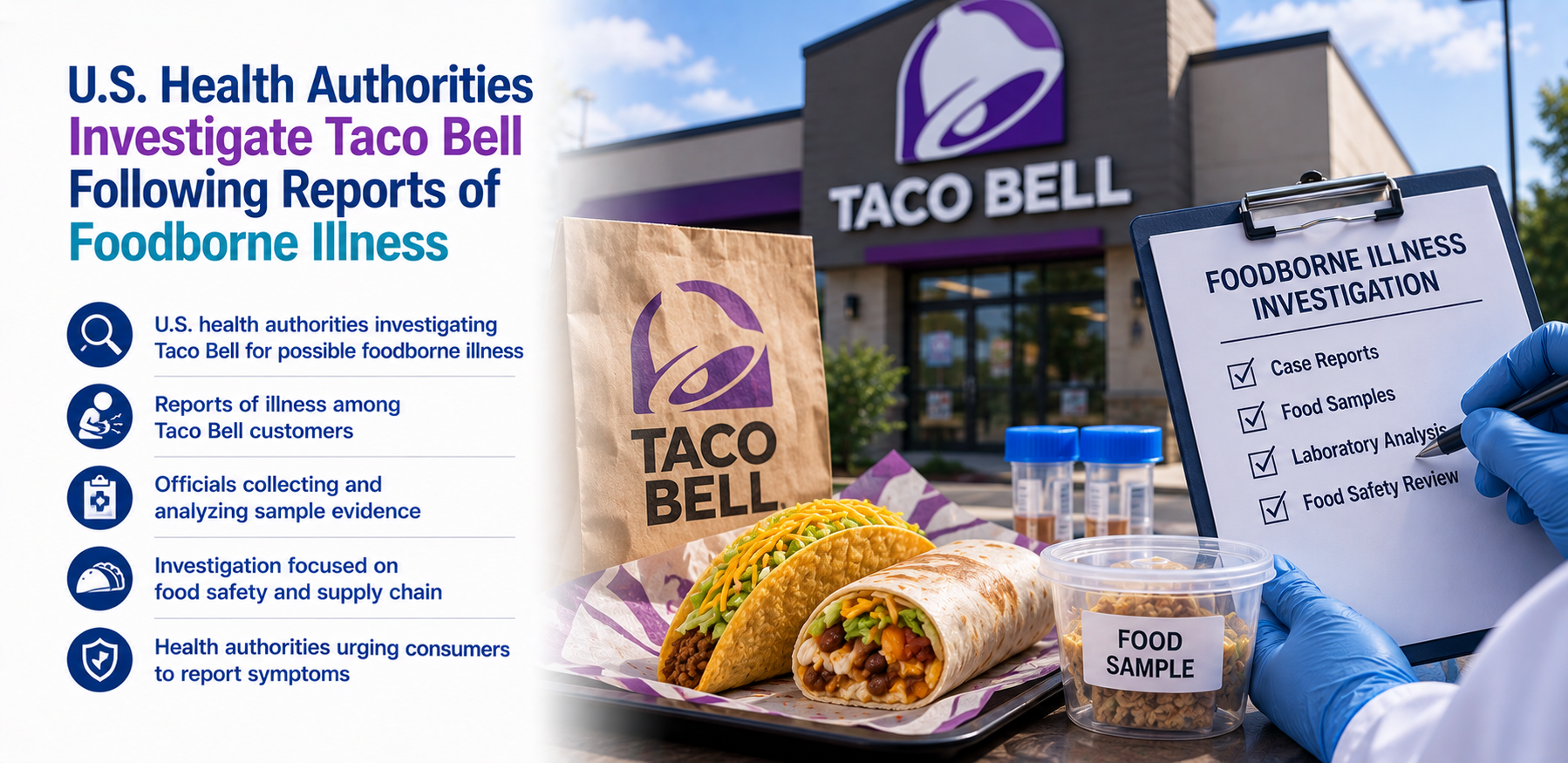
U.S. Health Authorities Investigate Taco Bell Following Reports of Foodborne Illness
What's Happening
U.S. health authorities are investigating reports of illnesses potentially linked to Taco Bell restaurants after several people reported becoming sick. The investigation is in its early stages, and officials are working to determine whether the illnesses are connected to a specific food item, ingredient, supplier, or restaurant location.
Following news of the investigation, shares of Yum! Brands, Taco Bell's parent company, declined as investors reacted to the potential impact of the inquiry. At this stage, health officials have not confirmed the source of the illnesses, the exact cause, or whether a specific Taco Bell product is responsible. The investigation remains ongoing.
How Foodborne Illness Investigations Begin
Public health agencies investigate potential foodborne illness outbreaks whenever multiple people report similar symptoms after eating at the same restaurant or consuming similar foods. Investigators typically begin by:
- Interviewing affected individuals.
- Reviewing medical records.
- Identifying foods consumed before illness.
- Collecting laboratory samples.
- Examining restaurant operations.
- Tracing food suppliers.
These investigations help determine whether illnesses share a common source or occurred independently.
What Causes Foodborne Illness?
Foodborne illnesses can result from contamination by:
- Bacteria such as Salmonella, E. coli, or Listeria.
- Viruses such as norovirus.
- Parasites.
- Chemical contaminants.
- Improper food handling.
- Cross-contamination during preparation.
Contamination may occur at various points throughout the food supply chain, including farming, processing, transportation, storage, or food preparation. Because investigations are still underway, officials have not identified which, if any, of these factors contributed to the reported illnesses.
Common Symptoms
Foodborne illnesses may cause:
- Nausea.
- Vomiting.
- Diarrhea.
- Stomach cramps.
- Fever.
- Fatigue.
- Dehydration.
Symptoms can appear within hours or several days after consuming contaminated food, depending on the specific cause. Most healthy individuals recover without complications, although young children, older adults, pregnant individuals, and people with weakened immune systems may face a higher risk of severe illness.
How Health Authorities Respond
When a potential outbreak is identified, public health agencies work quickly to:
- Confirm reported illnesses.
- Identify common food exposures.
- Conduct laboratory testing.
- Inspect restaurants when necessary.
- Trace ingredients through the supply chain.
- Determine whether recalls or public advisories are needed.
These investigations often involve collaboration between local health departments, state agencies, the U.S. Food and Drug Administration (FDA), and the U.S. Centers for Disease Control and Prevention (CDC).
What Happens If a Source Is Identified?
If investigators determine that a specific product or ingredient caused the illnesses, authorities may:
- Issue a public health advisory.
- Recall contaminated food products.
- Require corrective actions from suppliers.
- Conduct additional inspections.
- Continue monitoring for new cases.
If no common source is found, the investigation may conclude without identifying a definitive cause.
Industry Impact
- Restaurant Chains: Food safety investigations can affect consumer confidence and encourage restaurants to review food handling, supplier oversight, and quality assurance procedures.
- Food Suppliers: Suppliers may undergo additional inspections if investigators identify concerns within the supply chain.
- Public Health Agencies: Health officials continue monitoring reports while working to identify and contain potential outbreaks.
- Consumers: Prompt investigations help identify contamination sources and reduce the risk of additional illnesses.
Why This Matters
Foodborne illness investigations play an essential role in protecting public health by identifying contamination before additional people become sick. Although the Taco Bell investigation remains in its early stages, it demonstrates the importance of rapid surveillance, laboratory testing, and collaboration between healthcare providers, public health agencies, restaurants, and food suppliers.
The outcome of the investigation may lead to improvements in food safety practices if a specific source is identified. Until investigators complete their work, health officials continue emphasizing evidence-based public communication while avoiding conclusions that are not supported by the available data.
Key Takeaways
- U.S. health authorities are investigating reports of illnesses potentially linked to Taco Bell.
- Officials have not yet identified the cause or confirmed that a specific food item is responsible.
- Foodborne illness investigations involve laboratory testing, restaurant inspections, and supply chain tracing.
- Most foodborne illnesses resolve without complications, but some individuals face a greater risk of severe illness.
- The investigation highlights the importance of food safety monitoring and rapid public health response.
What This Means for Healthcare Marketers
The investigation illustrates the critical role of food safety surveillance in protecting public health. Rapid identification of potential outbreaks depends on close coordination among healthcare providers, laboratories, public health agencies, restaurants, and food suppliers. As food supply chains become increasingly complex, early detection and transparent communication are essential for limiting the spread of foodborne illness and maintaining public confidence.
For healthcare marketers, the case reinforces the importance of quality assurance, traceability, and proactive risk management across the food and healthcare industries. Organizations involved in diagnostics, laboratory testing, food safety technologies, and public health surveillance have opportunities to demonstrate how their solutions support faster investigations and improved consumer protection.
For healthcare intelligence teams, foodborne illness investigations provide valuable insight into emerging public health risks and regulatory priorities. Monitoring outbreak investigations, food recalls, laboratory surveillance, and food safety policies can help organizations anticipate trends while strengthening strategies that support population health and food safety.