U.S. Health Department Announces More Than $700 Million to Combat Mental Health and Addiction
What's Happening
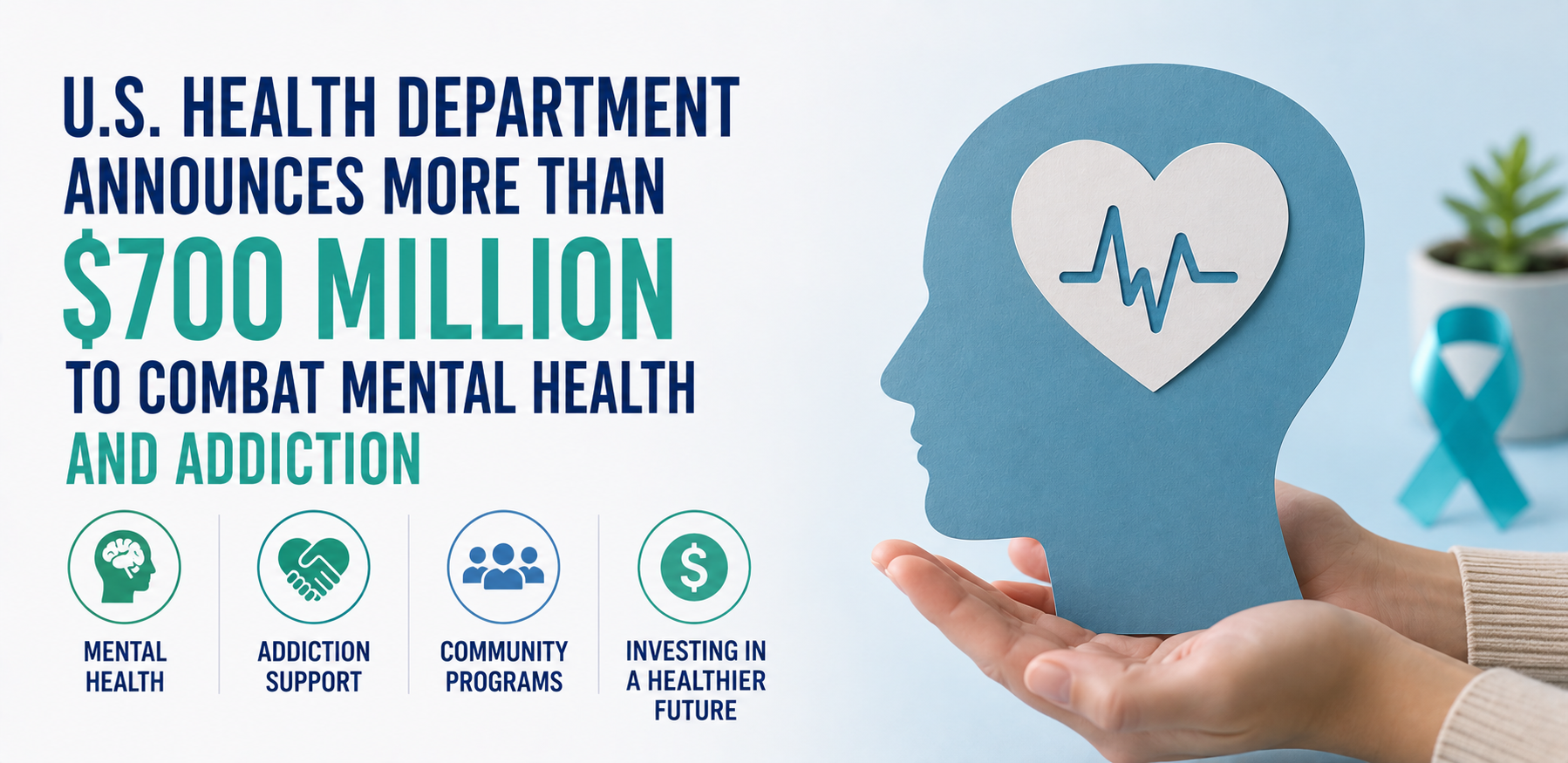
The U.S. Department of Health and Human Services (HHS) announced more than $700 million in funding to support mental health services, substance-use treatment programs, and addiction recovery efforts across the country.
The funding will be distributed through a variety of federal programs designed to expand access to behavioral healthcare, strengthen treatment infrastructure, support community organizations, and improve services for individuals struggling with mental illness or substance-use disorders.
The announcement comes at a time when healthcare leaders, policymakers, and providers continue grappling with rising demand for mental health services following years of increased psychological stress, substance-use challenges, workforce shortages, and growing awareness of behavioral health needs.
Federal officials said the investment is intended to help states, healthcare providers, and community organizations expand access to care while addressing gaps that continue to leave many Americans without timely treatment.
Why Mental Health Remains a Major Healthcare Challenge
Mental health has become one of the most significant public health issues in the United States.
Millions of Americans experience conditions such as:
- Depression
- Anxiety disorders
- Bipolar disorder
- Post-traumatic stress disorder (PTSD)
- Substance-use disorders
- Serious mental illnesses
While awareness has improved dramatically over the past decade, access to care has not always kept pace with demand.
Many patients still face:
- Long wait times
- Provider shortages
- Insurance barriers
- Geographic access challenges
- Financial constraints
In rural communities, shortages can be especially severe. Some counties have little or no access to psychiatrists, psychologists, or addiction specialists.
As a result, many patients receive delayed treatment or rely on primary care providers who may already be overwhelmed with other healthcare responsibilities.
The Continuing Addiction Crisis
A major portion of the funding is expected to support addiction treatment and recovery programs.
Although opioid overdose deaths have shown signs of stabilization in some areas, substance-use disorders remain a major public health concern.
The United States continues to face challenges involving:
- Opioid addiction
- Synthetic opioids such as fentanyl
- Methamphetamine use
- Alcohol-use disorders
- Polysubstance abuse
Healthcare leaders increasingly view addiction as a chronic medical condition rather than simply a behavioral issue.
This shift has encouraged greater investment in:
- Medication-assisted treatment
- Recovery support services
- Community outreach
- Harm-reduction programs
- Behavioral health integration
Federal funding plays a significant role because many treatment programs depend on government support to remain operational.
Why Behavioral Health Funding Is Receiving More Attention
Historically, mental health and addiction treatment often received less funding than other areas of healthcare.
Over the past several years, that has begun to change.
Several factors have increased attention on behavioral health: First, demand for services has grown substantially. Second, employers have become more focused on workforce mental health. Third, healthcare systems increasingly recognize the connection between mental health and physical health outcomes.
Research consistently shows that untreated mental health conditions can contribute to:
- Higher healthcare costs
- Poorer chronic disease management
- Increased hospital utilization
- Reduced quality of life
As a result, behavioral health is increasingly viewed as a core component of healthcare rather than a separate category.
Where the Money Could Have the Biggest Impact
While individual programs will determine how funds are allocated, healthcare experts generally believe investments are most impactful when they address both access and capacity challenges.
Potential areas of focus include:
- Workforce Expansion: One of the biggest barriers to care is a shortage of qualified professionals. Funding can support training, recruitment, retention, and workforce development efforts.
- Community-Based Care: Many patients receive services through community organizations rather than large hospital systems. Federal grants often help these programs expand capacity and reach underserved populations.
- Crisis Services: Communities continue investing in crisis-response programs designed to provide alternatives to emergency departments and law enforcement responses during behavioral health emergencies.
- Addiction Treatment: Expanded access to evidence-based addiction treatment remains a major priority across many states.
- Youth Mental Health: Concerns about adolescent mental health have increased substantially in recent years, making youth-focused programs another likely area of investment.
The Business Side of Behavioral Health
The announcement also reflects broader changes within the healthcare market.
Behavioral health has become one of the fastest-growing sectors in healthcare investment.
Health systems, insurers, private-equity firms, and digital-health companies have all increased their focus on:
- Virtual mental health services
- Addiction treatment
- Integrated care models
- Behavioral health technology
- Workforce solutions
Many healthcare organizations now view behavioral health as both a clinical necessity and a strategic growth area.
The federal funding announcement may further accelerate investment by helping providers expand services and improve infrastructure.
Why This Matters
The funding announcement reflects a larger shift in how healthcare leaders think about mental health and addiction.
For decades, behavioral health was often treated separately from the rest of healthcare.
Today, many providers and policymakers view mental health as essential to overall health outcomes.
The investment also acknowledges a reality that many patients experience firsthand: demand for behavioral healthcare frequently exceeds available capacity.
Addressing that gap requires more than awareness campaigns. It requires funding, workforce development, treatment infrastructure, and long-term commitment.
While $700 million alone will not solve every challenge facing behavioral healthcare, it represents another step toward expanding access and strengthening the system.
Key Takeaways
- HHS announced more than $700 million for mental health and addiction programs.
- The funding will support treatment, recovery, workforce development, and community-based services.
- Behavioral health demand continues to exceed available capacity in many areas.
- Addiction treatment remains a major public health priority.
- Mental health is increasingly viewed as a core component of overall healthcare.
What This Means for Healthcare Marketers
This announcement signals continued growth in one of healthcare's most active investment areas.
For healthcare marketers, behavioral health remains a sector where demand, funding, and strategic attention are all moving in the same direction. Organizations providing behavioral health services, workforce solutions, telehealth platforms, addiction treatment programs, analytics tools, and community-health resources may benefit from increased funding opportunities.
The announcement also creates new demand signals. Healthcare providers receiving federal grants often expand programs, hire staff, adopt new technologies, and seek partnerships to support implementation efforts.
For healthcare intelligence teams, tracking grant recipients, behavioral health expansion plans, workforce initiatives, and addiction-treatment investments may reveal emerging opportunities months before broader market activity becomes visible.
More broadly, the story reflects a healthcare industry that increasingly recognizes mental health and addiction treatment as essential healthcare services rather than secondary support functions. That shift is likely to influence funding priorities, purchasing decisions, and healthcare strategy for years to come.