U.S. Launches Pilot Program to Strengthen Domestic Production of Veterinary Medicines
What's Happening
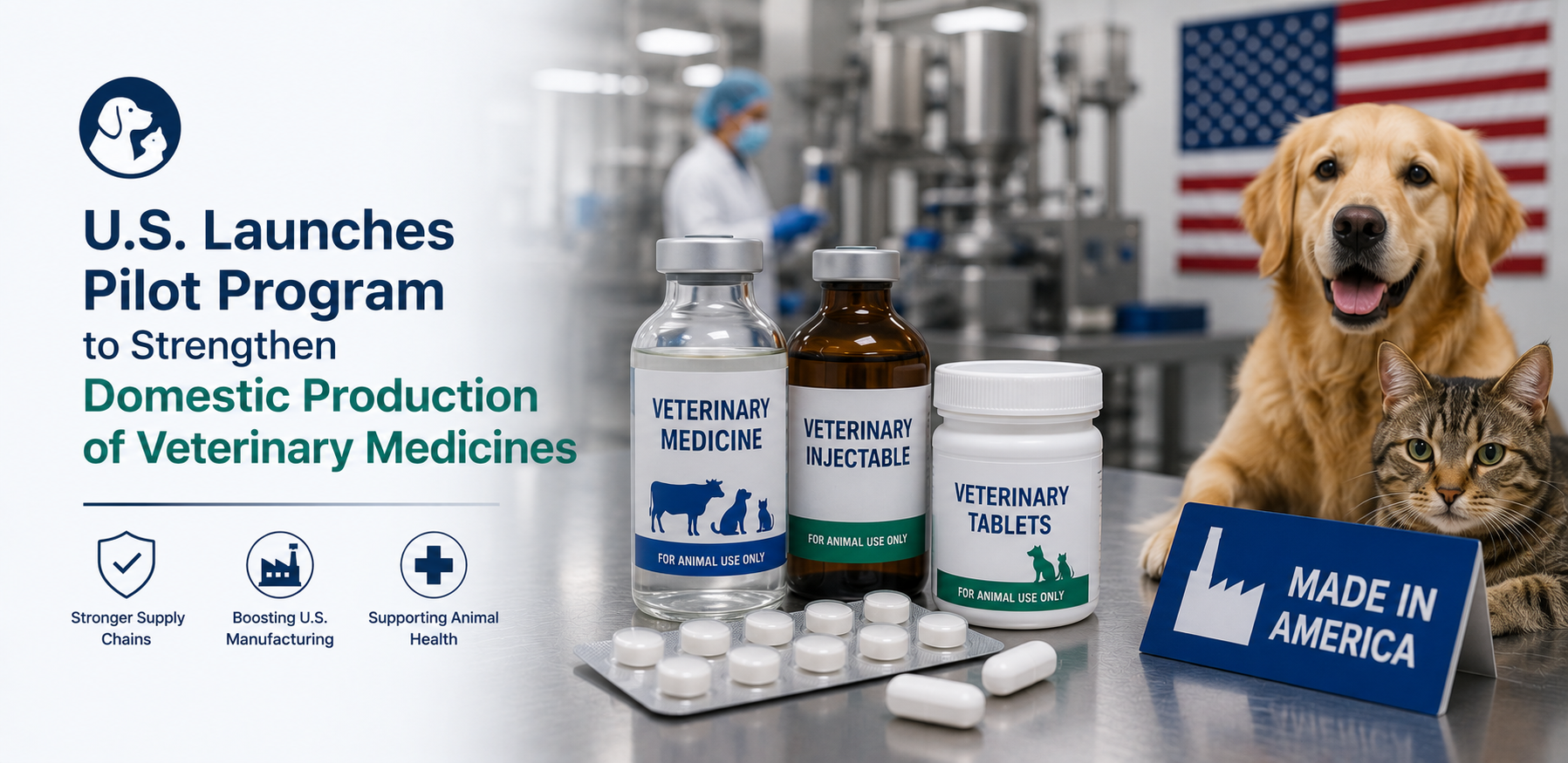
The U.S. Department of Health and Human Services (HHS) has launched a new pilot program aimed at expanding the domestic production of veterinary medicines, marking another step in the Trump administration's broader effort to reduce the country's dependence on foreign pharmaceutical manufacturing.
The initiative will allow selected manufacturers of veterinary drugs to receive faster regulatory support and closer collaboration with the U.S. Food and Drug Administration (FDA) as they establish or expand production facilities in the United States. The administration says the program is intended to improve the resilience of the nation's veterinary drug supply chain while encouraging more pharmaceutical manufacturing to take place domestically.
Although the program focuses on animal medicines, officials say it could also serve as a model for strengthening pharmaceutical manufacturing more broadly.
Why Focus on Veterinary Medicines?
Veterinary medicines play a critical role in protecting both animal health and public health.
These medicines are used to:
- Treat companion animals such as dogs and cats.
- Protect livestock from infectious diseases.
- Prevent disease outbreaks in food-producing animals.
- Support food safety and agricultural productivity.
- Control diseases that can spread between animals and humans.
Many veterinary drugs are manufactured through complex international supply chains, leaving the United States vulnerable to shortages if production is disrupted by natural disasters, trade disputes, pandemics, or geopolitical events.
The administration says increasing domestic manufacturing capacity will help ensure a more reliable supply of essential animal medicines.
What Does the Pilot Program Include?
Under the pilot program, eligible manufacturers will receive enhanced support during the regulatory process.
According to federal officials, participating companies may benefit from:
- Earlier engagement with FDA reviewers.
- Faster communication throughout product development.
- Streamlined regulatory guidance.
- Assistance in resolving manufacturing questions.
- Greater coordination during facility development.
The program is designed to help manufacturers navigate regulatory requirements more efficiently while maintaining FDA standards for product quality, safety, and effectiveness.
Why Domestic Manufacturing Has Become a Priority
The COVID-19 pandemic exposed vulnerabilities in global pharmaceutical supply chains, prompting policymakers to reevaluate where essential medicines are produced.
Since then, the U.S. government has increasingly emphasized:
- Expanding domestic manufacturing.
- Diversifying supply chains.
- Reducing reliance on foreign production.
- Improving preparedness for future emergencies.
While much of the public discussion has focused on medicines for humans, veterinary pharmaceuticals are also considered strategically important because disruptions can affect food production, animal welfare, and public health.
The veterinary drug initiative complements other federal efforts aimed at strengthening domestic pharmaceutical manufacturing across multiple sectors.
The FDA's Role
The FDA's Center for Veterinary Medicine regulates animal drugs marketed in the United States.
Before approval, manufacturers must demonstrate that veterinary medicines are:
- Safe for the intended animal species.
- Effective for their approved use.
- Manufactured according to quality standards.
- Properly labeled.
- Produced in compliant facilities.
The pilot program does not reduce these regulatory requirements. Instead, it is intended to make the review process more efficient by increasing collaboration between regulators and manufacturers during product development.
Potential Benefits
- Improved Supply Chain Stability: Domestic production may reduce the risk of shortages caused by international disruptions.
- Faster Regulatory Processes: Earlier communication between manufacturers and regulators could help companies bring products to market more efficiently.
- Greater National Preparedness: Expanding U.S. manufacturing capacity could strengthen the country's ability to respond to future public health emergencies affecting animals or agriculture.
- Economic Investment: The initiative may encourage additional investment in pharmaceutical manufacturing facilities, equipment, and skilled jobs within the United States.
Industry Impact
- Veterinary Pharmaceutical Companies: Manufacturers may gain incentives to expand U.S.-based production while benefiting from closer regulatory collaboration.
- Animal Healthcare Providers: Veterinarians could ultimately benefit from more stable supplies of essential medicines if domestic manufacturing capacity increases.
- Agriculture and Livestock: Reliable access to veterinary medicines supports disease prevention, animal welfare, and food production across the agricultural sector.
- Federal Regulators: The pilot program allows regulators to evaluate whether increased collaboration can accelerate development without compromising scientific review standards.
Why This Matters
Although veterinary medicines often receive less public attention than human pharmaceuticals, they are an essential component of both healthcare and food security.
The launch of this pilot program reflects a broader shift in U.S. policy toward treating pharmaceutical manufacturing as a matter of national resilience. By encouraging more veterinary drug production within the United States, policymakers hope to reduce supply chain vulnerabilities while ensuring continued access to medicines that protect animal health and support the agricultural economy.
The initiative may also provide valuable lessons for future efforts to strengthen domestic manufacturing of human medicines, particularly as governments continue seeking ways to reduce dependence on global pharmaceutical supply chains.
Key Takeaways
- HHS has launched a pilot program to encourage domestic production of veterinary medicines in the United States.
- Participating manufacturers will receive enhanced FDA engagement and regulatory support during product development.
- The initiative aims to strengthen supply chain resilience and reduce reliance on foreign pharmaceutical manufacturing.
- The program focuses on veterinary medicines but could inform future domestic manufacturing initiatives for human pharmaceuticals.
- Regulatory standards for safety, quality, and effectiveness remain unchanged despite the streamlined support offered through the pilot.
What This Means for Healthcare Marketers
The new pilot program reflects a growing emphasis on supply chain resilience and domestic pharmaceutical manufacturing across the healthcare ecosystem. While the initiative focuses on veterinary medicines, it signals broader government interest in strengthening critical manufacturing capabilities through regulatory collaboration rather than reducing scientific standards.
For healthcare marketers, the announcement highlights increasing demand for solutions that support pharmaceutical manufacturing, regulatory compliance, quality management, and supply chain modernization. Companies providing manufacturing technologies, automation, regulatory software, and production services may find new opportunities as manufacturers expand U.S.-based operations.
For healthcare intelligence teams, the program offers an early indication of future federal priorities in pharmaceutical policy. Tracking domestic manufacturing initiatives, regulatory pilot programs, and government investments can help organizations anticipate emerging opportunities across both animal and human healthcare markets.