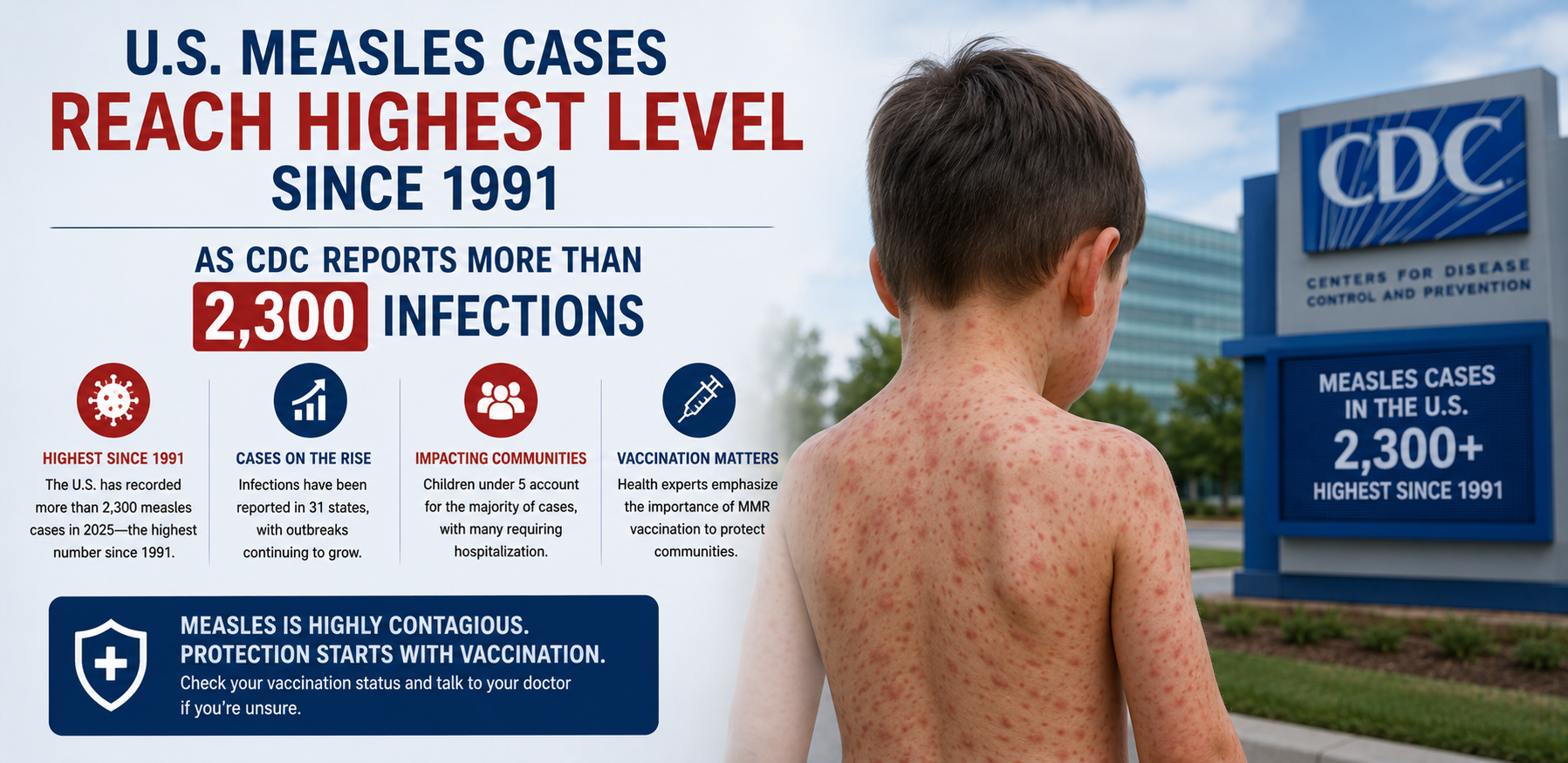
U.S. Measles Cases Reach Highest Level Since 1991 as CDC Reports More Than 2,300 Infections
What's Happening
The United States has recorded 2,318 confirmed measles cases so far in 2026, surpassing the 2,289 cases reported during all of 2025 and marking the highest annual total since 1991, according to the U.S. Centers for Disease Control and Prevention (CDC). The milestone comes with several months still remaining in the year, indicating that the outbreak continues to expand.
The CDC reported that 2,302 cases occurred across 45 U.S. jurisdictions, while 16 cases were identified among international visitors. The agency has also documented 35 measles outbreaks so far this year.
The resurgence represents one of the most significant public health challenges the United States has faced since measles was declared eliminated in 2000, raising concerns among healthcare professionals about declining vaccination rates, increasing community transmission, and the potential loss of the country's measles elimination status.
Understanding Measles
Measles is one of the most contagious infectious diseases known.
The virus spreads through respiratory droplets when an infected person coughs, sneezes, or even breathes. Because the virus can remain suspended in the air for up to two hours after an infected individual leaves a room, people can become infected without direct contact.
Symptoms typically begin with:
- High fever.
- Cough.
- Runny nose.
- Red, watery eyes.
Several days later, patients usually develop the disease's characteristic red rash that spreads from the face to the rest of the body.
Although many people recover completely, measles can cause serious complications, particularly among young children, pregnant women, and individuals with weakened immune systems.
Potential complications include:
- Pneumonia.
- Ear infections.
- Severe dehydration.
- Brain inflammation (encephalitis).
- Permanent neurological damage.
- Death in severe cases.
Because of its extreme contagiousness, even small declines in vaccination coverage can allow outbreaks to spread rapidly through communities.
Why Cases Are Increasing
Public health experts point to several factors contributing to the current resurgence.
Declining Vaccination Rates
The most significant factor is reduced childhood vaccination coverage. The measles, mumps, and rubella (MMR) vaccine provides excellent protection after two doses. However, herd immunity requires approximately 95% vaccination coverage to prevent sustained community transmission. Recent CDC data show U.S. kindergarten vaccination rates have fallen to 92.5%, leaving hundreds of thousands of children without adequate protection.
Larger Community Outbreaks
Several large outbreaks have fueled the national increase. South Carolina experienced one of the country's largest measles outbreaks in decades, while additional outbreaks continue in states including Utah, Virginia, Pennsylvania, and Arizona. These clusters account for a substantial share of total infections reported this year.
International Travel
Measles remains common in many parts of the world. International travel allows infected individuals to introduce the virus into communities where vaccination coverage has declined, increasing the likelihood of sustained transmission.
Localized Vaccine Gaps
Even when national vaccination rates appear relatively high, localized communities with lower immunization rates can become hotspots for rapid disease spread. Public health officials emphasize that outbreaks often begin in these under-vaccinated populations before spreading more broadly.
Why Measles Elimination Is at Risk
The United States achieved measles elimination status in 2000, meaning the virus was no longer spreading continuously within the country. This milestone was made possible through widespread vaccination and strong public health surveillance.
However, elimination does not mean measles disappeared entirely. Imported cases continue to occur each year through international travel. The difference is that outbreaks are typically contained before sustained transmission becomes established.
With multiple prolonged outbreaks occurring simultaneously, international health officials are expected to review whether the United States continues to meet the criteria for measles elimination later this year. Losing elimination status would represent a significant setback for U.S. public health and signal that endemic transmission has returned after more than two decades.
Why Vaccination Remains Critical
The MMR vaccine remains the most effective tool for preventing measles. Two doses provide approximately 97% protection against infection, while widespread vaccination also protects individuals who cannot receive vaccines because of age or certain medical conditions.
High vaccination coverage produces community immunity by reducing opportunities for the virus to spread. When vaccination rates decline:
- Outbreaks become more frequent.
- Healthcare systems face additional strain.
- Vulnerable populations face greater risk.
- Public health agencies must devote significant resources to outbreak investigation, contact tracing, and vaccination campaigns.
The current resurgence illustrates how quickly highly contagious diseases can return when community immunity weakens.
Industry Impact
- Healthcare Providers: Hospitals, pediatric practices, emergency departments, and urgent care centers are seeing increased demand for measles testing, diagnosis, isolation procedures, and vaccination services. Clinicians must remain alert for symptoms, particularly among unvaccinated patients and recent international travelers.
- Public Health Agencies: State and local health departments continue conducting extensive contact tracing, outbreak investigations, vaccination clinics, and public education campaigns. These activities require significant personnel and financial resources.
- Health Systems: Healthcare organizations are strengthening infection prevention protocols to reduce the risk of transmission within hospitals and outpatient facilities. Isolation procedures and rapid identification of suspected cases remain essential components of outbreak response.
- Vaccine Manufacturers: Continued outbreaks may increase demand for MMR vaccines as public health agencies expand immunization campaigns and encourage catch-up vaccinations among under-immunized populations.
Looking Ahead
Public health experts expect additional measles cases to be reported throughout the remainder of the year. Because measles spreads rapidly among susceptible populations, controlling future outbreaks will depend on:
- Increasing routine childhood vaccination.
- Expanding catch-up immunization programs.
- Rapid identification of new cases.
- Effective contact tracing.
- Continued public education regarding vaccine safety and effectiveness.
The CDC and state health departments will continue monitoring outbreaks while working to prevent further community transmission. The experience also serves as a reminder that diseases once considered largely controlled can quickly re-emerge if vaccination coverage declines.
Why This Matters
The current measles resurgence extends beyond infectious disease surveillance. It highlights the critical importance of preventive healthcare, routine immunization, public trust in vaccination programs, and resilient public health infrastructure.
Healthcare organizations must remain prepared to respond to vaccine-preventable diseases while balancing routine patient care with outbreak management. For policymakers, providers, and healthcare leaders, the outbreak demonstrates that maintaining high vaccination rates is essential not only for protecting individual patients but also for preserving community health and preventing avoidable healthcare costs.
Key Takeaways
- The United States has recorded 2,318 confirmed measles cases in 2026, exceeding the total for all of 2025 and marking the highest annual count since 1991.
- The CDC has identified 35 outbreaks across 45 jurisdictions this year.
- Declining MMR vaccination coverage is considered a major contributor to the resurgence.
- The United States may face review of its measles elimination status later this year if sustained transmission continues.
- Public health officials continue emphasizing vaccination as the most effective strategy for preventing future outbreaks.
What This Means for Healthcare Marketers
The rise in measles cases underscores the growing importance of population health, preventive care, and public health preparedness. Healthcare organizations involved in pediatrics, infectious disease, vaccination programs, diagnostics, healthcare IT, and community outreach are likely to increase investments in patient engagement, surveillance, and education initiatives. For healthcare marketers, the resurgence highlights opportunities to support providers and health systems with evidence-based educational content, vaccination awareness campaigns, and technologies that improve disease surveillance, immunization tracking, and outbreak response.