
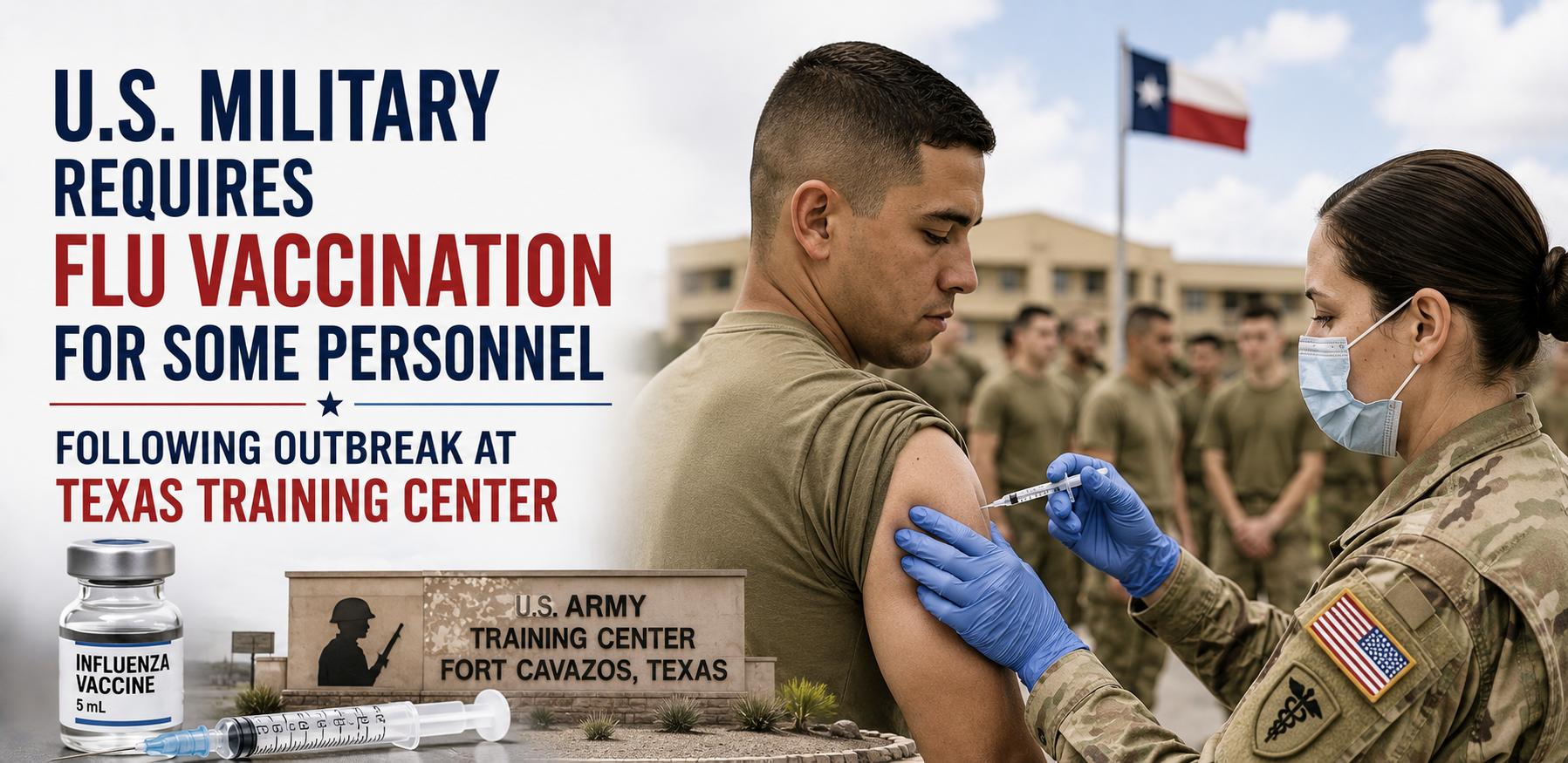
U.S. Military Requires Flu Vaccination for Some Personnel Following Outbreak at Texas Training Center
What's Happening
The U.S. military has ordered influenza vaccinations for certain service members after an outbreak of flu cases at a training center in Texas raised concerns about the spread of respiratory illness among military personnel.
The outbreak affected recruits and trainees living and working in close quarters, creating conditions that can allow infectious diseases to spread quickly. Military officials said the vaccination requirement is intended to contain the outbreak, protect personnel, and maintain operational readiness.
While seasonal flu vaccines are already widely recommended across the military, the latest action targets individuals considered to be at increased risk because of their location or exposure.
The decision highlights how even common illnesses such as influenza can create significant challenges in environments where large groups of people live, train, and work together.
Why Influenza Remains a Serious Public Health Concern
Influenza is often viewed as a routine seasonal illness, but it continues to cause substantial health and economic burdens every year.
The virus can lead to:
- Fever
- Cough
- Sore throat
- Fatigue
- Muscle aches
- Respiratory complications
Although many people recover within days or weeks, flu infections can become serious, particularly among vulnerable populations.
Complications may include:
- Pneumonia
- Hospitalization
- Worsening of chronic conditions
- Respiratory failure in severe cases
Public health officials continue to encourage vaccination because influenza remains one of the most common vaccine-preventable diseases.
Why Military Settings Are Vulnerable to Outbreaks
Military training facilities present unique public health challenges.
Many recruits live in shared housing, eat in communal dining facilities, and participate in group activities that involve close physical interaction.
These conditions can make it easier for respiratory viruses to spread.
Historically, military installations have experienced outbreaks involving:
- Influenza
- COVID-19
- Adenoviruses
- Meningococcal disease
- Other infectious illnesses
As a result, disease prevention has long been a critical component of military healthcare operations.
Vaccination programs, surveillance systems, and outbreak response protocols are routinely used to reduce health risks among service members.
Why Vaccination Is Often Used During Outbreaks
Vaccination remains one of the most effective tools for preventing influenza infections and reducing severe illness.
Even when vaccines do not completely prevent infection, they often help reduce:
- Disease severity
- Hospitalizations
- Medical complications
- Transmission rates
During outbreaks, targeted vaccination efforts can help slow the spread of disease and protect individuals who have not yet been exposed.
Military health officials frequently rely on vaccination campaigns because maintaining a healthy force is essential for operational readiness.
Illness-related disruptions can affect training schedules, staffing levels, and mission preparedness.
The Role of Public Health Surveillance
The military operates extensive disease surveillance systems that monitor health trends among service members.
These systems help officials:
- Detect outbreaks early
- Track disease spread
- Identify high-risk populations
- Evaluate intervention strategies
Surveillance programs became especially important during the COVID-19 pandemic and continue to play a key role in managing infectious disease risks.
When unusual clusters of illness are detected, public health teams can rapidly implement measures such as testing, isolation, vaccination, and treatment.
The Texas outbreak demonstrates how surveillance systems help guide public health decisions in real time.
Why Workforce Health Matters
The military's response reflects a broader principle that applies across many industries: workforce health directly affects organizational performance.
Large employers increasingly invest in:
- Vaccination programs
- Wellness initiatives
- Disease prevention efforts
- Occupational health services
The goal is not only to protect employees but also to minimize disruptions caused by illness.
Healthcare systems, schools, manufacturing facilities, and other organizations often face similar challenges when infectious diseases spread through large populations.
As a result, outbreak preparedness remains an important aspect of workforce management.
The Ongoing Importance of Influenza Vaccination
Despite the attention given to newer infectious disease threats, influenza continues to be a major focus of public health planning.
Seasonal flu outbreaks can strain healthcare systems by increasing:
- Emergency department visits
- Hospital admissions
- Workforce absenteeism
- Healthcare costs
Vaccination remains one of the most widely used preventive measures available.
Health experts generally agree that maintaining strong vaccination coverage is important for reducing the overall impact of influenza each year.
The military's decision reinforces the continued importance of these efforts.
Industry Impact
- Military Healthcare Systems: Officials continue using surveillance, vaccination, and prevention strategies to maintain force readiness.
- Public Health Agencies: The outbreak highlights the importance of ongoing influenza monitoring and response efforts.
- Employers: Organizations may view the situation as a reminder of the value of workplace health programs.
- Healthcare Providers: Clinicians continue encouraging vaccination as a key preventive strategy against seasonal influenza.
Why This Matters
The outbreak serves as a reminder that common infectious diseases can still create significant operational and public health challenges.
While influenza is often overshadowed by newer health threats, it remains capable of causing widespread illness and disrupting organizations that depend on healthy workforces.
The military's response demonstrates how institutions use vaccination, surveillance, and preventive health measures to manage these risks.
As public health systems continue preparing for future disease outbreaks, influenza prevention remains a fundamental component of healthcare preparedness.
Key Takeaways
- The U.S. military required flu vaccinations for certain personnel following an outbreak at a Texas training center.
- Influenza continues to be a significant public health concern despite being a familiar seasonal illness.
- Military environments can be particularly vulnerable to infectious disease outbreaks because of close living conditions.
- Vaccination remains one of the most effective tools for reducing flu-related illness and complications.
- The response highlights the importance of disease surveillance and outbreak preparedness.
What This Means for Healthcare Marketers
This story underscores the continued importance of infectious disease prevention and workforce health management.
For healthcare marketers, influenza remains a major area of healthcare spending and public health activity despite the emergence of newer infectious disease threats. Vaccines, diagnostics, surveillance technologies, occupational health services, and population health programs all play important roles in managing seasonal disease risks.
The military's response also demonstrates the growing value of proactive health strategies. Organizations increasingly recognize that prevention is often more effective and less costly than responding to widespread illness after it occurs.
For healthcare intelligence teams, outbreak responses can provide insight into evolving public health priorities, vaccination trends, and preparedness investments. Monitoring these developments may help organizations identify future opportunities related to disease prevention, healthcare delivery, and workforce health management.
More broadly, the situation highlights how maintaining public health readiness requires continuous attention to both emerging threats and long-standing diseases such as influenza that continue to affect millions of people each year.