U.S. Nearly Doubles Financial Commitment to Global Ebola Response
What's Happening
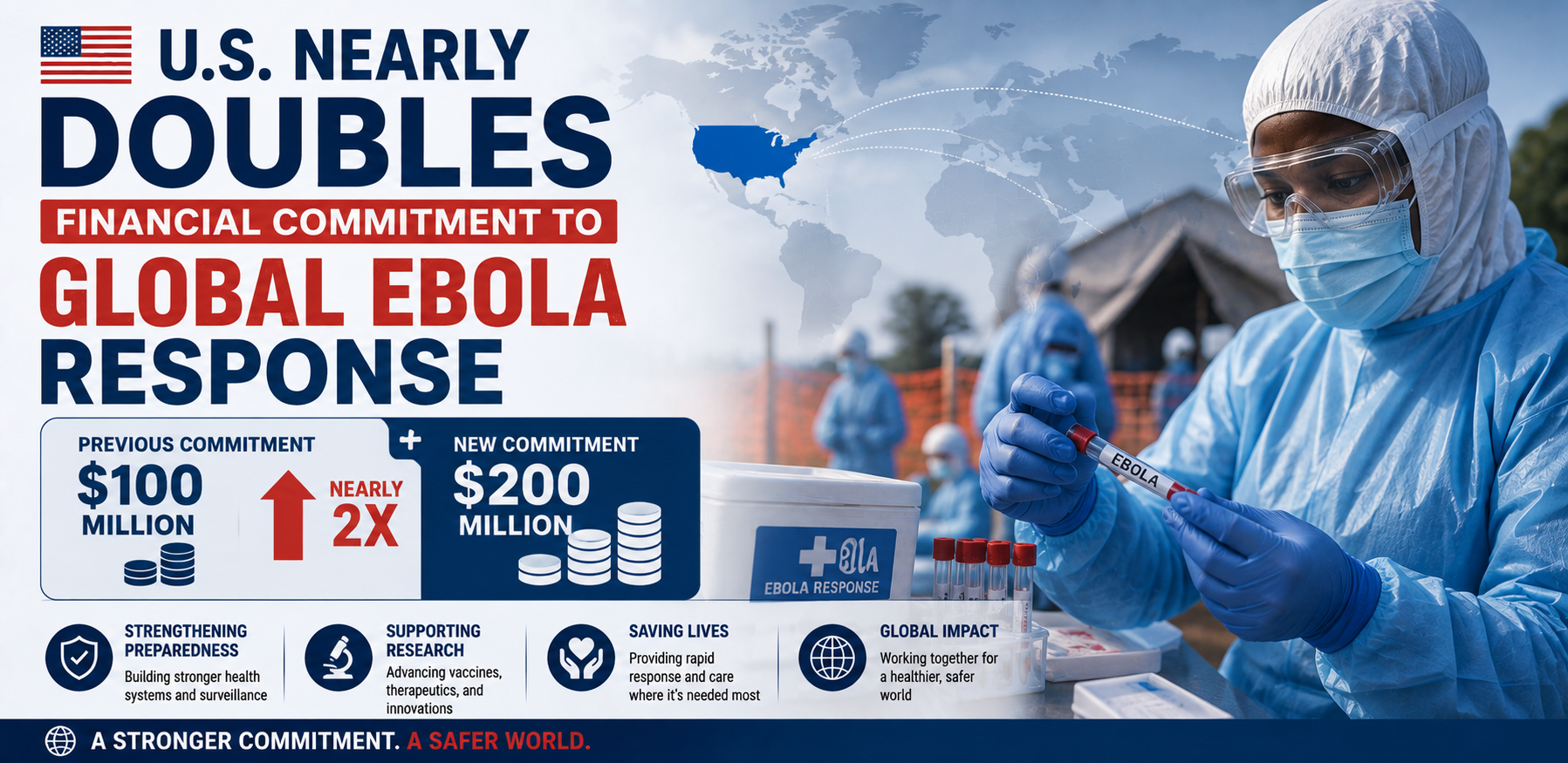
The United States has announced that it will nearly double its financial commitment to the global Ebola response, increasing support for efforts to contain outbreaks and strengthen public health systems in affected regions.
The additional funding will help support disease surveillance, laboratory testing, treatment, vaccination efforts, and emergency response activities aimed at limiting the spread of the virus. The announcement comes as health officials continue monitoring Ebola activity and emphasize the importance of rapid international coordination to prevent larger outbreaks.
The increased investment reflects the U.S. government's continued commitment to global health security and preparedness against emerging infectious diseases.
Understanding Ebola
Ebola virus disease is a severe and often life-threatening illness caused by infection with the Ebola virus.
The virus spreads through direct contact with:
- Blood or bodily fluids of infected individuals.
- Contaminated medical equipment.
- Infected animals.
- Surfaces contaminated with the virus.
Symptoms may include:
- Fever.
- Severe headache.
- Muscle pain.
- Vomiting.
- Diarrhea.
- Internal and external bleeding in severe cases.
Rapid diagnosis, isolation, and supportive medical care are essential for controlling outbreaks.
How the Funding Will Help
The expanded U.S. commitment is expected to strengthen multiple areas of outbreak response, including:
- Disease surveillance.
- Laboratory diagnostics.
- Vaccination campaigns.
- Treatment and patient care.
- Healthcare worker training.
- Emergency response coordination.
Strengthening these capabilities helps detect outbreaks earlier and reduces the risk of wider international spread.
Industry Impact
- Public Health Agencies: The increased funding supports faster outbreak detection, stronger surveillance systems, and improved emergency preparedness.
- Healthcare Providers: Healthcare workers responding to Ebola outbreaks will benefit from additional resources, training, and medical supplies.
- Vaccine and Biotechnology Companies: Continued investment in Ebola preparedness supports research into vaccines, therapeutics, and diagnostic technologies for emerging infectious diseases.
- Global Health Organizations: The funding strengthens international collaboration between governments, public health agencies, and humanitarian organizations working to contain Ebola outbreaks.
Looking Ahead
Public health officials will continue monitoring Ebola outbreaks while expanding surveillance and response efforts in high-risk regions.
The increased funding is expected to improve preparedness for future outbreaks while supporting ongoing vaccine research, laboratory capacity, and rapid response infrastructure.
Global cooperation will remain essential for preventing localized outbreaks from becoming larger international public health emergencies.
Why This Matters
Ebola outbreaks remain a significant global public health concern despite being relatively rare.
Investing in outbreak preparedness, surveillance, and rapid response helps protect both affected communities and the broader global population from emerging infectious disease threats.
The expanded U.S. commitment also reinforces the importance of sustained international investment in global health security and pandemic preparedness.
Key Takeaways
- The United States is nearly doubling its financial commitment to the global Ebola response.
- The funding will support surveillance, laboratory testing, vaccination, treatment, and emergency response efforts.
- The investment strengthens preparedness for future Ebola outbreaks.
- Continued international collaboration remains essential for containing emerging infectious diseases.
- The initiative reinforces the importance of global health security and pandemic preparedness.
What This Means for Healthcare Marketers
The expanded funding highlights continued investment in infectious disease preparedness, vaccine development, diagnostics, and global public health infrastructure. Government agencies, biotechnology companies, vaccine manufacturers, diagnostic laboratories, and global health organizations continue strengthening outbreak response capabilities. For healthcare marketers, organizations involved in infectious diseases, vaccines, laboratory diagnostics, public health technology, and global health initiatives represent high-intent opportunities for scientific communications, partnership development, provider education, and international collaboration.