What’s Happening
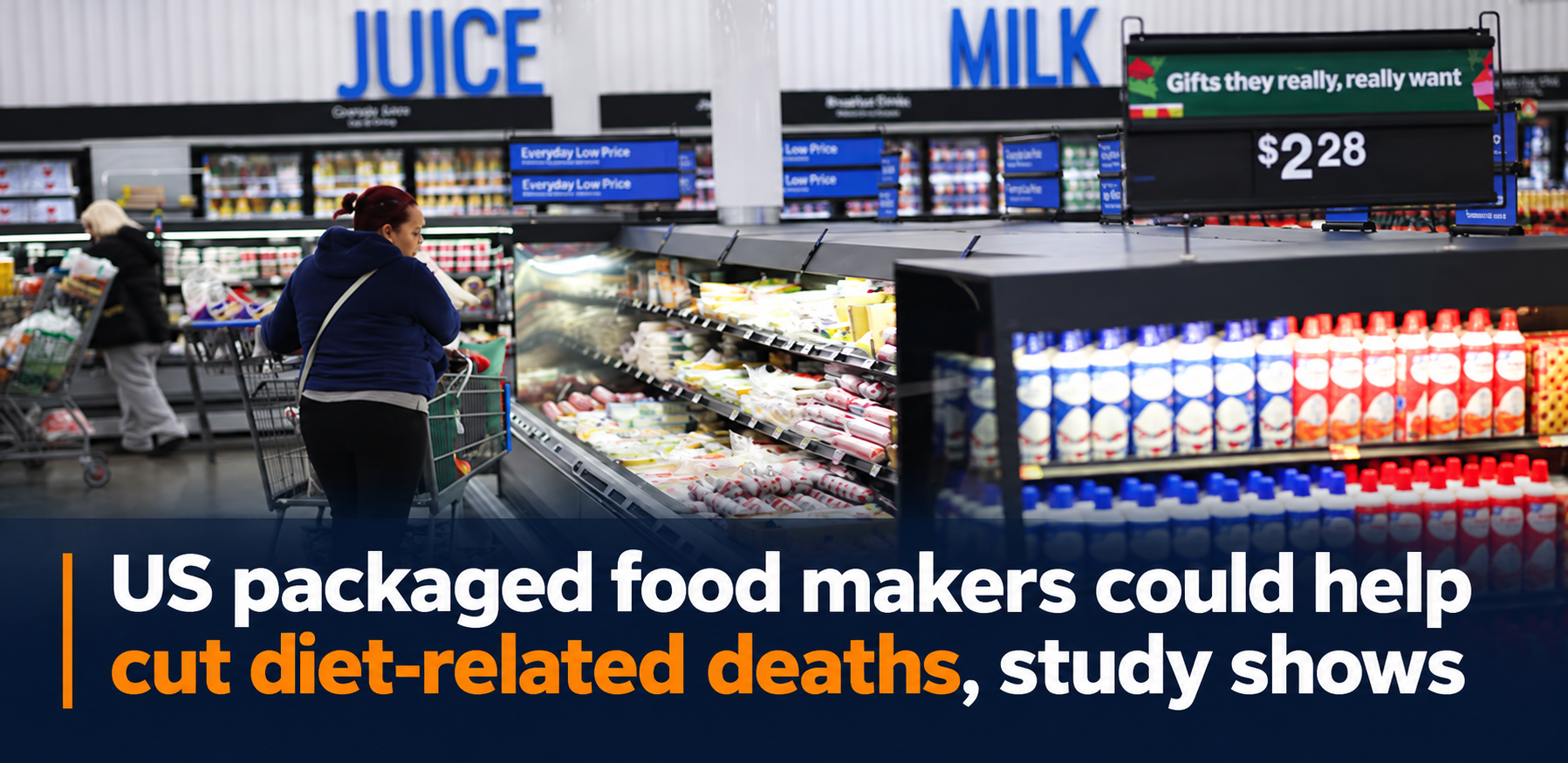
U.S. packaged food and beverage companies could help prevent about 150,000 diet-related deaths each year by shifting sales toward healthier products, according to a new study.
The research looked at nearly 10,000 packaged food and beverage products sold in the United States by 24 major manufacturers.
Together, these companies represent an estimated 37% of the U.S. packaged food and beverage market by sales value.
The study found that moving consumers toward healthier products that are already available could reduce deaths linked to diet-related diseases such as heart disease and stroke.
What the Study Looked At
Researchers examined products across a wide range of packaged food and beverage categories.
They compared products based on their nutritional quality and looked at what could happen if companies shifted more of their sales toward healthier products within each category.
The research focused on products that consumers already buy rather than assuming that people would completely change their diets.
This means companies could potentially make an impact through changes in what products they promote, sell, and make more accessible.
Which Food Categories Have the Biggest Opportunity?
The study identified several categories where shifting sales toward healthier products could have a particularly large impact.
These included:
- Baked goods
- Sauces, dips and condiments
- Confectionery
- Carbonated drinks
- Savory snacks
These categories often contain products with higher levels of ingredients such as added sugar, salt, or unhealthy fats.
Moving sales toward healthier options within these categories could therefore have a meaningful effect on overall diet quality.
What Could Be the Health Impact?
The study estimated that shifting sales toward the healthiest half of products within each food category could delay approximately 150,000 diet-related deaths in a single year.
Many of the potential benefits would come from reducing the burden of chronic diseases associated with poor diets.
These include cardiovascular diseases and stroke, which are major causes of illness and death in the United States.
The researchers also estimated that healthier food choices could reduce healthcare costs and prevent approximately $11.6 billion in lost wages associated with diet-related illness.
What’s Changing / Business Impact
The findings put greater attention on the role that food manufacturers and retailers can play in public health.
Companies do not necessarily need to eliminate less healthy products to influence consumer diets.
They can also change the balance of products they sell and promote.
For example, companies could:
- Increase the availability of healthier products.
- Promote lower-sugar or lower-sodium alternatives.
- Reformulate existing products.
- Expand healthier options within popular categories.
- Make nutritional information easier for consumers to understand.
- Shift marketing and promotional activity toward healthier products.
These changes could also affect how food companies think about product development and portfolio strategy.
Why This Matters
Diet-related diseases create significant costs for both individuals and the healthcare system.
Food companies have a direct connection to consumer diets because their products are purchased and consumed at a large scale.
The study suggests that relatively broad changes in purchasing patterns could have a significant population-level impact.
Importantly, the research does not mean that every individual who buys a healthier packaged product will avoid disease. Instead, it estimates the potential impact across the U.S. population if purchasing patterns shifted toward healthier products.
The findings also highlight a growing connection between consumer goods companies, healthcare costs, and public health.
Looking Ahead
The study could increase pressure on packaged food companies to demonstrate progress on nutrition and health.
Companies may face greater expectations from consumers, investors, healthcare organizations, and policymakers to improve the nutritional quality of their portfolios.
For food manufacturers, this could create opportunities to develop and market products that meet changing consumer preferences while also addressing health concerns.
The larger challenge will be turning healthier products into products that consumers actually choose at scale.
What This Means for Healthcare Marketers
This research creates several useful signals for healthcare marketers working across food, nutrition, wellness, and chronic disease.
- Nutrition is a healthcare issue: Food companies are increasingly connected to conversations around chronic disease prevention.
- Product reformulation creates opportunities: Companies changing ingredients or launching healthier products may need new consumer education and engagement strategies.
- Health-focused portfolios can create new markets: Expansion into healthier products can signal a shift in a company's target consumers and commercial strategy.
- Chronic disease prevention is a major opportunity: Companies involved in cardiovascular health, diabetes, obesity, and nutrition may increasingly work with food manufacturers.
- Consumer behavior matters: Marketing strategies can influence which products consumers notice, understand, and ultimately purchase.
- Public health partnerships may grow: Food companies may increasingly collaborate with healthcare organizations, researchers, and public-health groups.
- Data can identify market opportunities: Companies can use consumer, purchasing, and health data to understand demand for healthier products and identify where new products could gain traction.
For B2B healthcare marketers, food companies that are reformulating products, expanding healthier portfolios, or investing in nutrition-focused initiatives can be important signals of changing commercial priorities.
Key Takeaways
- U.S. packaged food companies could potentially help prevent about 150,000 diet-related deaths annually by shifting sales toward healthier products.
- The study examined nearly 10,000 products from 24 major manufacturers.
- The companies analyzed represent about 37% of the U.S. packaged food and beverage market by sales value.
- The biggest opportunities were identified in baked goods, sauces and condiments, confectionery, carbonated drinks, and savory snacks.
- Shifting sales toward healthier products could also reduce healthcare costs and prevent an estimated $11.6 billion in lost wages linked to diet-related illness.
- The findings highlight how food-product strategy and healthcare outcomes are increasingly connected.