U.S. Provides Ebola Treatment in Congo, Bringing Clinical Trials Closer to Real-World Use
What's Happening
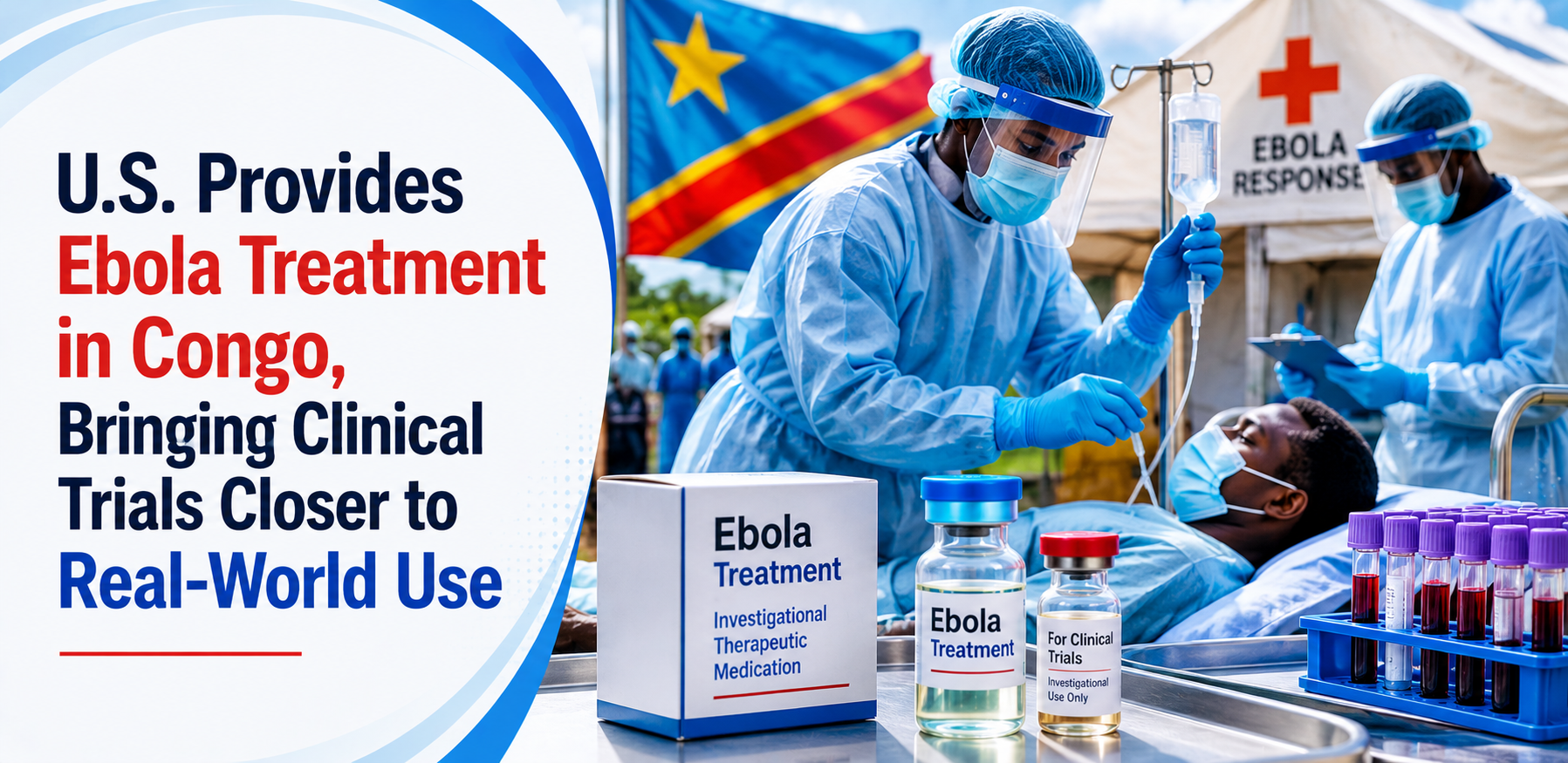
The United States has provided supplies of an experimental Ebola treatment to support the ongoing Ebola outbreak response in the Democratic Republic of Congo, a move that could help researchers gather additional real-world data on therapies that have shown promise in clinical trials.
The treatment is being deployed as health authorities work to contain the outbreak and prevent wider transmission. Public health officials hope that making advanced treatments available during active outbreaks will not only improve patient outcomes but also generate valuable information about how these therapies perform outside controlled research settings.
The development comes as governments, international health organizations, and researchers continue searching for better ways to respond quickly to emerging infectious disease outbreaks. For scientists, every outbreak provides an opportunity to learn more about how treatments work in real-world conditions, helping accelerate future regulatory reviews and treatment strategies.
Why Ebola Remains a Global Health Concern
Ebola is a severe viral disease that can cause serious illness and death. The virus spreads through direct contact with infected bodily fluids and can move rapidly through communities if outbreaks are not identified and controlled quickly. Common symptoms include:
- Fever
- Fatigue
- Muscle pain
- Headaches
- Vomiting
- Diarrhea
- Internal or external bleeding in severe cases
Ebola outbreaks often place enormous pressure on healthcare systems because patients require intensive care and strict infection-control measures. Although outbreaks are generally contained within specific regions, global health authorities closely monitor every new case because of the virus's high fatality rate and potential for international spread.
How Ebola Treatment Has Evolved
For many years, Ebola treatment focused largely on supportive care. Doctors worked to maintain hydration, stabilize blood pressure, manage symptoms, and treat secondary infections. While supportive care remains important, advances in medical research have led to the development of therapies specifically designed to target the Ebola virus.
Several experimental and approved treatments have demonstrated the ability to improve survival rates when administered early. These treatments typically work by helping the immune system identify and neutralize the virus before it causes extensive damage. The progress represents a major shift from the early years of Ebola response, when treatment options were extremely limited.
Why Real-World Data Matters
Clinical trials remain the gold standard for evaluating new treatments. However, researchers also want to understand how therapies perform in real-world healthcare settings. During an active outbreak, scientists can observe:
- How quickly patients respond
- How treatments work across different populations
- Operational challenges associated with deployment
- Effectiveness outside tightly controlled trial environments
This information can be valuable for both regulators and healthcare providers. Real-world evidence helps researchers refine treatment protocols, improve patient selection, and better understand long-term outcomes. As more data becomes available, confidence in treatment strategies can increase.
Why Outbreaks Create Unique Research Opportunities
Unlike many diseases, Ebola outbreaks are unpredictable. Researchers cannot simply recruit patients whenever they choose because cases occur sporadically and often in remote regions. As a result, every outbreak becomes an important opportunity to collect scientific data. This creates a difficult balance. Public health officials must prioritize patient care while also learning as much as possible about potential treatments. International health organizations have increasingly developed frameworks that allow research and outbreak response efforts to occur simultaneously. The goal is to improve current outcomes while strengthening preparedness for future outbreaks.
The Role of the United States in Ebola Response
The United States has played a significant role in global Ebola preparedness and response efforts for more than a decade. American agencies have contributed through research funding, vaccine development, treatment development, laboratory support, public health expertise, and emergency response coordination. Many of the therapies and vaccines currently used against Ebola were developed with support from U.S. government agencies, academic institutions, and pharmaceutical companies. The latest treatment deployment reflects ongoing efforts to support international outbreak response while advancing scientific understanding of the disease.
Why Global Health Security Matters
Public health experts increasingly view infectious disease outbreaks as global challenges rather than local events. An outbreak occurring in one country can quickly become an international concern because of modern travel and interconnected economies. This reality has strengthened support for investments in disease surveillance, vaccine development, therapeutic research, public health infrastructure, and international cooperation.
The COVID-19 pandemic reinforced the importance of preparedness and demonstrated how rapidly infectious diseases can affect global health systems. Many governments now see outbreak response investments as part of broader national and international security strategies.
Industry Impact
- Pharmaceutical Companies: Real-world treatment deployment may generate additional data supporting future regulatory and commercial decisions.
- Public Health Agencies: Health authorities gain valuable experience managing outbreaks and evaluating treatment strategies.
- Researchers: Outbreak responses provide opportunities to collect evidence that can improve future therapies.
- Patients: Access to advanced treatments may improve outcomes during active outbreaks.
Key Takeaways
- The United States supplied Ebola treatment resources to support the outbreak response in Congo.
- The effort may generate valuable real-world data on Ebola therapies.
- Ebola remains a serious infectious disease with significant public health implications.
- Researchers are seeking to better understand how treatments perform during active outbreaks.
- The initiative reflects broader efforts to strengthen global outbreak preparedness.
What This Means for Healthcare Marketers
This story highlights the growing importance of global health preparedness as a driver of healthcare innovation and investment. For healthcare marketers, infectious disease response is no longer limited to vaccines. Governments, pharmaceutical companies, diagnostics providers, healthcare technology firms, and public health organizations are investing across the entire preparedness ecosystem. Treatments, surveillance systems, outbreak analytics, laboratory capabilities, and emergency-response infrastructure are all becoming increasingly important markets.
The development also underscores the value of real-world evidence in healthcare decision-making. As regulators and providers increasingly incorporate real-world data into evaluations, organizations that can generate, analyze, and operationalize these insights may gain a competitive advantage. For healthcare intelligence teams, outbreak-response initiatives often serve as early indicators of future funding priorities, public health investments, and regulatory activity. Monitoring these developments can provide valuable insight into where healthcare systems are directing resources and how preparedness strategies continue to evolve.
More broadly, the story demonstrates that healthcare innovation increasingly extends beyond treating disease to building systems capable of responding rapidly when new public health threats emerge.