U.S. Requires Americans Returning from Congo to Wait 21 Days Before Entering Following Ebola Exposure Risk
What's Happening
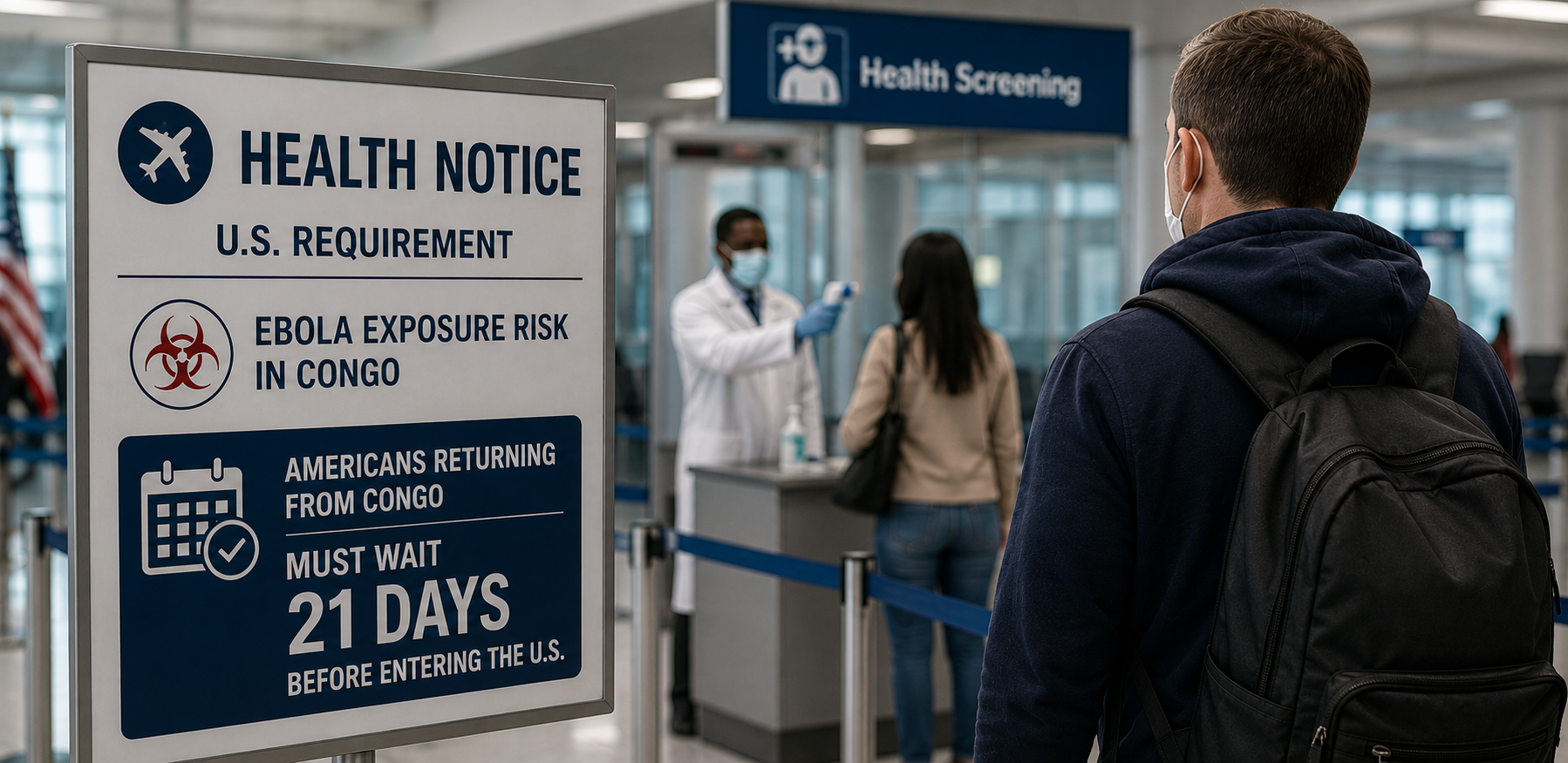
The U.S. government has announced that Americans returning from the Democratic Republic of Congo (DRC) who may have been exposed to Ebola virus disease must complete a 21-day waiting period before traveling to the United States. The measure is intended to reduce the risk of importing Ebola cases while allowing public health officials to monitor individuals during the virus's incubation period.
The policy follows the ongoing Ebola outbreak in the Democratic Republic of Congo and comes after a U.S. citizen working in the country contracted the virus. U.S. health authorities emphasized that the waiting period is a precautionary measure designed to protect public health while supporting international outbreak response efforts.
The announcement reflects the continued importance of travel-related health measures during outbreaks of highly infectious diseases.
Why 21 Days?
The Ebola virus has an incubation period of 2 to 21 days, meaning symptoms can appear anytime during that window after a person is exposed.
People infected with Ebola:
- Do not spread the virus before symptoms develop.
- Become contagious only after symptoms begin.
- Require immediate medical evaluation if symptoms appear.
Because symptoms may take up to three weeks to develop, public health officials use a 21-day monitoring period to ensure exposed individuals remain healthy before traveling.
This approach has been used during previous Ebola outbreaks and is based on well-established public health guidance.
What Is Ebola Virus Disease?
Ebola virus disease (EVD) is a rare but serious illness caused by infection with the Ebola virus.
The virus spreads through direct contact with:
- Blood.
- Bodily fluids.
- Contaminated medical equipment.
- Infected animals in certain regions.
It is not spread through the air like influenza or COVID-19.
Early symptoms often include:
- Fever.
- Severe headache.
- Muscle aches.
- Fatigue.
- Weakness.
As the disease progresses, patients may develop:
- Vomiting.
- Diarrhea.
- Dehydration.
- Internal or external bleeding in severe cases.
Prompt medical care significantly improves the chances of survival.
Why Travel Measures Are Important
International travel can increase the risk of infectious diseases crossing borders.
Public health agencies use travel measures to:
- Identify potentially exposed individuals.
- Prevent further transmission.
- Monitor travelers during incubation periods.
- Ensure rapid medical evaluation if symptoms develop.
- Protect healthcare systems and the public.
These measures are designed to reduce risk while minimizing unnecessary restrictions on international travel.
How Ebola Outbreaks Are Controlled
Health authorities use several strategies to contain Ebola outbreaks.
These include:
- Rapid identification of infected individuals.
- Isolation of patients.
- Contact tracing.
- Monitoring exposed individuals.
- Vaccination of eligible contacts.
- Infection prevention in healthcare settings.
- Public education campaigns.
Together, these measures have significantly improved outbreak control compared with earlier Ebola epidemics.
What Returning Travelers Should Know
Individuals returning from areas affected by Ebola should:
- Monitor their health for 21 days after potential exposure.
- Check for symptoms such as fever or severe fatigue.
- Contact public health officials immediately if symptoms develop.
- Follow all travel guidance provided by health authorities.
- Seek medical care before visiting healthcare facilities if illness occurs.
Travelers without known exposure generally face a very low risk of developing Ebola.
Industry Impact
- Public Health Agencies: Federal and international health organizations continue coordinating travel guidance and outbreak response efforts.
- Healthcare Providers: Hospitals remain prepared to identify and safely manage suspected Ebola cases while following established infection-control protocols.
- Travelers: Individuals returning from outbreak regions may be subject to monitoring and temporary travel restrictions depending on their level of exposure.
- Global Health Organizations: The policy highlights the importance of international cooperation in preventing the spread of infectious diseases across borders.
Why This Matters
The 21-day waiting requirement demonstrates how public health agencies use evidence-based measures to reduce the risk of infectious diseases spreading internationally.
Rather than imposing broad travel bans, health officials are applying targeted precautions based on the known behavior of the Ebola virus and its incubation period.
The policy also reflects lessons learned from previous Ebola outbreaks, where early identification, monitoring, and coordinated international action proved effective in limiting transmission.
As global travel continues to connect countries more closely, carefully designed public health measures remain an essential part of protecting communities while supporting international disease control efforts.
Key Takeaways
- The U.S. now requires certain Americans returning from the Democratic Republic of Congo to complete a 21-day waiting period before entering the country following potential Ebola exposure.
- The waiting period matches the virus's maximum incubation period.
- Ebola spreads through direct contact with infected bodily fluids and is not airborne.
- The measure is intended to reduce the risk of importing Ebola cases while supporting ongoing outbreak response efforts.
- Public health officials continue emphasizing that early monitoring and rapid medical evaluation are critical for controlling Ebola outbreaks.
What This Means for Healthcare Marketers
The updated travel guidance highlights the continued importance of global infectious disease preparedness. Public health agencies increasingly rely on evidence-based travel policies, surveillance systems, and international coordination to reduce the spread of emerging infectious diseases while minimizing unnecessary disruptions. Strong preparedness infrastructure remains essential for responding quickly to outbreaks that have the potential to cross international borders.
For healthcare marketers, the policy underscores growing demand for solutions that support disease surveillance, travel health, diagnostics, infection prevention, and emergency preparedness. Organizations involved in public health technology, laboratory services, vaccines, and outbreak response can demonstrate how their capabilities strengthen national and global health security.
For healthcare intelligence teams, travel advisories and public health guidance provide valuable insight into evolving outbreak response strategies. Monitoring changes in international health policies, surveillance efforts, and infectious disease preparedness can help organizations anticipate future public health priorities while identifying opportunities to support healthcare systems during emerging global health events.