U.S. Restricts Immediate Return of Americans in Congo Following Ebola Exposure Risk
What's Happening
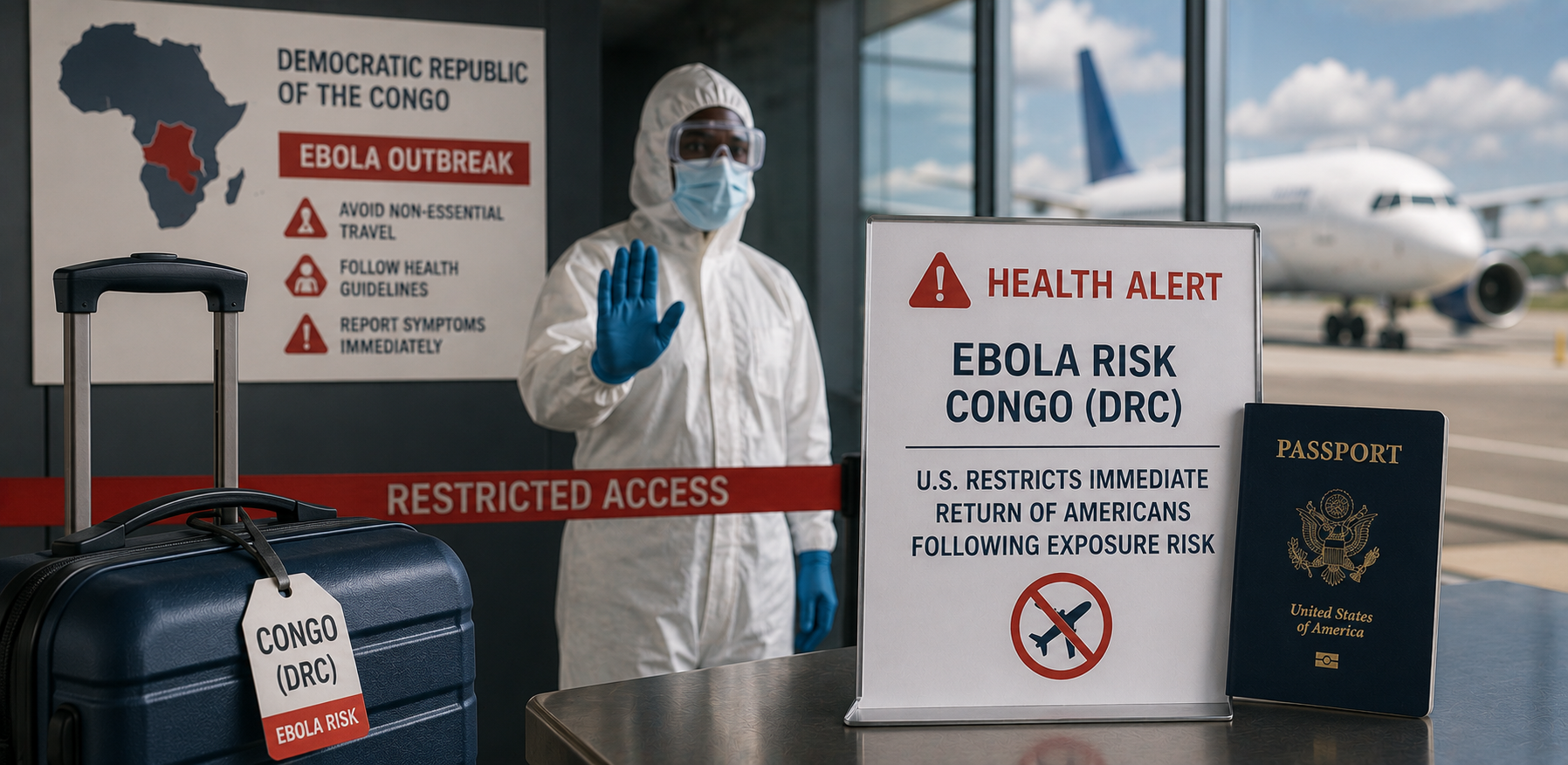
The U.S. government has temporarily restricted the immediate return of American citizens currently in the Democratic Republic of Congo (DRC) who may have been exposed to Ebola, citing public health precautions during the country's ongoing outbreak.
The policy is intended to reduce the risk of transporting individuals who could develop Ebola while traveling. U.S. officials said affected citizens will continue receiving assistance and guidance while health authorities monitor the situation and determine when it is safe for them to travel. The decision follows recent reports involving an American aid worker who contracted Ebola in Congo and was transferred to Germany for specialized treatment.
Why Is the U.S. Limiting Travel?
Ebola is a highly contagious disease once symptoms develop, and international travel involving potentially exposed individuals requires careful public health planning. By temporarily delaying travel for people who may have been exposed, health authorities can:
- Monitor individuals for symptoms.
- Reduce the risk of international transmission.
- Ensure appropriate medical evaluation if illness develops.
- Coordinate safe travel once the monitoring period is complete.
These measures are commonly used during outbreaks involving serious infectious diseases.
How Does Ebola Spread?
Ebola virus disease spreads through direct contact with:
- Blood.
- Bodily fluids.
- Contaminated medical equipment.
- Infected animals in certain regions.
The virus does not spread through the air like influenza or COVID-19. People become contagious only after symptoms begin, which is why health officials closely monitor individuals who may have been exposed before they travel internationally.
What Happens After a Possible Exposure?
People who may have been exposed to Ebola are generally monitored during the virus's incubation period. Public health monitoring may include:
- Daily temperature checks.
- Symptom monitoring.
- Medical evaluations if symptoms develop.
- Guidance on limiting certain activities.
- Coordination with local health authorities.
Most people who are monitored do not develop Ebola, but early detection is critical because prompt treatment improves outcomes and helps prevent further spread.
Why International Coordination Matters
Managing Ebola outbreaks requires close collaboration between governments and public health organizations. Agencies involved may include:
- The U.S. Centers for Disease Control and Prevention (CDC).
- The World Health Organization (WHO).
- Local ministries of health.
- International humanitarian organizations.
- Specialized infectious disease hospitals.
These partnerships help coordinate surveillance, laboratory testing, patient care, and travel guidance during outbreaks.
Protecting Public Health While Supporting Citizens
Although travel restrictions can be difficult for affected individuals, they are intended to balance two important priorities: protecting public health and ensuring citizens receive appropriate medical support. U.S. officials continue assisting Americans in the region while monitoring conditions and providing updated travel guidance based on evolving public health assessments. Such measures are generally temporary and are adjusted as outbreak conditions change.
Industry Impact
- Public Health Agencies: Government health authorities continue monitoring the Ebola outbreak while coordinating international response efforts.
- Healthcare Providers: Hospitals remain prepared to evaluate and manage suspected Ebola cases using established infection-control protocols.
- Travel and Humanitarian Organizations: Organizations operating in outbreak regions continue following updated health guidance to protect staff and the communities they serve.
- U.S. Citizens Abroad: Americans in affected regions may experience temporary travel restrictions while health officials monitor potential exposure risks.
Why This Matters
The temporary travel restrictions demonstrate how governments use targeted public health measures to reduce the risk of international disease transmission during infectious disease outbreaks. Rather than broad travel bans, modern outbreak responses increasingly rely on evidence-based monitoring, coordinated international communication, and carefully managed travel protocols.
The decision also highlights the importance of global cooperation in responding to infectious diseases. As outbreaks can quickly become international concerns, governments and health agencies continue working together to protect both affected communities and the broader public.
Key Takeaways
- The U.S. temporarily restricted the immediate return of certain Americans in the Democratic Republic of Congo because of potential Ebola exposure.
- The measure is intended to reduce the risk of international disease transmission while individuals are monitored.
- Ebola spreads through direct contact with infected bodily fluids and is not airborne.
- Public health agencies continue coordinating outbreak response and travel guidance.
- The policy reflects modern infectious disease preparedness and international public health cooperation.
What This Means for Healthcare Marketers
The temporary travel restrictions illustrate how infectious disease response extends beyond clinical care to include travel health, international coordination, and public health preparedness. Governments increasingly rely on targeted, evidence-based measures that balance disease prevention with the movement of people during outbreaks. Effective surveillance, monitoring, and communication remain essential components of global health security.
For healthcare marketers, the situation highlights growing demand for technologies and services that support outbreak management, international health surveillance, laboratory diagnostics, and emergency preparedness. Organizations involved in infectious disease monitoring, travel medicine, and global public health infrastructure can demonstrate how their solutions help governments and healthcare providers respond quickly to emerging health threats.
For healthcare intelligence teams, travel guidance and outbreak-related policy decisions offer valuable insight into evolving global health priorities. Monitoring infectious disease surveillance, international response strategies, travel advisories, and public health preparedness initiatives can help organizations anticipate future healthcare needs while identifying opportunities to strengthen global health resilience.