What’s Happening
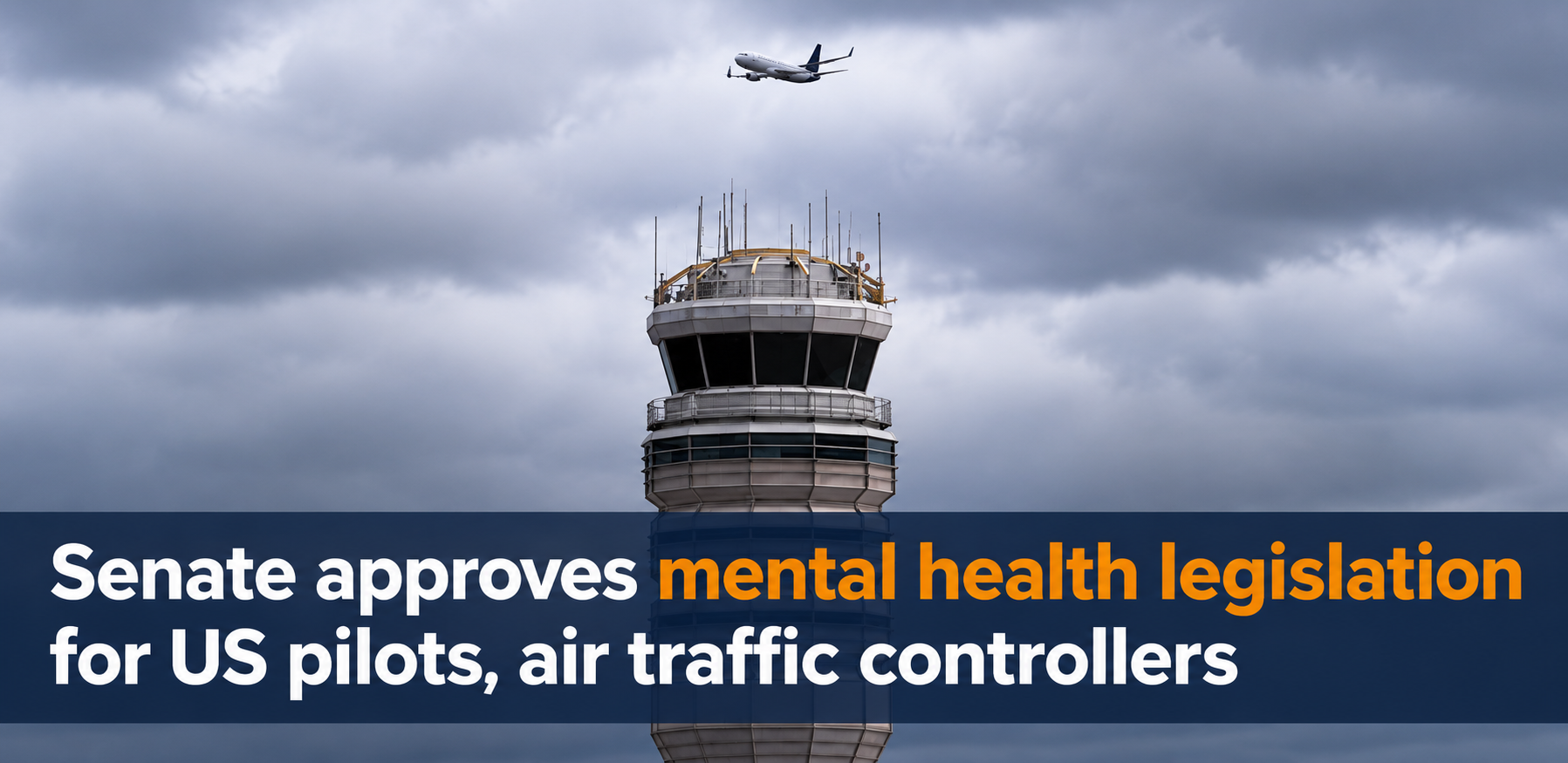
The U.S. Senate has approved legislation aimed at addressing mental health concerns among airline pilots and air traffic controllers.
The bill is designed to make it easier for aviation professionals to seek mental healthcare without automatically putting their careers at risk.
The legislation comes after growing concerns that pilots and air traffic controllers may avoid seeking treatment because they fear that reporting certain mental health conditions could affect their ability to work.
The bill now moves forward in the legislative process.
Why Mental Health Is an Issue in Aviation
Pilots and air traffic controllers work in highly regulated environments where concentration, decision-making, and alertness are critical.
At the same time, aviation professionals can experience stress, anxiety, depression, sleep problems, and other mental health challenges.
Some aviation workers have said they are reluctant to seek professional help because of concerns that disclosing a diagnosis or treatment could lead to additional medical reviews or restrictions on their ability to work.
That creates a difficult situation: workers may need treatment but worry that getting help could affect their careers.
What Would the Legislation Do?
The legislation would create changes around how mental health information is handled for pilots and air traffic controllers.
The goal is to encourage aviation workers to seek appropriate care earlier while maintaining safety standards.
The proposal would also address the process used to evaluate aviation professionals who disclose mental health conditions or receive treatment.
Rather than treating mental healthcare itself as a reason to remove someone from their job, the approach focuses more closely on whether a condition actually affects a person's ability to safely perform their duties.
Why Is This Important for Pilots?
Airline pilots must meet medical certification requirements established by the Federal Aviation Administration.
Mental health is already part of those requirements.
However, pilots have historically expressed concerns that seeking treatment could lead to delays, additional evaluations, or questions about their medical certification.
That can create an incentive for some workers to avoid seeking care.
Supporters of the legislation argue that aviation safety can benefit when workers are comfortable getting help before a problem becomes more serious.
What About Air Traffic Controllers?
Air traffic controllers also work in high-pressure environments.
They are responsible for managing aircraft movements and maintaining safe separation between planes.
The legislation addresses mental health concerns for controllers as well as pilots because both groups perform safety-sensitive jobs.
Improving access to mental healthcare could help workers address problems such as anxiety, depression, burnout, and other conditions while continuing to meet the safety requirements of their positions.
What’s Changing / Business Impact
The legislation could create changes for several parts of the healthcare and aviation systems.
If aviation workers become more comfortable seeking treatment, demand could increase for:
- Mental health evaluations
- Counseling and behavioral healthcare
- Psychiatric services
- Employee assistance programs
- Digital mental health services
- Occupational health programs
- Specialized aviation medical services
Healthcare providers that serve aviation workers may also need to understand the specific medical-certification requirements that apply to these professions.
The legislation could therefore create a stronger connection between behavioral healthcare, occupational health, and aviation safety.
Why This Matters
Mental health treatment can be difficult to access when people fear professional consequences for seeking help.
For aviation workers, that concern is particularly important because their jobs involve public safety.
The legislation attempts to address the tension between encouraging treatment and maintaining strict safety standards.
The goal is not to remove medical requirements for pilots or air traffic controllers. Instead, it aims to create a system in which seeking mental healthcare does not automatically create unnecessary barriers to continuing a career.
Looking Ahead
The bill still has to move through the remaining legislative process before it can become law.
If enacted, federal aviation authorities would need to determine how the new requirements would be implemented.
The impact will depend on how the rules are ultimately written and how aviation medical examiners, airlines, air traffic organizations, and healthcare providers apply them.
For mental healthcare providers, the development could create opportunities to build services specifically designed around the needs of aviation professionals.
What This Means for Healthcare Marketers
The legislation creates several important signals for healthcare marketers:
- Behavioral health demand: Greater willingness among pilots and controllers to seek care could increase demand for mental health services.
- Occupational healthcare: Employers may look for specialized programs that support employees in safety-sensitive roles.
- Employee assistance programs: Airlines and aviation organizations may expand behavioral health resources for their workforce.
- Specialized care: Providers with expertise in aviation medicine and behavioral health could have an opportunity to differentiate their services.
- Digital mental health: Telehealth and digital behavioral health platforms could become useful options for workers who need confidential and convenient access to care.
- Policy-driven demand: Changes in federal rules can create new healthcare needs within specific professional populations.
- Employer partnerships: Healthcare organizations may find opportunities to partner directly with airlines, airports, and aviation organizations.
For B2B healthcare marketers, regulatory changes affecting specific worker populations can be an early signal of new demand for specialized healthcare services. Tracking legislation alongside employer needs can help identify emerging markets before demand becomes widespread.
Key Takeaways
- The U.S. Senate approved legislation addressing mental healthcare for pilots and air traffic controllers.
- The proposal aims to make it easier for aviation professionals to seek mental healthcare without automatically putting their careers at risk.
- Pilots and air traffic controllers work in safety-sensitive roles with strict medical requirements.
- Concerns about professional consequences can discourage some workers from seeking treatment.
- The legislation seeks to balance access to mental healthcare with aviation safety requirements.
- If enacted, the changes could increase demand for behavioral health, occupational health, and specialized aviation healthcare services.
- The bill still needs to complete the remaining legislative process before it can become law.