
Warburg Pincus Nears $7 Billion Acquisition of Rare Disease Drugmaker PanTheryx Rare
What's Happening
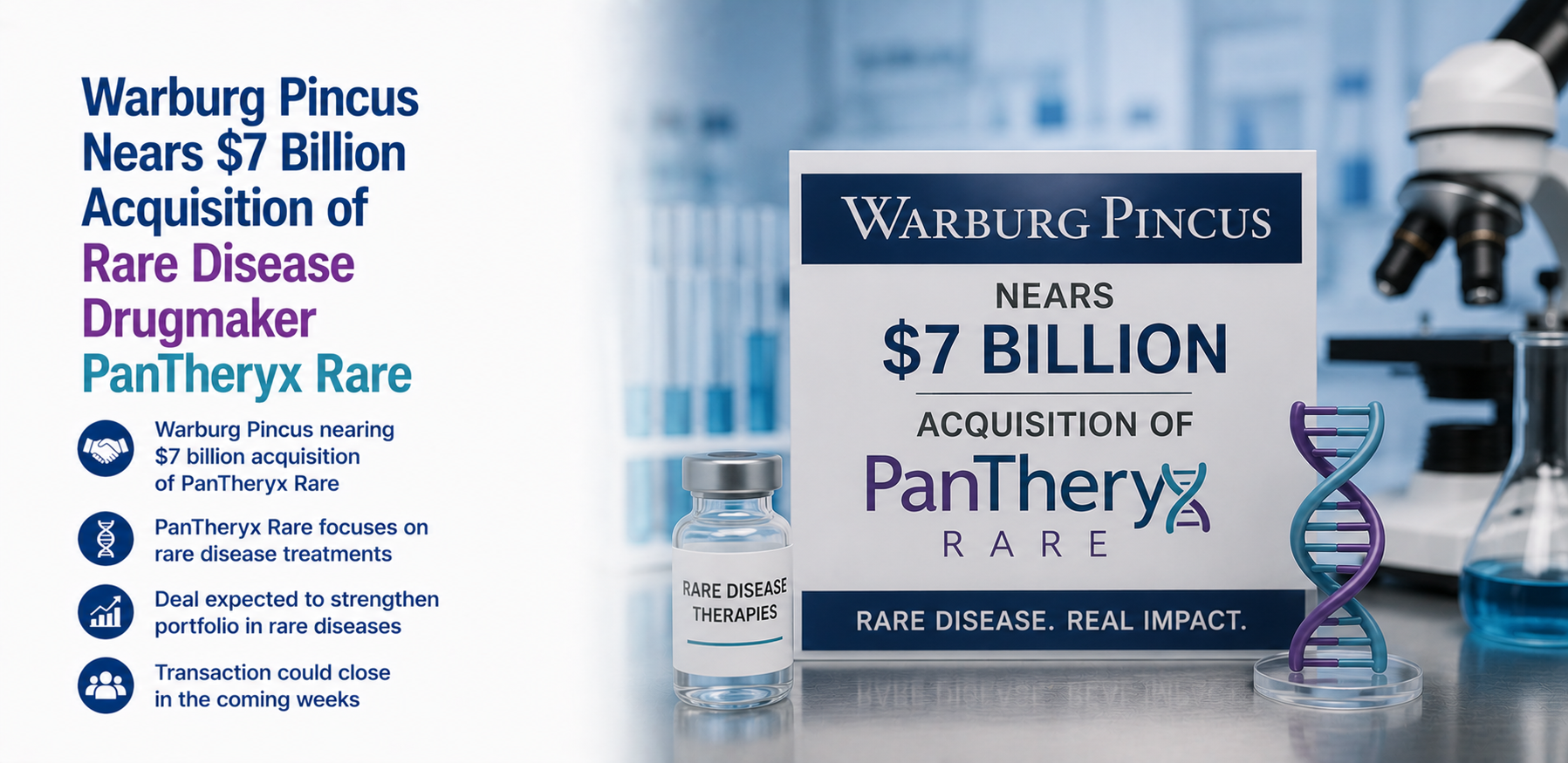
Private equity firm Warburg Pincus is nearing a deal to acquire PanTheryx Rare, a pharmaceutical company focused on treatments for rare diseases, in a transaction valued at approximately $7 billion, according to people familiar with the matter. If completed, the acquisition would rank among the largest healthcare private equity deals of the year and underscores continued investor interest in the rare disease sector. (reuters.com)
The companies have not publicly confirmed the transaction, and negotiations could still change before a final agreement is reached. Nevertheless, the reported deal highlights the growing value investors place on companies developing specialized medicines for patients with uncommon medical conditions. Rare disease drugmakers have become attractive acquisition targets because they often develop highly specialized therapies that face limited competition and address significant unmet medical needs.
What Are Rare Diseases?
A rare disease is a medical condition that affects a relatively small number of people. In the United States, a disease is generally considered rare if it affects fewer than 200,000 people. Although each rare disease affects a limited population, there are more than 7,000 known rare diseases, collectively impacting millions of people worldwide. Many rare diseases are genetic, chronic, progressive, life-threatening, or diagnosed during childhood. Examples include Duchenne muscular dystrophy, cystic fibrosis, Huntington's disease, and certain inherited metabolic disorders. Many patients have limited or no approved treatment options.
Why Rare Disease Medicines Are So Valuable
Developing treatments for rare diseases presents unique scientific and commercial challenges. Because patient populations are small, companies often face difficulty recruiting patients for clinical trials, limited scientific knowledge about the disease, complex diagnosis and disease monitoring, and high research and development costs. To encourage innovation, governments provide incentives such as market exclusivity, tax credits, research grants, accelerated regulatory pathways, and orphan drug designation. These incentives have helped increase investment in therapies for rare diseases over the past several decades.
Why Private Equity Is Interested
Private equity firms increasingly view healthcare as an attractive long-term investment. Rare disease companies are especially appealing because they often have specialized expertise, strong intellectual property, limited direct competition, high barriers to entry, and opportunities for global expansion. In many cases, rare disease medicines also qualify for premium pricing because they address conditions with few available treatments. Investors believe these characteristics can support sustainable long-term growth despite relatively small patient populations.
Why Healthcare M&A Continues to Grow
Healthcare mergers and acquisitions remain active across several sectors, including pharmaceuticals, biotechnology, medical devices, healthcare technology, specialty pharmacies, and rare disease companies. Acquisitions allow investors and pharmaceutical companies to expand therapeutic portfolios, access innovative technologies, strengthen research pipelines, enter new markets, and accelerate commercial growth. Rather than building new businesses from scratch, acquiring established companies often provides faster access to specialized expertise and approved products.
Why Rare Diseases Are Receiving More Attention
Advances in genetics, precision medicine, and biotechnology have transformed rare disease research. Modern technologies now allow researchers to identify disease-causing genetic mutations, develop targeted therapies, improve diagnostic testing, and personalize treatment. As scientific understanding improves, more pharmaceutical companies are entering the rare disease market. Patients who previously had few treatment options are increasingly benefiting from therapies specifically designed for their conditions.
What Happens Next?
Because the transaction has not yet been officially announced, several steps remain before it becomes final. These may include:
- Finalizing acquisition terms.
- Completing due diligence.
- Signing definitive agreements.
- Obtaining regulatory approvals.
- Closing the transaction.
If completed, Warburg Pincus would gain ownership of one of the growing companies operating in the rare disease pharmaceutical market.
Industry Impact
- Pharmaceutical Companies: The reported acquisition reflects continued investment in specialized therapies for rare diseases.
- Private Equity Investors: Healthcare remains one of the most active sectors for large private equity transactions.
- Healthcare Providers: Expanded investment may accelerate research and commercialization of treatments for patients with rare conditions.
- Patients: Additional financial resources could support the development of new therapies and improve access to innovative treatments over time.
Why This Matters
The reported acquisition demonstrates the growing strategic importance of rare disease medicine. While each individual condition affects relatively few patients, the combined rare disease market represents a significant opportunity for scientific innovation and healthcare investment. Increasing interest from private equity firms reflects confidence that advances in genetics, biotechnology, and precision medicine will continue driving growth across the sector. For patients living with rare diseases, greater investment may help accelerate research, expand treatment options, and improve access to therapies that address previously unmet medical needs.
Key Takeaways
- Warburg Pincus is reportedly nearing a $7 billion acquisition of rare disease drugmaker PanTheryx Rare.
- The transaction would be one of the largest healthcare private equity deals of the year if completed.
- Rare disease companies continue attracting investment because of strong scientific innovation and significant unmet medical need.
- Government incentives have encouraged pharmaceutical companies to develop treatments for rare diseases.
- The deal highlights continued growth and investor confidence in the rare disease pharmaceutical market.
What This Means for Healthcare Marketers
The reported acquisition reflects the growing commercial importance of rare disease therapeutics. Once considered a niche area of medicine, rare diseases have become a major focus for pharmaceutical companies and investors because advances in genetics, precision medicine, and biotechnology have created new opportunities to develop targeted therapies for conditions with significant unmet medical needs.
For healthcare marketers, rare disease commercialization requires highly specialized engagement strategies. Unlike mass-market medicines, rare disease therapies often involve small patient populations, specialized treatment centers, advocacy organizations, and multidisciplinary care teams. Success depends on building strong relationships with healthcare providers, patient communities, and rare disease experts while delivering clear scientific education and support.
For healthcare intelligence teams, major acquisitions provide insight into where healthcare investment is heading. Monitoring mergers and acquisitions, licensing agreements, and private equity activity can help organizations identify emerging therapeutic priorities and competitive trends. Continued investment in rare disease companies suggests the sector will remain an important driver of pharmaceutical innovation in the years ahead.