Wendy's and Chipotle Say They Are Not Affected by Cyclospora Outbreak Under Investigation
What's Happening
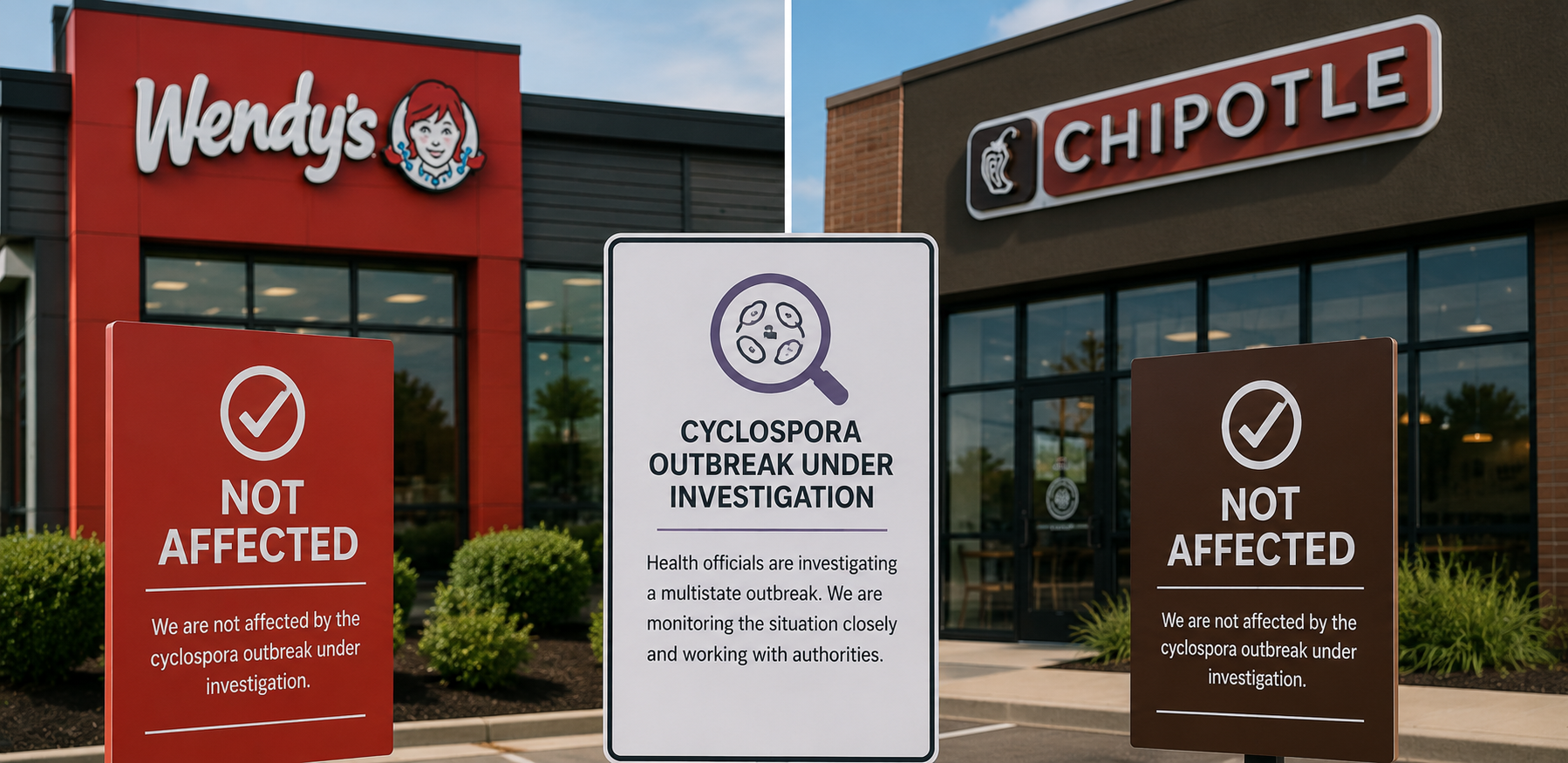
Wendy's and Chipotle Mexican Grill have stated that they are not connected to the ongoing cyclospora outbreak currently being investigated by U.S. health officials.
The clarification comes after reports linked a multistate outbreak of cyclospora (cyclosporiasis) to shredded iceberg lettuce supplied to certain Taco Bell restaurants. As public attention around the outbreak grew, both Wendy's and Chipotle confirmed that their restaurants are not using lettuce from the supplier under investigation and have not been identified as part of the outbreak.
The statements are intended to reassure customers while federal and state authorities continue tracing the source of the contamination. The companies emphasized that they continue to monitor the situation closely and maintain their own food safety standards.
Why the Companies Issued Statements
When a foodborne illness outbreak receives national attention, consumers often associate the incident with the broader restaurant industry rather than a single business.
Even companies with no connection to an outbreak may experience:
- Reduced customer confidence.
- Lower restaurant traffic.
- Increased customer inquiries.
- Social media speculation.
- Reputational risk.
By publicly confirming that they are not involved, Wendy's and Chipotle aim to reduce confusion and reassure customers that their supply chains are separate from the ongoing investigation.
Understanding the Cyclospora Outbreak
Cyclospora is a microscopic parasite that causes the intestinal illness cyclosporiasis.
People typically become infected after consuming contaminated food or water, particularly fresh produce that is eaten raw.
Common symptoms include:
- Persistent diarrhea.
- Stomach cramps.
- Nausea.
- Fatigue.
- Loss of appetite.
- Weight loss.
Because symptoms may not appear for several days after exposure, identifying the contaminated food source often requires detailed public health investigations involving patient interviews and food supply records.
Why Fresh Produce Is Frequently Investigated
Fresh vegetables and leafy greens are commonly examined during foodborne illness investigations because they are usually consumed without cooking, leaving any contamination intact.
Potential points where contamination can occur include:
- Farming operations.
- Irrigation water.
- Harvesting.
- Processing facilities.
- Transportation.
- Distribution centers.
Modern restaurant supply chains often involve multiple growers, distributors, and regional suppliers, making traceback investigations complex and time-consuming.
The Importance of Supply Chain Transparency
Large restaurant chains increasingly rely on sophisticated supplier management systems to monitor food quality and safety.
These systems often include:
- Supplier qualification programs.
- Routine food safety audits.
- Product traceability.
- Laboratory testing.
- Recall management procedures.
- Continuous quality monitoring.
Being able to quickly identify where ingredients originated allows companies to respond more effectively if contamination is suspected.
Protecting Consumer Confidence
Food safety incidents can affect an entire industry, even when only one company is directly involved.
Restaurants often respond by:
- Communicating transparently with customers.
- Confirming whether their products are involved.
- Reviewing supplier relationships.
- Cooperating with public health investigations.
- Reinforcing existing food safety protocols.
Prompt communication helps reduce misinformation while maintaining public trust.
Industry Impact
- Restaurant Chains: The outbreak demonstrates how quickly food safety concerns can influence customer perceptions across the restaurant industry, regardless of whether individual brands are directly affected.
- Food Suppliers: Produce suppliers face heightened scrutiny as investigators work to identify contamination sources and strengthen food safety practices throughout the supply chain.
- Public Health Agencies: Federal and state health officials continue collaborating with restaurants and suppliers to trace the contaminated ingredient and prevent additional illnesses.
- Consumers: Public health updates and company statements help consumers make informed decisions while investigations remain ongoing.
Why This Matters
The responses from Wendy's and Chipotle highlight the importance of transparency during public health investigations.
In today's connected information environment, outbreaks affecting one company can quickly influence perceptions of an entire industry. Clear communication helps distinguish businesses that are directly involved from those that are not while supporting ongoing public health efforts.
The situation also demonstrates how supply chain visibility has become a strategic priority for restaurant companies. The ability to rapidly identify suppliers and verify sourcing allows organizations to respond confidently during food safety investigations and maintain consumer trust.
Key Takeaways
- Wendy's and Chipotle said they are not connected to the ongoing cyclospora outbreak under investigation.
- Both companies stated they do not source lettuce from the supplier identified in the current investigation.
- The outbreak remains focused on shredded iceberg lettuce served at certain Taco Bell restaurants.
- Food safety investigations rely heavily on supply chain traceability and cooperation between restaurants, suppliers, and public health agencies.
- Transparent communication plays an important role in maintaining consumer confidence during foodborne illness investigations.
What This Means for Healthcare Marketers
The statements from Wendy's and Chipotle demonstrate how rapidly organizations must respond when public health events attract widespread attention. Even businesses that are not directly affected may need to communicate proactively to protect customer trust and prevent misinformation. Effective crisis communication has become an essential component of organizational resilience across healthcare, food, and life sciences.
For healthcare marketers, the story underscores the importance of transparency, evidence-based messaging, and timely public communication. Organizations that clearly explain their role during health-related events are better positioned to maintain credibility with patients, customers, partners, and regulators.
For healthcare intelligence teams, developments like these highlight the value of monitoring not only disease outbreaks but also corporate responses, supply chain disclosures, and regulatory investigations. Together, these signals provide a more complete picture of emerging public health risks and their potential impact across multiple industries.