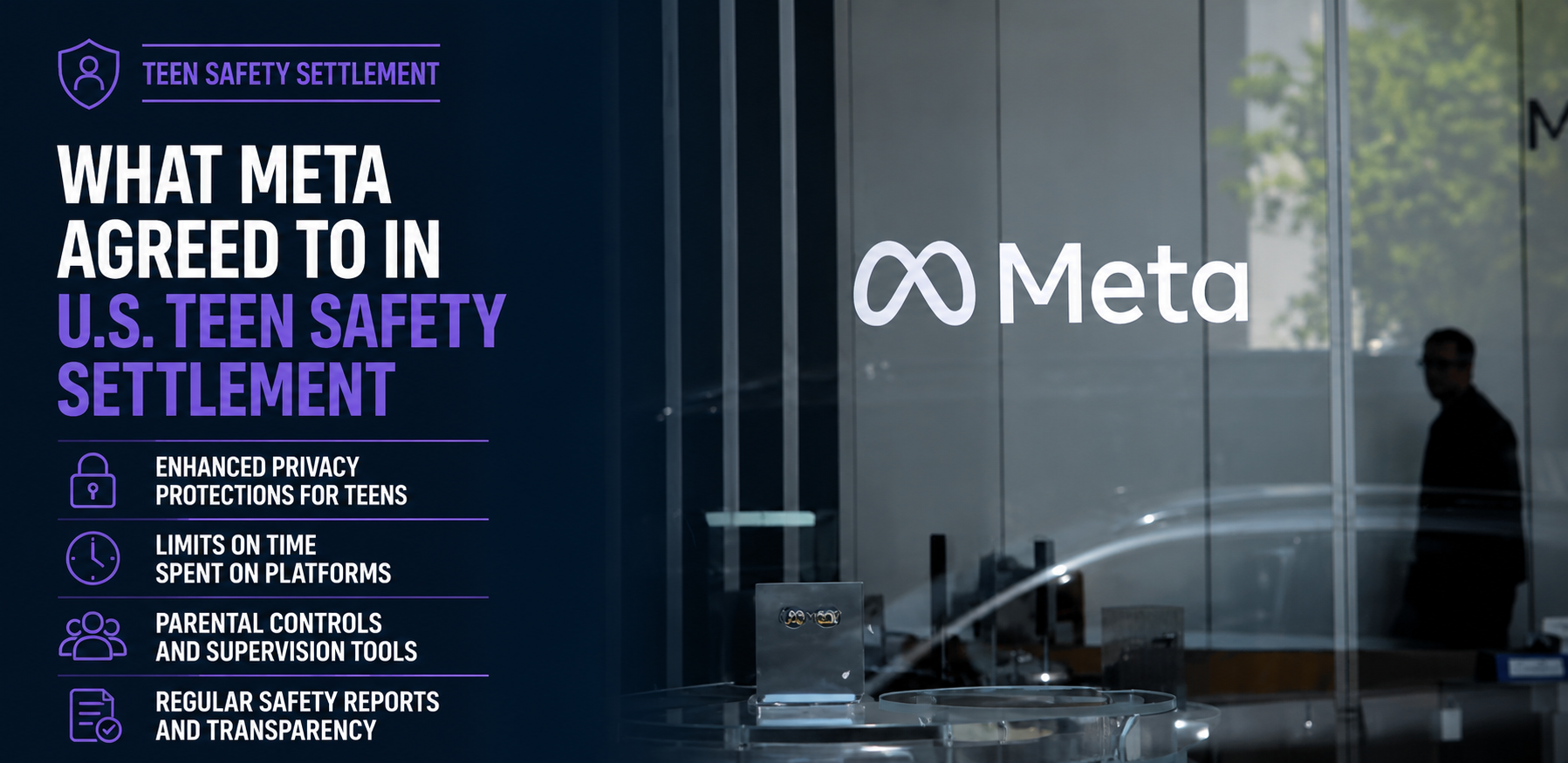
What Meta Agreed to in U.S. Teen Safety Settlement
What's Happening
Meta has agreed to pay up to $18 billion to resolve claims brought by U.S. states alleging that Facebook and Instagram were designed to keep young users hooked and that the company violated children's privacy laws. The agreement was reached during a federal trial in California and includes nationwide changes to Meta's services for teenage users. (reuters.com)
Our Article: Reuters article
What the States Alleged
The states alleged that Meta:
- Designed Facebook and Instagram to attract and retain young users.
- Misled the public about risks to children.
- Violated state consumer-protection laws.
- Collected, retained and used personal information from children under 13 without proper parental consent, in violation of the Children's Online Privacy Protection Act (COPPA). (reuters.com)
The federal trial included consumer-protection claims from California, Colorado, Kentucky and New Jersey, as well as COPPA claims brought by 29 states. The settlement extends beyond those parties to include attorneys general from dozens of states, Washington, D.C. and U.S. territories. (reuters.com)
What Meta Agreed To
Meta will introduce several new safeguards for teenage users across Facebook and Instagram.
- Two-Hour Daily Limit: Teen users will have a default two-hour daily limit across Facebook and Instagram.
- Overnight Restrictions: Teen access will be blocked between midnight and 6 a.m., unless parental consent allows otherwise.
- School-Hour Notifications: Push notifications to teen users will be disabled during 8 a.m. to 3 p.m. school hours.
- Age Assurance: Meta will strengthen measures designed to determine users' ages and prevent children from accessing age-restricted services and content. (reuters.com)
- Likes and Reactions: Likes and reactions will be hidden from teens by default, both on their own posts and on other users' posts. (reuters.com)
Changes Will Be Phased In
The new protections will not all take effect immediately.
According to the settlement:
- A non-personalized feed is due within four months.
- Broader compliance measures are due within six months.
- Major age-assurance requirements are due within one year. (reuters.com)
This means Meta will have to progressively change how its platforms operate for young users.
The $18 Billion Settlement
Meta has guaranteed approximately 70% of the settlement, or around $12.7 billion, to be paid over a decade.
The remaining approximately $5 billion is conditional.
Meta would pay that additional amount if competing platforms including Snap, TikTok and YouTube adopt comparable protections and make comparable payments to the states. (reuters.com)
This structure is intended to prevent Meta from being placed at a competitive disadvantage if other social-media companies do not make similar changes.
Meta Denies Wrongdoing
Meta has denied wrongdoing and maintains that it has taken steps to protect children on its platforms. (reuters.com)
The settlement therefore resolves the legal claims without requiring Meta to admit that its products caused the alleged harms.
Why This Is a U.S. Health Story
The case has a significant youth mental-health and public-health dimension.
The underlying litigation concerns allegations that social-media platforms can contribute to harmful patterns of use among children and teenagers.
The settlement therefore goes beyond privacy and consumer protection. It creates concrete restrictions on how young people can interact with one of the world's largest social-media platforms.
Potential Healthcare Impact
- Adolescent Mental Health: Reducing prolonged or nighttime social-media use could become an important part of broader efforts to address concerns around youth mental health and digital behavior.
- Pediatric Care: Pediatricians and other healthcare professionals may increasingly discuss social-media use, screen time and digital habits with adolescents and their families.
- Behavioral Health: The settlement could increase attention to the relationship between digital engagement and behavioral-health outcomes.
- Public Health: The agreement represents a major example of government intervention into the design of consumer technology on the grounds of protecting children's well-being.
Impact on the Technology Industry
The settlement could also influence TikTok, Snapchat and YouTube.
If those companies adopt similar safeguards, the industry could move toward more standardized rules around:
- Teen screen time.
- Overnight access.
- Age verification.
- Push notifications.
- Personalized feeds.
- Engagement features.
The conditional $5 billion portion of Meta's settlement specifically creates a financial incentive for competitors to adopt comparable measures. (reuters.com)
Looking Ahead
The settlement will be implemented gradually, with major changes occurring over the next year.
However, it does not resolve every legal dispute involving social-media platforms and children. Other lawsuits involving Meta and competing platforms remain active.
The agreement could nevertheless become an important precedent for how U.S. regulators and courts approach youth safety, social-media design and digital mental health.
Why This Matters
This is a significant U.S. health-related story because it establishes nationwide restrictions on a major social-media platform specifically aimed at protecting teenagers.
It also signals that concerns about children's digital behavior and mental health are increasingly translating into concrete product-design requirements and financial consequences for technology companies.
Key Takeaways
- Meta will pay up to $18 billion to settle claims by U.S. states. (reuters.com)
- Teen users will have a default two-hour daily limit across Facebook and Instagram.
- Teen access will be blocked from midnight to 6 a.m.
- Push notifications will be disabled during 8 a.m. to 3 p.m. school hours.
- Meta will strengthen age-assurance measures.
- Likes and reactions will be hidden from teens by default.
- About $12.7 billion is guaranteed, while another $5 billion depends on competitors adopting similar safeguards. (reuters.com)
- Meta denies wrongdoing.
- The settlement could have broader implications for youth mental health, digital safety and social-media regulation.
What This Means for Healthcare Marketers
The development is particularly relevant to adolescent mental health, behavioral health, pediatric care, digital health and population health. It also creates a growing need for healthcare organizations to understand and address the relationship between children's digital behavior, social-media exposure and health outcomes.