Who Qualifies for Medicare's New $50 Weight-Loss Drug Program, and What Are the Challenges?
What's Happening
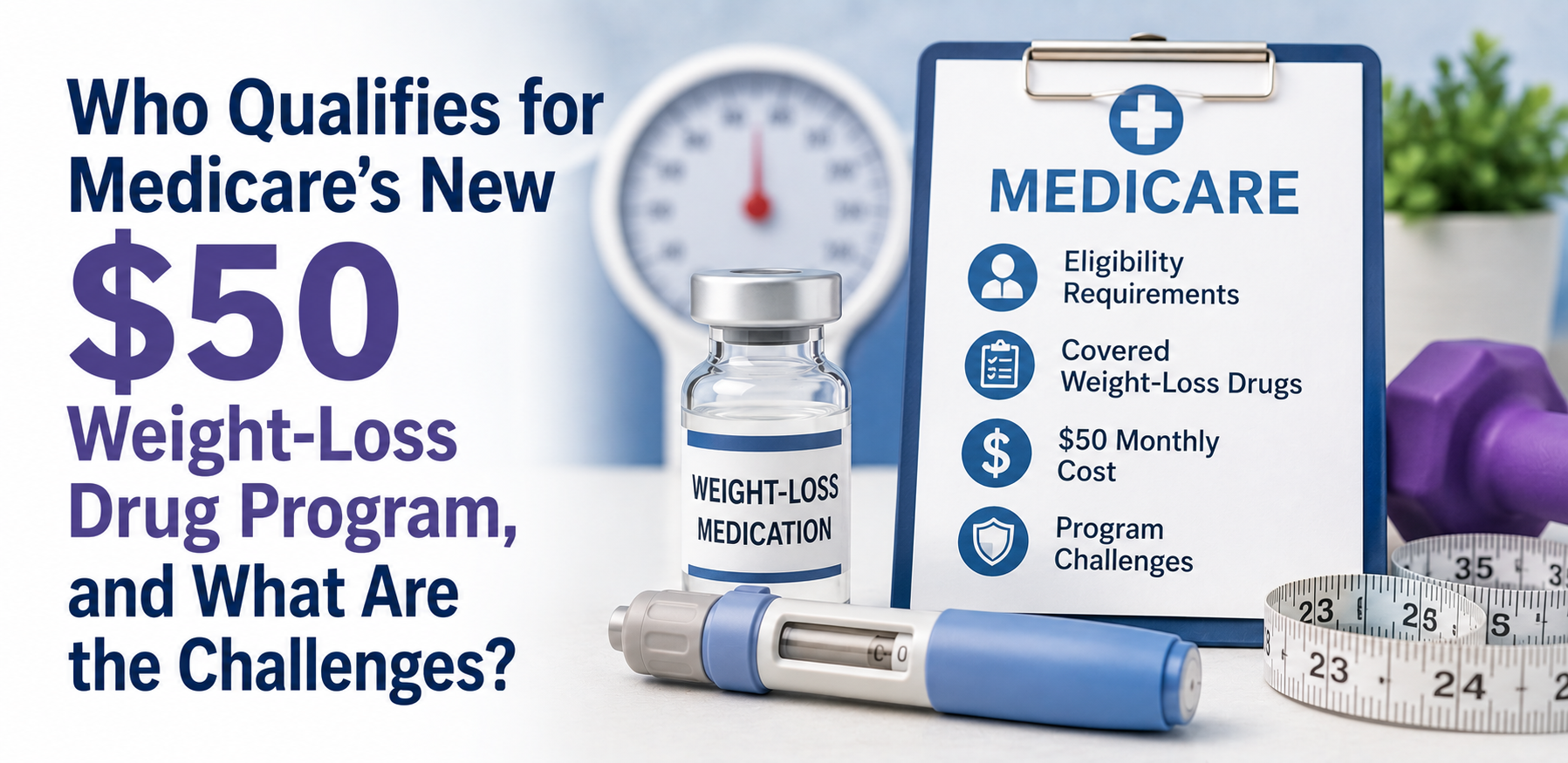
Beginning July 1, 2026, millions of Medicare beneficiaries may become eligible to receive popular GLP-1 weight-loss medications for a fixed monthly copay of $50 through a new federal pilot program called Medicare GLP-1 Bridge. The initiative marks the first time Medicare has offered broad coverage for weight-loss medications prescribed solely to treat obesity rather than another qualifying medical condition.
The program covers three medications:
- Wegovy (Novo Nordisk)
- Zepbound KwikPen (Eli Lilly)
- Foundayo (Eli Lilly's oral GLP-1 medicine)
Previously, Medicare generally covered GLP-1 drugs only when prescribed for conditions such as type 2 diabetes or certain cardiovascular diseases. Patients seeking these medications purely for weight management often paid hundreds of dollars each month out of pocket.
The new program aims to improve access while allowing the Centers for Medicare & Medicaid Services (CMS) to study whether broader coverage improves health outcomes and reduces long-term healthcare costs. The pilot will run through December 2027, after which policymakers will determine whether a permanent program should be created.
Why Medicare Is Launching This Program
Obesity affects a large percentage of older Americans and increases the risk of numerous chronic diseases, including:
- Type 2 diabetes
- Heart disease
- Stroke
- Chronic kidney disease
- Osteoarthritis
- High blood pressure
Clinical trials have shown that GLP-1 medications can help patients lose significant amounts of weight while also improving several obesity-related health conditions.
However, these medicines remain expensive.
Without insurance, patients often pay several hundred dollars, or more than $1,000 per month depending on the medication and dosage.
As demand has grown, pressure has increased on Medicare to improve access for eligible beneficiaries who previously had few affordable treatment options.
Who Qualifies?
Not every Medicare beneficiary is eligible.
To qualify for Medicare GLP-1 Bridge, patients must meet several requirements.
Medicare Coverage Requirements
Participants must:
- Be enrolled in Medicare Part D or a Medicare Advantage plan that includes prescription drug coverage.
- Not already receive GLP-1 medications through existing Medicare coverage for another approved medical condition.
Patients who already qualify for GLP-1 coverage because of type 2 diabetes or another covered indication continue receiving their medication through their regular Medicare drug plan rather than through the Bridge program.
Medical Eligibility
Patients must also meet obesity-related clinical criteria.
They qualify if they have:
- A Body Mass Index (BMI) of 35 or higher, or
- A BMI of 30 or higher with certain qualifying conditions such as difficult-to-control hypertension, chronic kidney disease, or specific forms of heart failure, or
- A BMI of 27 or higher with certain cardiovascular risk factors, including previous heart attack, stroke, peripheral artery disease, or prediabetes.
How Much Will Patients Pay?
Eligible beneficiaries pay a flat $50 per month regardless of which covered medication they receive or what dose they use.
However, there are several important details.
The $50 payment:
- Does not count toward a patient's Medicare Part D deductible.
- Does not count toward annual out-of-pocket spending limits.
- Cannot be reduced through Medicare's Prescription Payment Plan or the Extra Help program.
The remaining cost of the medication is paid by Medicare under the demonstration program. Medicare's negotiated cost is approximately $250 per patient each month, substantially below standard retail prices.
How Do Patients Enroll?
Unlike many Medicare benefits, patients cannot simply sign up online.
Instead, the process begins with their healthcare provider.
The typical pathway includes:
- A physician determines whether the patient meets clinical eligibility requirements.
- The physician writes a prescription for one of the approved medications.
- Medicare reviews a prior authorization request.
- Once approved, the patient fills the prescription through a participating pharmacy.
- The patient pays the $50 monthly copay.
Because prior authorization is required, physicians expect some delays during the early months of the program while pharmacies, providers, and Medicare systems adjust to the new process.
Why Experts Are Excited
Many obesity specialists view the program as a major step forward.
For years, Medicare beneficiaries have had fewer treatment options than younger adults with commercial insurance.
Supporters believe expanded access could:
- Improve weight management.
- Reduce obesity-related complications.
- Lower rates of diabetes and cardiovascular disease.
- Improve mobility and quality of life.
- Reduce long-term healthcare spending.
Researchers also hope the demonstration will generate valuable real-world evidence about how older adults respond to GLP-1 therapy outside traditional clinical trials.
What Are the Concerns?
Although many experts welcome expanded access, physicians have raised several important concerns.
Muscle Loss
Older adults naturally lose muscle mass with age.
GLP-1 medications reduce appetite, which can lead to both fat loss and muscle loss if patients do not consume enough protein or perform resistance exercise.
Loss of muscle can contribute to:
- Frailty
- Falls
- Reduced mobility
- Loss of independence
Healthcare providers emphasize that patients should combine medication with proper nutrition and strength training whenever possible.
Bone Health
Rapid weight loss may also reduce bone density in some older adults.
Doctors recommend monitoring bone health, particularly among patients already at higher risk of osteoporosis or fractures.
Healthcare Infrastructure
Experts also question whether enough physicians, dietitians, pharmacists, and obesity specialists are available to support what could become millions of new patients.
Successful obesity treatment typically involves:
- Lifestyle counseling
- Nutrition guidance
- Exercise support
- Regular follow-up
- Medication monitoring
Some healthcare professionals worry that medication demand could outpace the clinical support needed for long-term success.
Program Uncertainty
The demonstration currently ends in December 2027.
Because obesity is a chronic disease that often requires long-term treatment, many physicians worry about what happens if patients lose access after the pilot concludes.
Stopping GLP-1 therapy frequently leads to weight regain, making the program's long-term future an important question for both patients and providers.
What Could This Mean for Medicare?
The program represents one of Medicare's most significant obesity policy changes in decades.
If successful, it could influence future decisions regarding:
- Permanent Medicare coverage
- Obesity treatment guidelines
- Drug pricing negotiations
- Chronic disease management
- Preventive healthcare investments
CMS will closely monitor enrollment, patient outcomes, healthcare utilization, and program costs throughout the demonstration before deciding whether broader implementation is appropriate.
Industry Impact
- Pharmaceutical Companies: Novo Nordisk and Eli Lilly could see increased demand as millions of Medicare beneficiaries gain access to obesity treatments.
- Healthcare Providers: Primary care physicians, endocrinologists, obesity specialists, pharmacists, and dietitians may experience higher patient volumes related to weight management.
- Health Insurers and Medicare: The pilot will provide valuable data on whether broader obesity treatment reduces long-term healthcare costs enough to justify expanded coverage.
- Patients: Eligible older adults who previously could not afford GLP-1 medications may now have access to treatments that were financially out of reach.
Why This Matters
The Medicare GLP-1 Bridge program marks a significant shift in how the U.S. healthcare system approaches obesity treatment.
Rather than viewing obesity primarily as a lifestyle issue, Medicare is recognizing it as a chronic medical condition that may warrant prescription drug coverage for eligible patients.
The pilot also reflects the growing influence of GLP-1 therapies across healthcare. As clinical evidence continues to expand, policymakers are increasingly evaluating how these medicines fit into long-term strategies for preventing chronic disease and controlling healthcare spending.
Whether the program ultimately becomes permanent will depend not only on patient demand but also on its ability to demonstrate meaningful improvements in health outcomes while remaining financially sustainable.
Key Takeaways
- Medicare launched the GLP-1 Bridge program on July 1, 2026.
- Eligible beneficiaries can receive certain GLP-1 weight-loss medications for $50 per month.
- Patients must meet specific Medicare enrollment and clinical eligibility requirements.
- Prior authorization and physician approval are required.
- Physicians support expanded access but have raised concerns about muscle loss, bone health, healthcare capacity, and the program's temporary nature.
What This Means for Healthcare Marketers
The Medicare GLP-1 Bridge program represents one of the most significant policy developments in the obesity treatment market. For healthcare marketers, it demonstrates how government reimbursement decisions can rapidly reshape patient access, prescribing patterns, and market demand. Expanding Medicare coverage introduces millions of potential new patients into the obesity treatment ecosystem, creating opportunities across pharmaceuticals, diagnostics, nutrition services, digital health platforms, specialty pharmacies, and patient support programs.
The program also reinforces that successful obesity care extends beyond medication alone. Organizations that offer integrated solutions, including nutritional counseling, remote patient monitoring, adherence programs, behavioral health support, and long-term disease management—may become increasingly valuable as providers seek comprehensive approaches for older adults.
For healthcare intelligence teams, the pilot will generate important data on utilization, patient outcomes, healthcare spending, and reimbursement models. Monitoring enrollment trends, physician adoption, patient adherence, and policy discussions throughout the demonstration will provide valuable insight into the future direction of obesity treatment within Medicare and the broader U.S. healthcare system.
More broadly, the initiative reflects a healthcare landscape that is increasingly treating obesity as a chronic disease requiring sustained medical management rather than a condition addressed solely through lifestyle interventions. The results of this pilot could influence future reimbursement policies and reshape one of the fastest-growing therapeutic markets in healthcare.