Wildfire Smoke Poses Serious Health Risks as Experts Warn of Growing Public Health Threat
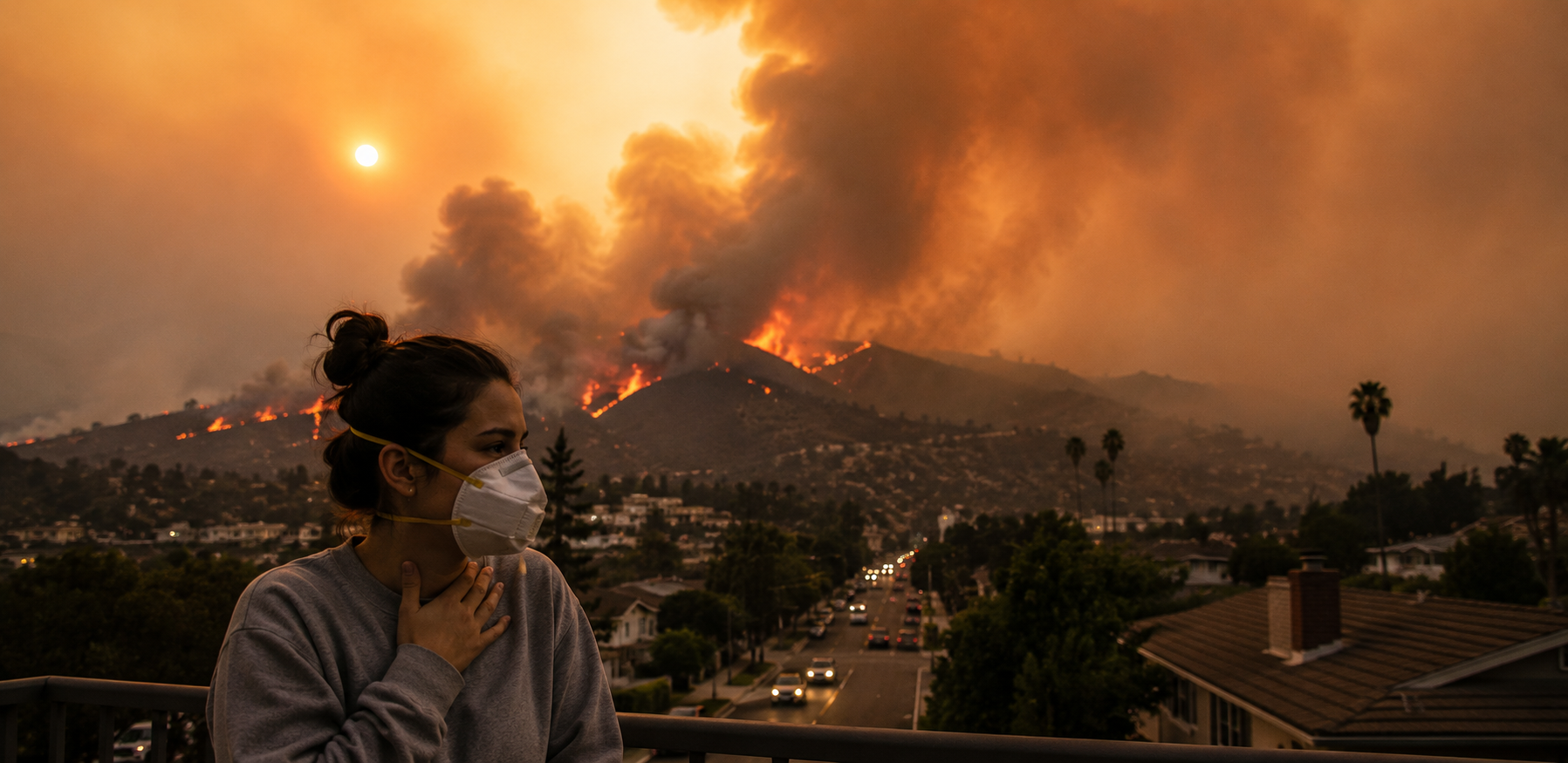
What's Happening
As wildfires become more frequent and intense across North America, health experts are warning that wildfire smoke is emerging as one of the most significant environmental health threats facing communities today.
Unlike the visible flames, wildfire smoke can travel hundreds or even thousands of miles, exposing millions of people far from the actual fire to harmful air pollution. Public health officials say these smoke events are becoming longer-lasting and more widespread, increasing the risk of respiratory illnesses, cardiovascular complications, and other health problems.
Researchers emphasize that wildfire smoke is no longer only a concern for people living near forests. Large smoke plumes can affect cities, suburbs, and rural communities across entire regions, making air quality a growing healthcare challenge.
What Makes Wildfire Smoke Dangerous?
Wildfire smoke is a complex mixture of gases and microscopic particles produced when vegetation, buildings, vehicles, and other materials burn.
One of the biggest health concerns is fine particulate matter, commonly known as PM2.5.
These particles are extremely small—about 30 times smaller than the width of a human hair—and can travel deep into the lungs before entering the bloodstream.
Wildfire smoke may also contain:
- Carbon monoxide.
- Nitrogen oxides.
- Volatile organic compounds.
- Heavy metals.
- Toxic chemicals released from burning structures and synthetic materials.
The exact composition depends on what is burning, making some wildfire smoke events even more hazardous than others.
Health Effects Can Begin Within Hours
Exposure to wildfire smoke can affect both healthy individuals and those with underlying medical conditions.
Short-term symptoms may include:
- Coughing.
- Sore throat.
- Eye irritation.
- Runny nose.
- Headaches.
- Chest discomfort.
- Shortness of breath.
- Wheezing.
For people with asthma or chronic obstructive pulmonary disease (COPD), smoke exposure can trigger severe flare-ups requiring emergency medical care.
Even healthy adults may experience reduced lung function after prolonged exposure to heavy smoke.
Cardiovascular Risks Are Often Overlooked
Although wildfire smoke is commonly associated with breathing problems, researchers say its impact extends well beyond the lungs.
Fine particles that enter the bloodstream can contribute to:
- Increased blood pressure.
- Heart rhythm disturbances.
- Heart attacks.
- Stroke.
- Worsening heart failure.
Older adults and people with existing cardiovascular disease face the greatest risk, particularly during prolonged periods of poor air quality.
Studies have also found increases in emergency department visits and hospital admissions during major wildfire smoke events.
Who Is Most Vulnerable?
Certain groups are significantly more susceptible to the health effects of wildfire smoke.
These include:
- Older adults.
- Infants and young children.
- Pregnant women.
- Individuals with asthma.
- People with COPD.
- Patients with heart disease.
- Individuals with weakened immune systems.
- Outdoor workers.
- First responders.
Healthcare providers encourage these individuals to monitor local air quality closely and limit outdoor exposure when smoke levels become unhealthy.
How to Reduce Exposure
Public health agencies recommend several steps to reduce health risks during wildfire smoke events.
These include:
- Staying indoors with windows and doors closed when air quality is poor.
- Using high-efficiency air filters or portable air purifiers.
- Monitoring local Air Quality Index (AQI) reports.
- Avoiding strenuous outdoor exercise during heavy smoke.
- Wearing a properly fitted N95 respirator when prolonged outdoor exposure cannot be avoided.
- Following local evacuation and public health guidance if fires approach residential areas.
People with chronic medical conditions should also ensure they have adequate supplies of medications and follow their healthcare provider's recommendations during smoke events.
Climate Change and Future Healthcare Challenges
Scientists expect wildfire activity to increase in many regions due to rising temperatures, prolonged droughts, and changing weather patterns.
Longer wildfire seasons mean healthcare systems may increasingly encounter:
- More respiratory emergencies.
- Greater demand for emergency medical services.
- Increased hospital admissions.
- Higher healthcare costs.
- Greater need for public health preparedness.
Healthcare organizations are beginning to incorporate environmental health planning into disaster preparedness strategies as smoke events become more common.
Industry Impact
- Public Health Agencies: Health departments continue expanding air quality monitoring, emergency preparedness, and public communication efforts to protect communities during wildfire seasons.
- Healthcare Providers: Hospitals and clinics may experience increased patient volumes related to asthma attacks, respiratory infections, cardiovascular events, and other smoke-related illnesses.
- Healthcare Systems: Growing wildfire activity places additional pressure on emergency departments, ambulance services, and disaster response planning.
- Patients: Millions of Americans may experience repeated smoke exposure each year, making awareness and preventive measures increasingly important for protecting long-term health.
Why This Matters
Wildfire smoke has evolved from a seasonal environmental issue into a major public health concern.
As climate conditions contribute to larger and longer-lasting wildfires, healthcare systems must prepare for increasing numbers of smoke-related illnesses affecting both respiratory and cardiovascular health.
The growing reach of wildfire smoke also demonstrates that environmental events can have widespread healthcare consequences, even for communities located far from active fires. Continued investments in air quality monitoring, emergency preparedness, public education, and environmental health research will be essential to reducing future health impacts.
Key Takeaways
- Wildfire smoke contains harmful fine particles and gases that can affect both respiratory and cardiovascular health.
- Smoke exposure may trigger asthma attacks, worsen chronic lung disease, and increase the risk of heart attacks and strokes.
- Older adults, children, pregnant women, and people with chronic medical conditions are at the greatest risk.
- Air quality monitoring, indoor air filtration, and limiting outdoor exposure are among the most effective protective measures.
- As wildfire seasons become more severe, healthcare systems are increasingly treating wildfire smoke as a long-term public health challenge.
What This Means for Healthcare Marketers
Wildfire smoke illustrates how environmental factors are becoming increasingly intertwined with population health. Healthcare organizations, public health agencies, and technology companies are investing more heavily in environmental monitoring, predictive analytics, and community preparedness as climate-related health risks continue to grow. Solutions that improve early warning systems, patient education, remote monitoring, and emergency response are likely to become more important across the healthcare ecosystem.
For healthcare marketers, this trend highlights the growing need to communicate around prevention, resilience, and population health rather than treatment alone. Organizations that can demonstrate expertise in environmental health, respiratory care, chronic disease management, or public health preparedness have opportunities to position themselves as trusted partners in addressing emerging health challenges.
For healthcare intelligence teams, wildfire smoke serves as a reminder that environmental events can significantly influence healthcare demand. Monitoring climate-related health trends, air quality data, emergency department utilization, and public health advisories can help organizations anticipate changes in patient needs, allocate resources more effectively, and identify opportunities for innovation in preventive healthcare.