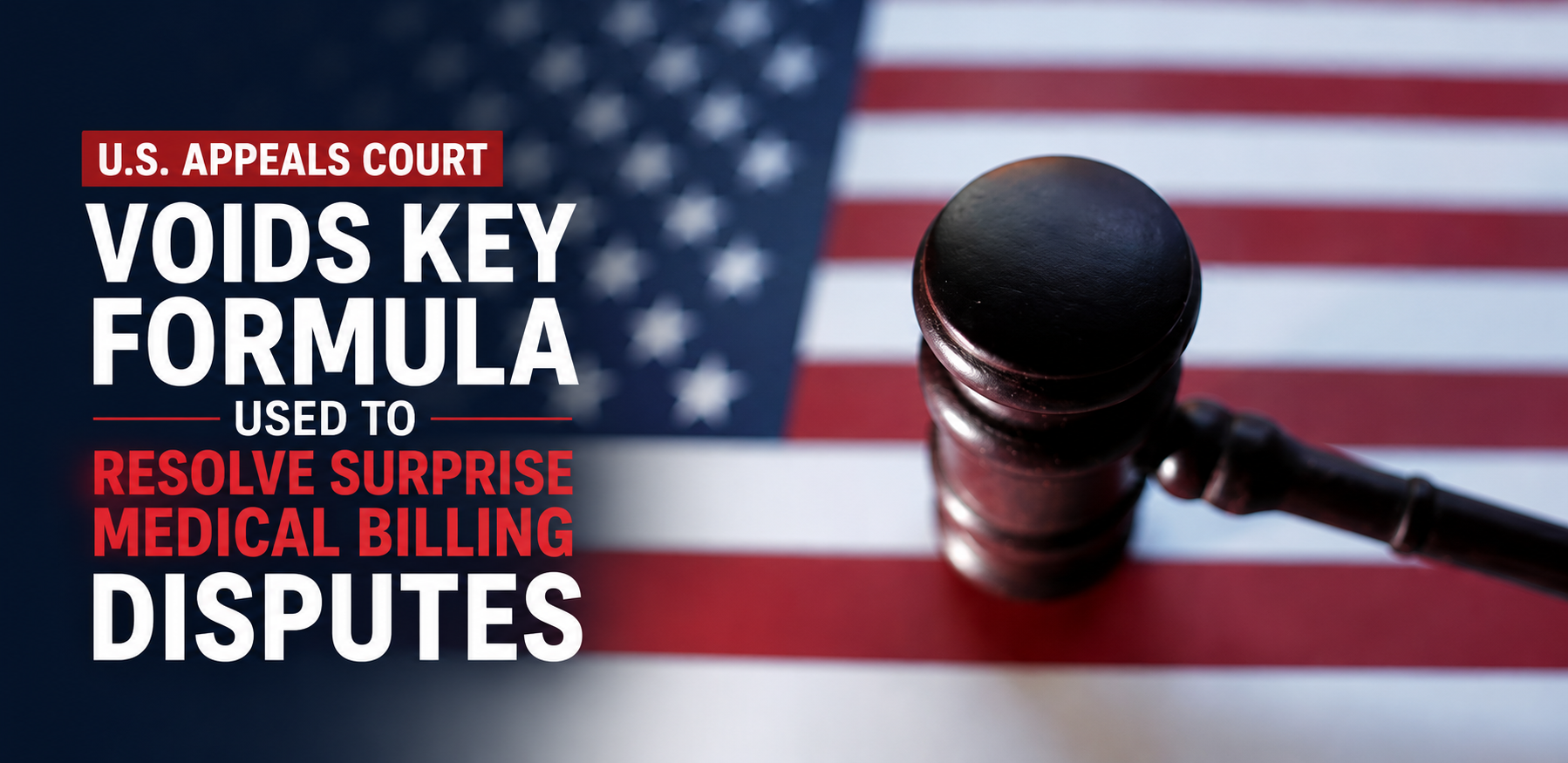
U.S. Appeals Court Voids Key Formula Used to Resolve Surprise Medical Billing Disputes
What's Happening
A U.S. federal appeals court has struck down a key formula used under the No Surprises Act to resolve payment disputes between healthcare providers and insurers over out-of-network medical services.
The ruling invalidates part of the methodology used to calculate the Qualifying Payment Amount (QPA), a benchmark that plays a central role in determining reimbursement during the law's independent dispute resolution process. The court agreed with healthcare providers that the formula improperly included certain contracted rates that did not reflect actual medical services provided while excluding some incentive payments.
Although the decision changes how reimbursement rates will be calculated, the court said patients will continue to be protected from surprise medical bills while federal agencies develop a revised formula.
Understanding the No Surprises Act
The No Surprises Act, which took effect in 2022, was created to protect patients from unexpectedly high medical bills when they receive emergency care or treatment from out-of-network providers at in-network facilities.
Instead of billing patients, the law requires providers and insurers to resolve payment disputes through an independent arbitration process.
A key part of that process is the Qualifying Payment Amount (QPA), which serves as a benchmark during negotiations.
Why the Court Ruled Against the Formula
Healthcare providers argued that the government's formula understated appropriate reimbursement by:
- Including "ghost rates" for services that providers never actually performed.
- Excluding certain bonus and incentive payments included in provider contracts.
The appeals court agreed that these aspects of the calculation conflicted with the language of the No Surprises Act and ordered the disputed portions of the formula to be set aside.
Industry Impact
- Healthcare Providers: Hospitals, physician groups, and air ambulance operators may receive higher reimbursement through future arbitration if a revised formula better reflects actual contracted payment rates.
- Health Insurers: Insurers may need to adjust reimbursement calculations and dispute resolution processes once federal agencies establish a replacement methodology.
- Patients: The ruling does not eliminate protections against surprise medical bills, and patients are expected to remain shielded from unexpected out-of-network charges while regulators update the formula.
- Healthcare Policy: Federal agencies will need to develop a new calculation methodology that complies with the court's interpretation of the law while maintaining the dispute resolution system.
Looking Ahead
The Departments of Health and Human Services, Labor, and the Treasury are expected to revise the Qualifying Payment Amount methodology in response to the court's decision.
Until a replacement formula is finalized, regulators are expected to continue using enforcement discretion to avoid disrupting patient protections under the No Surprises Act.
Why This Matters
The No Surprises Act has significantly changed how out-of-network medical billing disputes are handled across the U.S. healthcare system.
The appeals court's ruling reshapes one of the law's most important reimbursement mechanisms while preserving its core goal of protecting patients from unexpected medical bills.
The decision could also influence future negotiations between healthcare providers and insurers and affect reimbursement across the healthcare industry.
Key Takeaways
- A U.S. appeals court struck down key parts of the reimbursement formula used under the No Surprises Act.
- The ruling affects how insurers calculate the Qualifying Payment Amount used in payment disputes.
- Healthcare providers successfully challenged the inclusion of "ghost rates" and exclusion of certain incentive payments.
- Patient protections against surprise medical bills remain in place.
- Federal agencies must now develop a revised reimbursement formula that complies with the court's ruling.
What This Means for Healthcare Marketers
The ruling highlights continued changes in healthcare reimbursement, payer-provider negotiations, and regulatory policy. Health systems, physician groups, insurers, revenue cycle management companies, healthcare consulting firms, and payment technology providers will closely monitor updates to the No Surprises Act framework. For healthcare marketers, organizations involved in reimbursement solutions, healthcare finance, revenue cycle management, payer services, and healthcare policy represent high-intent opportunities for provider education, compliance support, strategic partnerships, and commercial growth.