
Kennedy Advisers Recommend Doubling U.S. Autism Spending on Care and Family Support
What's Happening
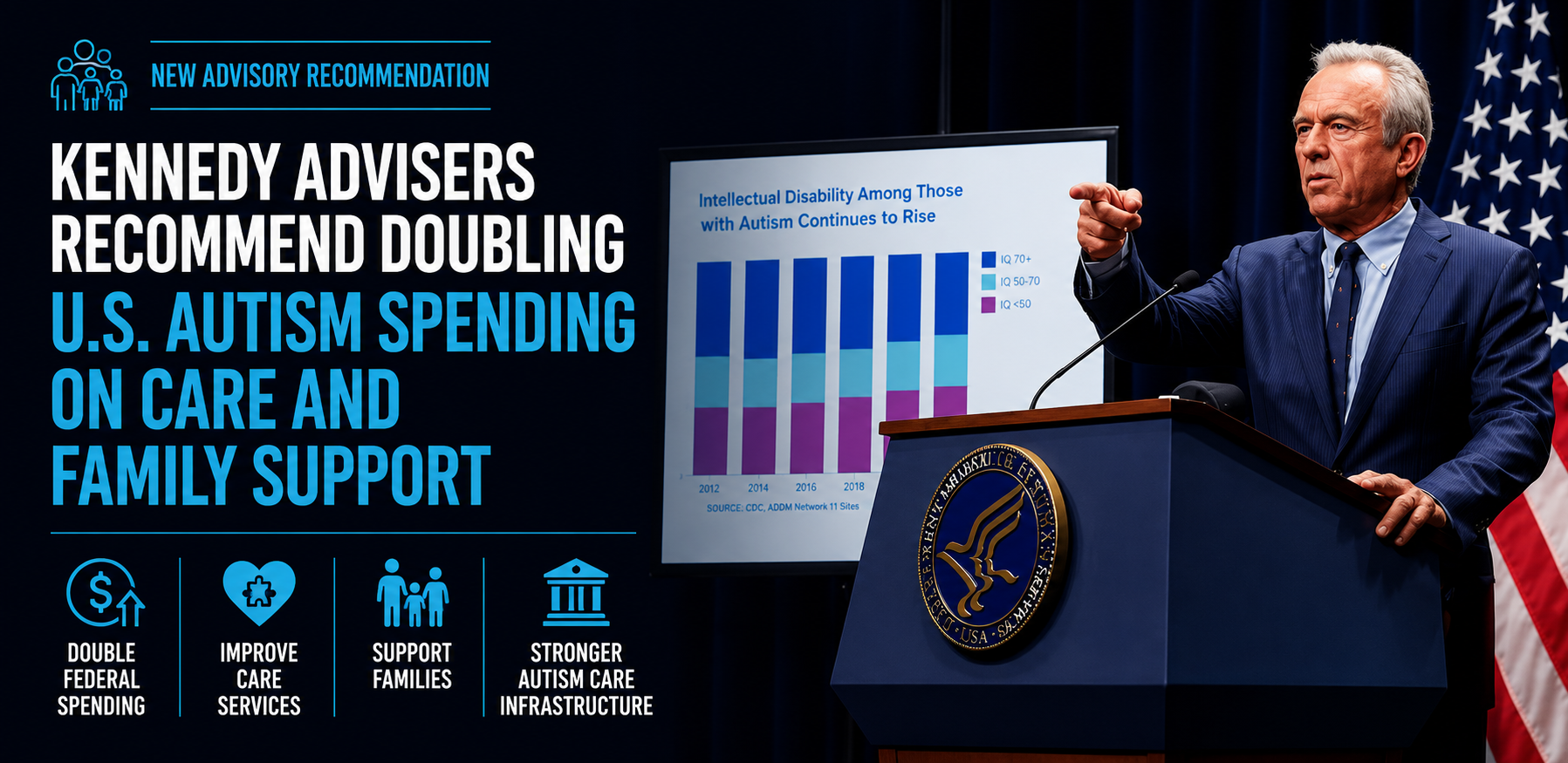
A U.S. advisory committee on autism appointed by Health Secretary Robert F. Kennedy Jr. has adopted a new strategic plan calling for federal agencies to nearly double annual autism-related investment, from about $390.4 million to roughly $760 million. (reuters.com)
The proposed increase would support research and initiatives focused on medical care, housing, aging and other needs of autistic people and their families. (reuters.com)
Our Article: Reuters article
What the New Plan Prioritizes
The Interagency Autism Coordinating Committee (IACC) identified two overarching priorities:
- Improve medical care and research for people with autism.
- Support autistic people throughout their lives, with particular attention to people with complex or high support needs. (reuters.com)
The committee said people with profound autism and the highest support needs have historically been underrepresented in autism research and strategic planning.
More Focus on Medical Care
The plan calls for federal agencies to move more quickly on research and treatment of medical conditions that commonly occur alongside autism.
These include:
- Gastrointestinal disorders
- Sleep problems
- Seizures
- Speech and motor impairments
- Mental-health conditions (reuters.com)
This represents a broader approach to autism that looks beyond autism-related traits themselves and focuses on the overall health and quality of life of autistic people.
Support Across the Lifespan
Another major focus is providing support beyond childhood.
The committee's recommendations address issues including:
- Housing
- Aging
- Medical care
- Family support
- Long-term care
- Services for people with high support needs (reuters.com)
This is significant because autism policy and services have historically focused heavily on children, while many autistic adults continue to need substantial support throughout adulthood.
Who Will Fund the Increase?
The plan calls for increased investment from federal agencies including:
- National Institutes of Health (NIH)
- Centers for Disease Control and Prevention (CDC)
- Other federal agencies involved in autism research and services (reuters.com)
The proposed funding level would bring annual federal autism investment to approximately $760 million.
The Recommendation Is Not Binding
The IACC provides advisory guidance to the federal government.
That means the strategic plan does not automatically create new funding or require federal agencies to implement every recommendation.
Federal agencies and the administration would ultimately determine how the recommendations are adopted and funded. (reuters.com)
A Shift Toward High-Support Needs
A major theme of the plan is increasing attention to people with profound autism or complex support needs.
About one-third of the committee's public members are parents of profoundly autistic children.
The committee said this population has been significantly underrepresented in previous research and strategic planning. (reuters.com)
Autism and Vaccine Research
The plan notably does not mention vaccines or studying a vaccine-autism connection.
That is notable because Kennedy has historically promoted claims linking vaccines and autism, claims that have been repeatedly rejected by large scientific studies.
The administration has separately commissioned research examining vaccines and autism, including a $50 million NIH project. (reuters.com)
The strategic plan itself instead concentrates on medical care, research and support for autistic people.
Impact on U.S. Healthcare
- Autism Care: More federal funding could support research into better diagnosis, treatment and management of medical conditions affecting autistic people.
- Behavioral and Mental Health: The plan specifically identifies mental-health conditions as an area requiring greater research and clinical attention. (reuters.com)
- Neurology: Seizures and other neurological conditions that can occur alongside autism are included among the areas targeted for additional research.
- Family Support: Greater investment could support programs addressing the significant caregiving and financial burdens faced by families supporting people with high care needs.
- Adult Healthcare: The emphasis on aging and lifelong support could encourage a greater focus on autistic adults, an area that has historically received less attention than pediatric autism care.
Why This Matters
This is a significant U.S. healthcare and public-health story because it could reshape federal priorities and spending around autism.
The proposed increase would move federal autism investment toward approximately $760 million annually, while placing greater emphasis on medical care, high-support-needs populations, family support and lifelong healthcare. (reuters.com)
Looking Ahead
The recommendations now go to federal agencies for consideration.
Because the IACC's guidance is non-binding, the ultimate impact will depend on whether NIH, CDC and other agencies adopt the recommendations and whether Congress or the administration provides the requested funding. (reuters.com)
Key Takeaways
- A Kennedy-appointed U.S. autism advisory committee adopted a new strategic plan.
- It recommends increasing federal autism investment from $390.4 million to roughly $760 million annually. (reuters.com)
- The plan prioritizes medical care, research and lifelong support.
- It places greater emphasis on people with profound autism and high support needs.
- Research priorities include gastrointestinal disorders, sleep problems, seizures, speech and motor impairment, and mental-health conditions.
- The plan includes housing, aging and family support.
- It does not recommend studying vaccines as a cause of autism.
- The recommendations are non-binding and still require action by federal agencies. (reuters.com)
What This Means for Healthcare Marketers
The development is relevant to autism care, behavioral health, neurology, pediatric and adult healthcare, family support services, population health and healthcare research. A stronger federal focus on lifelong autism care could expand demand for providers, programs and technologies addressing the complex medical and support needs of autistic populations.