
Bristol Myers Squibb to Invest $2.3 Billion in New Houston Manufacturing Campus
What's Happening
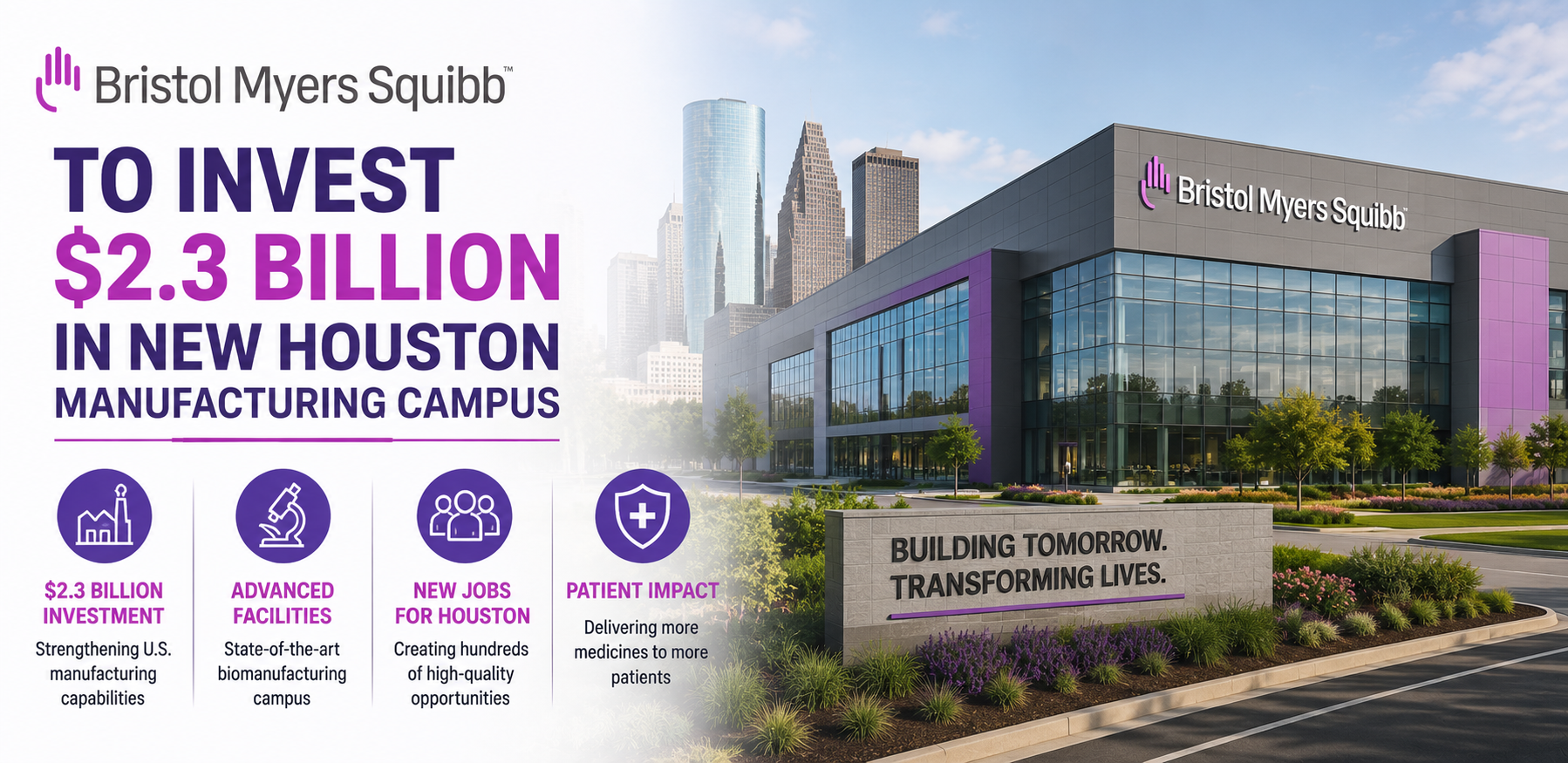
Bristol Myers Squibb has announced plans to invest $2.3 billion in a new state-of-the-art manufacturing campus in Houston, Texas, expanding its U.S. production capacity for next-generation medicines.
The approximately 600,000-square-foot facility will manufacture a wide range of therapies, including small-molecule medicines, biologics, and antibody-drug conjugates (ADCs). The project is part of the company's previously announced $40 billion commitment to invest in U.S. research, technology, and manufacturing over the next five years.
The new campus is expected to create nearly 500 permanent skilled jobs and approximately 2,000 construction and related jobs during development between 2027 and 2030.
Why the Investment Matters
The Houston campus has been designed to support Bristol Myers Squibb's growing pipeline of innovative medicines while increasing manufacturing flexibility.
The facility will:
- Produce small-molecule medicines.
- Manufacture biologics.
- Support antibody-drug conjugate (ADC) production.
- Use modular manufacturing systems that can expand as future demand grows.
- Strengthen domestic pharmaceutical manufacturing capacity.
The modular, multi-modal design allows the company to adapt production as new medicines progress through development and commercialization.
Supporting U.S. Pharmaceutical Manufacturing
The investment is part of a broader industry trend toward expanding pharmaceutical production in the United States.
Drug manufacturers are increasing domestic manufacturing to:
- Improve supply chain resilience.
- Expand production capacity.
- Accelerate delivery of innovative medicines.
- Reduce dependence on overseas manufacturing.
- Support future biologics and advanced therapies.
Texas also approved financial incentives to support the project, including grants and additional economic development benefits.
Industry Impact
- Pharmaceutical Companies: The investment demonstrates continued expansion of U.S. biopharmaceutical manufacturing to support growing demand for innovative therapies.
- Healthcare Providers: Greater domestic manufacturing capacity may improve the long-term availability of medicines while strengthening supply chain reliability.
- Patients: Expanded production capabilities can help accelerate access to new therapies as Bristol Myers advances its pipeline.
- Investors: The project reflects Bristol Myers Squibb's long-term commitment to manufacturing, research, and commercial growth in the United States.
Looking Ahead
Construction is expected to begin as Bristol Myers prepares the Houston campus for future manufacturing operations.
The company plans to use the site to support medicines across multiple therapeutic areas while maintaining the flexibility to expand production as its product pipeline evolves.
The investment is also expected to reinforce Houston's growing role as a major U.S. life sciences and pharmaceutical manufacturing hub.
Why This Matters
Manufacturing capacity has become a strategic priority for pharmaceutical companies as demand grows for biologics, precision medicines, and advanced therapies.
Bristol Myers Squibb's investment strengthens the domestic pharmaceutical supply chain while supporting innovation, job creation, and future medicine production.
The project also reflects the broader industry shift toward expanding U.S.-based manufacturing infrastructure.
Key Takeaways
- Bristol Myers Squibb will invest $2.3 billion in a new manufacturing campus in Houston.
- The facility will produce small-molecule drugs, biologics, and antibody-drug conjugates.
- The project is part of the company's $40 billion U.S. investment strategy.
- The campus is expected to create nearly 500 permanent jobs and about 2,000 construction jobs.
- The investment strengthens U.S. pharmaceutical manufacturing and supply chain resilience.
What This Means for Healthcare Marketers
Bristol Myers Squibb's investment highlights continued expansion in pharmaceutical manufacturing, biologics, antibody-drug conjugates, and advanced production technologies. Pharmaceutical manufacturers, CDMOs, biotechnology companies, and healthcare supply chain partners continue investing in domestic manufacturing to support innovation and improve supply resilience. For healthcare marketers, organizations involved in biopharmaceutical manufacturing, life sciences, advanced therapeutics, and healthcare infrastructure represent high-intent opportunities for provider education, partnership development, commercial expansion, and strategic growth.