
Cardinal Health and AdaptHealth Expand Home Healthcare Access Through New Distribution Partnership
What's Happening
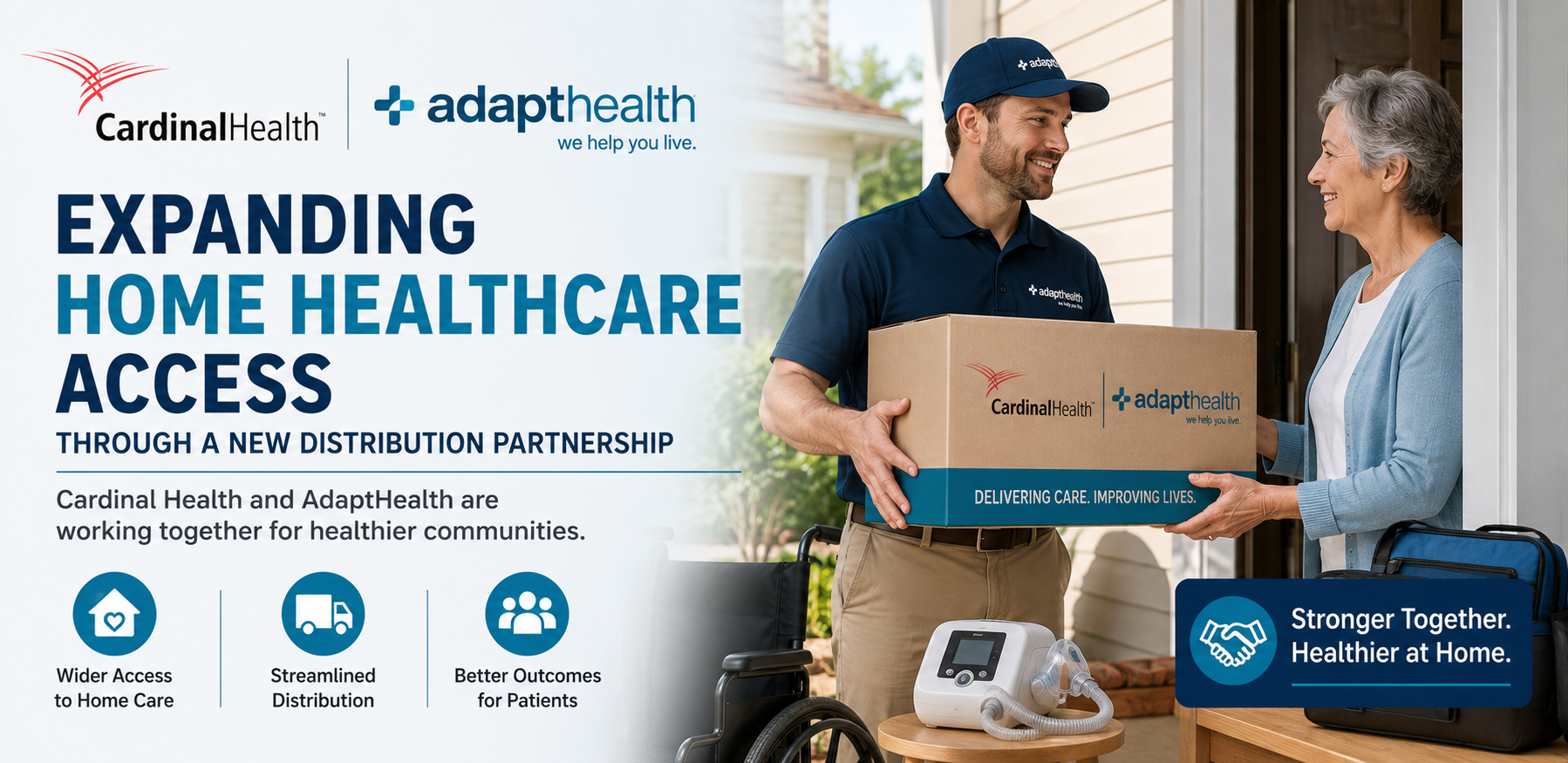
Cardinal Health and AdaptHealth have announced a new strategic partnership aimed at expanding access to home medical equipment and supplies across the United States.
Under the agreement, Cardinal Health at-Home Solutions will become the exclusive distributor of Strive Medical, AdaptHealth's national direct-to-patient medical supply business. The partnership is designed to strengthen the distribution of essential home healthcare products while simplifying how patients receive ongoing medical supplies.
The collaboration reflects a broader transformation taking place across healthcare as more care shifts from hospitals and physician offices into patients' homes. Rather than relying solely on traditional healthcare settings, providers, payers, and suppliers are increasingly investing in home-based care models that improve convenience, reduce costs, and support better long-term patient outcomes.
For the healthcare industry, the announcement highlights the growing importance of distribution networks that can efficiently deliver medical products directly to patients wherever they receive care.
Why Home Healthcare Is Growing
Home healthcare has become one of the fastest-growing segments of the U.S. healthcare market.
Several long-term trends are accelerating this shift.
An Aging Population: Millions of Americans are living longer with chronic conditions that require ongoing medical supplies, respiratory equipment, mobility aids, wound care products, and nutritional support. Receiving these products at home allows patients to maintain greater independence while reducing unnecessary hospital visits.
Growth in Chronic Disease: Conditions such as diabetes, COPD, cardiovascular disease, sleep apnea, kidney disease, and mobility disorders often require recurring medical supplies over many years. Reliable home delivery helps improve treatment adherence while reducing interruptions in care.
Preference for Care at Home: Patients increasingly prefer recovering and managing chronic illnesses at home whenever possible. Advances in remote monitoring, telehealth, home diagnostics, and connected medical devices have made home-based care safer and more practical for a wider range of conditions.
Healthcare Cost Pressures: Home-based care is often less expensive than prolonged hospital stays or institutional care. Health systems and insurers continue investing in programs that safely transition appropriate patients to home settings while maintaining clinical oversight.
Understanding the Partnership
The partnership combines the strengths of two major healthcare organizations.
Cardinal Health brings one of the nation's largest healthcare distribution networks, supplying hospitals, pharmacies, physician practices, and home healthcare providers with medical products.
AdaptHealth, through Strive Medical, specializes in delivering medical supplies directly to patients managing chronic conditions at home.
By integrating distribution capabilities, the companies aim to:
- Improve product availability.
- Increase delivery efficiency.
- Simplify ordering and fulfillment.
- Strengthen supply chain reliability.
- Enhance the patient experience.
The collaboration also supports growing demand for recurring home delivery services, particularly for patients requiring ongoing medical supplies as part of long-term disease management.
Why Distribution Matters in Modern Healthcare
Healthcare innovation often focuses on new therapies and technologies, but effective distribution is equally critical.
Even the most advanced medical products provide little value if patients cannot receive them consistently and on time.
Healthcare supply chains have become increasingly complex due to:
- Rising patient demand.
- Growth in home healthcare.
- More specialized medical products.
- Expanding direct-to-patient delivery models.
- Higher expectations for rapid fulfillment.
As healthcare increasingly moves beyond hospitals, distribution companies play a larger role in ensuring continuity of care.
Reliable logistics can improve patient adherence, reduce treatment delays, and support better health outcomes.
Industry Impact
- Home Healthcare Providers: The partnership strengthens one of the country's largest home healthcare distribution networks, potentially improving access to essential medical supplies for patients nationwide.
- Health Systems: Hospitals increasingly depend on reliable post-acute care partners to support patients after discharge. Stronger home delivery capabilities may help reduce readmissions while improving continuity of care.
- Health Insurers: As insurers continue promoting value-based care and lower-cost treatment settings, efficient home medical supply distribution becomes an important component of long-term care management.
- Medical Device Manufacturers: Manufacturers supplying diabetes care, respiratory products, wound care solutions, urology supplies, and durable medical equipment may benefit from expanded distribution capacity and improved market reach.
The Future of Healthcare Is Increasingly Home-Based
The healthcare industry is undergoing a fundamental shift from facility-centered care toward patient-centered care delivered wherever patients are most comfortable.
This transition is supported by several technologies and care models, including:
- Remote patient monitoring.
- Virtual care.
- Home infusion services.
- Hospital-at-home programs.
- Connected medical devices.
- Digital health platforms.
As these models continue expanding, companies that provide dependable logistics and supply chain infrastructure will become increasingly important to the broader healthcare ecosystem.
Strategic partnerships like this one demonstrate that healthcare transformation depends not only on clinical innovation but also on ensuring patients can consistently access the products they need.
Why This Matters
The partnership between Cardinal Health and AdaptHealth reflects the continued evolution of healthcare delivery beyond traditional clinical settings.
As chronic disease prevalence rises and healthcare organizations seek more efficient models of care, home healthcare is becoming a central component of the patient journey.
Strengthening distribution networks helps ensure that patients receive essential supplies without interruption, supporting better adherence, improved outcomes, and a more connected healthcare system.
For healthcare organizations, the ability to deliver care into the home is no longer a competitive advantage. It is becoming an operational necessity.
Key Takeaways
- Cardinal Health and AdaptHealth have formed a strategic partnership to strengthen home medical supply distribution.
- Cardinal Health at-Home Solutions will become the exclusive distributor of Strive Medical.
- The collaboration supports growing demand for home-based healthcare and direct-to-patient delivery.
- Reliable distribution is becoming increasingly important as more healthcare shifts outside hospitals.
- The partnership reflects broader investment in home healthcare, chronic disease management, and patient-centered care.
What This Means for Healthcare Marketers
This partnership signals continued momentum behind home-based healthcare and post-acute care services. Organizations investing in durable medical equipment, remote patient monitoring, home infusion, digital health, logistics technology, and chronic disease management are likely to remain active buyers of healthcare technology and services. For healthcare marketers, announcements involving distribution partnerships often identify organizations expanding operational capacity and investing in patient-centered care models, making them valuable indicators of future commercial opportunities.