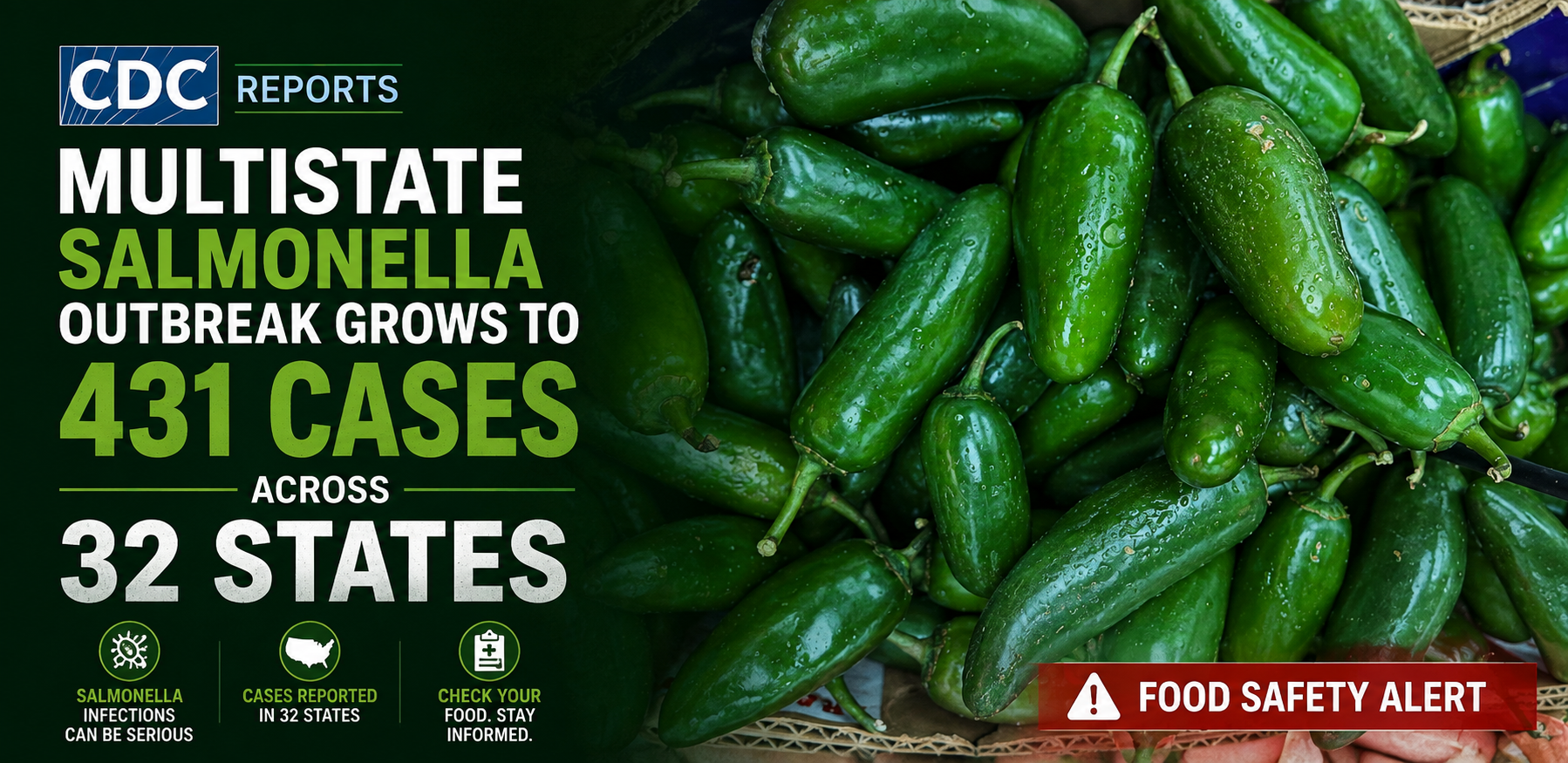
CDC Reports Multistate Salmonella Outbreak Grows to 431 Cases Across 32 States
What's Happening
The U.S. Centers for Disease Control and Prevention (CDC) reported that a multistate Salmonella outbreak linked to contaminated jalapeño peppers has grown to 431 confirmed illnesses across 32 states.
The latest update marks a significant increase from the 345 cases reported across 27 states earlier this month. Health officials continue to investigate the outbreak and are urging consumers, retailers, and restaurants not to eat or serve recalled jalapeño peppers linked to the investigation. The outbreak has resulted in 116 hospitalizations, although no deaths have been reported.
What the CDC Says
The outbreak has been traced to fresh jalapeño peppers distributed through multiple suppliers. The agency advises consumers to avoid eating recalled jalapeño peppers, discard any peppers if the source is unknown, and wash and sanitize surfaces that may have come into contact with contaminated produce. Restaurants and retailers should stop selling or serving affected products until they can confirm the peppers are not part of the recall. Health officials also cautioned that the actual number of illnesses is likely much higher because many infected people recover without seeking medical care or being tested.
Symptoms of Salmonella Infection
Salmonella infection typically develops 6 hours to 6 days after exposure. Common symptoms include diarrhea, fever, stomach cramps, nausea, and vomiting. Most people recover within several days, but young children, older adults, pregnant women, and individuals with weakened immune systems face a higher risk of severe illness requiring hospitalization.
Industry Impact
- Public Health Agencies: The CDC and state health departments continue tracing the contaminated supply chain while monitoring for additional illnesses.
- Food Industry: Retailers, restaurants, distributors, and produce suppliers may face additional recalls and food safety inspections as investigators work to identify all affected products.
- Healthcare Providers: Clinicians are being encouraged to consider Salmonella infection in patients presenting with compatible gastrointestinal symptoms and recent consumption of fresh jalapeño peppers.
- Consumers: The outbreak highlights the importance of checking recall notices and safely handling fresh produce to reduce the risk of foodborne illness.
Looking Ahead
The CDC expects the number of reported cases may continue to rise because illnesses are often reported weeks after people become sick. Investigators are continuing to identify additional distribution channels and determine whether other food products containing the contaminated peppers may also be affected.
Why This Matters
Foodborne illness outbreaks remain a significant public health concern in the United States. The continued increase in Salmonella cases underscores the importance of rapid outbreak detection, effective food traceability, and coordinated action among public health agencies, food producers, and healthcare providers to limit the spread of contaminated products.
Key Takeaways
- The CDC reported 431 confirmed Salmonella cases across 32 states linked to contaminated jalapeño peppers.
- The outbreak has grown from 345 cases in 27 states reported earlier this month.
- 116 people have been hospitalized, with no deaths reported.
- Consumers should avoid recalled jalapeño peppers and discard products of unknown origin.
- Public health officials continue investigating the outbreak and expect additional cases may be identified as reporting continues.
What This Means for Healthcare Marketers
The expanding outbreak reinforces the importance of food safety surveillance, infectious disease monitoring, laboratory diagnostics, and public health preparedness. Healthcare organizations, public health agencies, diagnostic laboratories, food safety technology providers, and healthcare analytics companies continue investing in outbreak detection, traceability, and rapid response capabilities. For healthcare marketers, organizations involved in infectious disease surveillance, laboratory medicine, food safety, epidemiology, and public health represent high-intent opportunities for provider education, scientific communications, and population health initiatives.