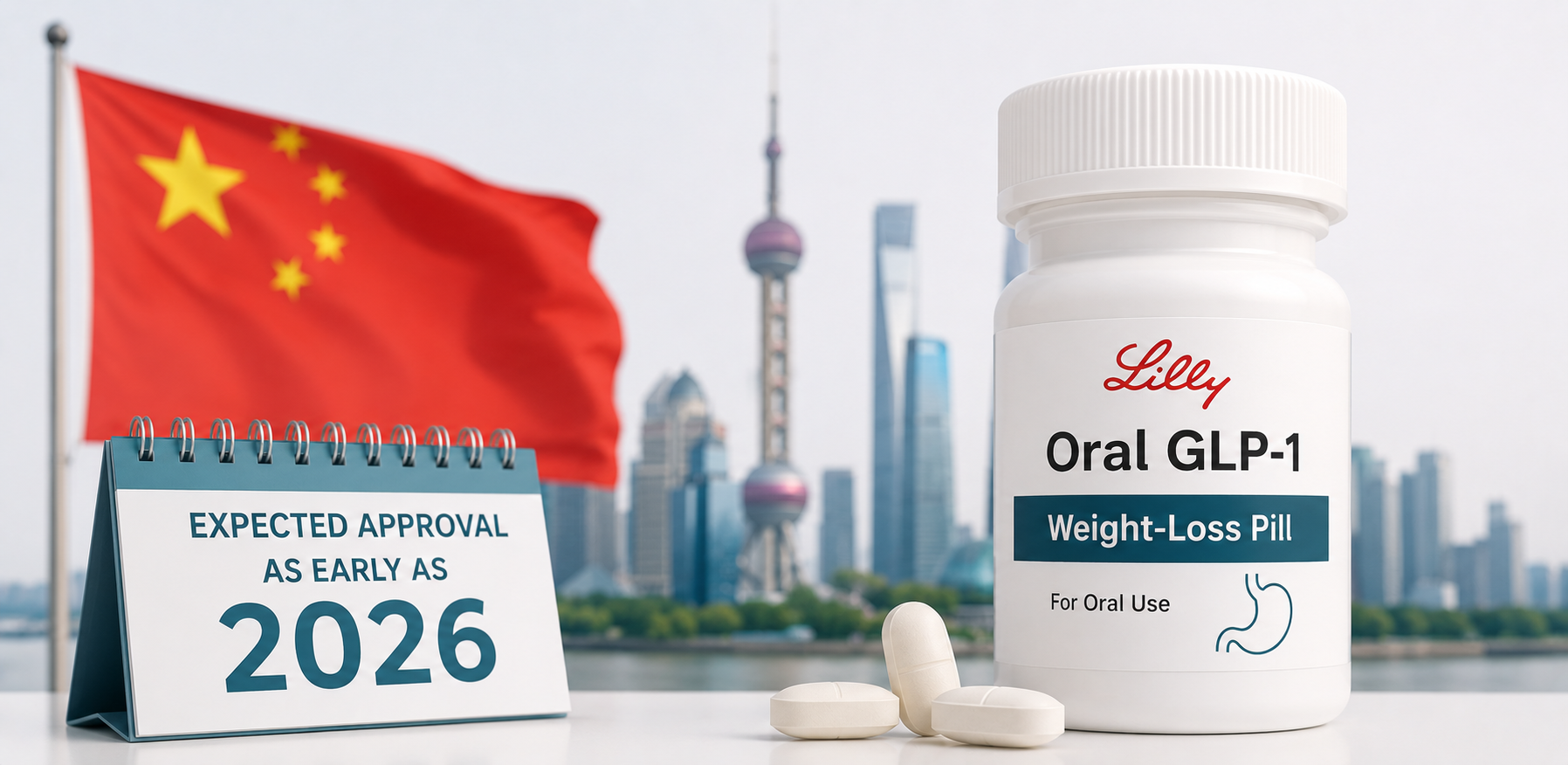
China Could Approve Lilly's Oral GLP-1 Weight-Loss Pill as Early as 2026, Executive Says
What's Happening
Eli Lilly expects China could approve its experimental oral GLP-1 obesity treatment as early as 2026, according to a company executive.
The drug is part of a new generation of obesity treatments designed to provide many of the benefits associated with injectable GLP-1 medicines in a convenient pill form. If approved, it could become one of the first oral GLP-1 therapies available for weight management in one of the world's largest pharmaceutical markets.
The announcement reflects growing confidence in both the drug's development progress and the commercial potential of obesity treatments globally. Lilly has already become a major player in the obesity market through its injectable medicines Mounjaro and Zepbound. An effective oral alternative could significantly expand access to treatment by offering patients another option beyond injections.
What Are GLP-1 Drugs?
GLP-1 drugs are a class of medicines originally developed to treat type 2 diabetes. They work by mimicking a naturally occurring hormone that helps regulate:
- Blood sugar levels
- Appetite
- Digestion
- Food intake
Researchers later discovered that these medications could also produce substantial weight loss. Patients using these medicines often experience reduced appetite, lower calorie consumption, improved blood sugar control, and significant weight loss.
Why an Oral Version Matters
Most of today's leading GLP-1 treatments are administered through injections. While many patients successfully use injectable medications, some people remain hesitant about regular injections. An oral treatment could provide several potential advantages:
- Greater Convenience: Many patients prefer taking a daily pill rather than administering injections.
- Expanded Access: Oral medications may appeal to individuals who would otherwise avoid treatment.
- Simplified Treatment Experience: Healthcare providers may find it easier to discuss treatment options when multiple delivery methods are available.
- Market Expansion: A pill-based option could significantly increase the number of patients willing to consider obesity treatment.
Why China Is an Important Market
China represents one of the largest healthcare markets in the world. The country has experienced rising rates of obesity and metabolic diseases in recent years, creating increasing demand for effective treatment options. Healthcare experts view obesity as a growing public health challenge because it is associated with conditions such as type 2 diabetes, heart disease, high blood pressure, sleep disorders, and certain cancers. A successful launch in China could provide Lilly access to millions of potential patients and further strengthen the company's position in the global obesity market.
The Competition for Oral Obesity Treatments
Lilly is not the only company pursuing oral obesity medicines. Several pharmaceutical manufacturers are working to develop pill-based alternatives to injectable treatments. The race is attracting significant attention because an effective oral therapy could dramatically expand the market. Companies are competing to offer treatments that provide:
- Strong weight-loss results
- Favorable safety profiles
- Convenient dosing
- Broad patient appeal
Industry Impact
- Pharmaceutical Companies: The development intensifies competition within the rapidly expanding obesity-treatment market.
- Healthcare Providers: Additional treatment options could help clinicians tailor obesity management to individual patient preferences.
- Patients: An oral alternative may improve access and increase willingness to seek treatment.
- Investors: Regulatory progress in obesity medicine remains one of the most closely watched areas of healthcare.
Key Takeaways
- Lilly expects China could approve its oral GLP-1 obesity pill as early as 2026.
- The treatment is designed to offer weight-loss benefits in a pill form rather than through injections.
- China represents a major growth opportunity for obesity treatments.
- Demand for GLP-1 medicines continues to expand globally.
- Oral therapies could significantly broaden access to obesity care.
What This Means for Healthcare Marketers
This story highlights the continued expansion of the obesity-treatment market into one of healthcare's largest commercial opportunities. For healthcare marketers, obesity care is evolving beyond a niche therapeutic category into a major healthcare ecosystem involving pharmaceuticals, digital health, metabolic care, nutrition services, employer health programs, and chronic disease management.
The development also demonstrates how global healthcare markets are becoming increasingly interconnected. Regulatory milestones in countries such as China can influence investment decisions, commercialization strategies, competitive positioning, and future product launches worldwide. Companies that successfully combine strong clinical outcomes with patient convenience may reshape the competitive landscape of obesity treatment over the coming years.