Curium to Acquire Lantheus in Up to $8 Billion Deal, Expanding Its Radiopharmaceutical Business
What's Happening
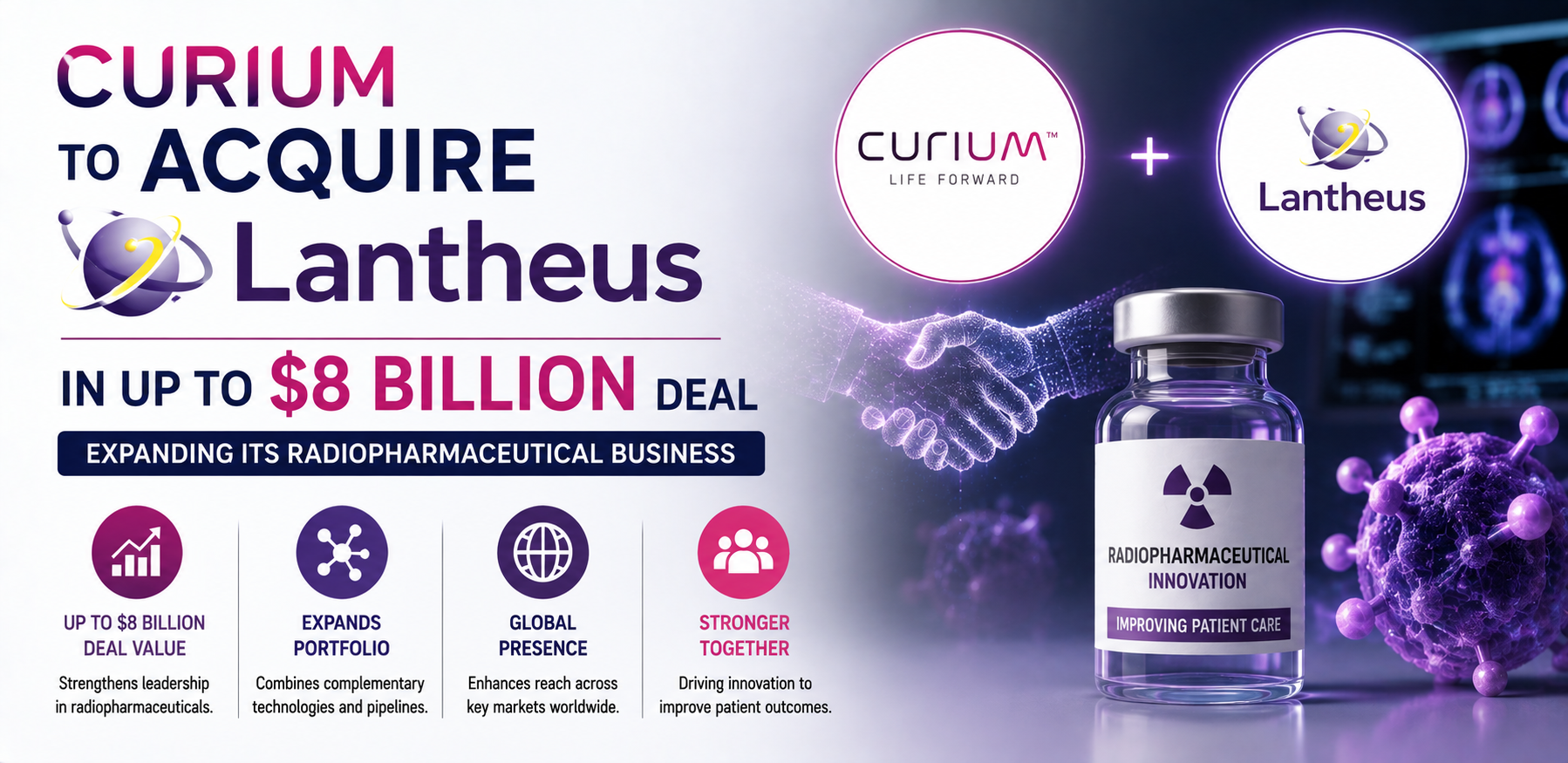
Curium has agreed to acquire radiopharmaceutical company Lantheus Holdings in a deal valued at up to $8 billion, marking one of the largest healthcare acquisitions of the year and reinforcing strong investment in nuclear medicine.
Under the agreement, Lantheus shareholders will receive $102.50 per share in cash, along with the potential to receive an additional $12 per share if certain commercial milestones are achieved by 2030. The transaction is expected to close during the first half of 2027, subject to shareholder and regulatory approvals. (Reuters)
The acquisition combines two major players in radiopharmaceuticals, an area of medicine that uses radioactive compounds to diagnose and treat diseases such as cancer.
Understanding Radiopharmaceuticals
Radiopharmaceuticals are medicines containing small amounts of radioactive material that help physicians diagnose or treat disease.
They are commonly used in:
- Cancer diagnosis.
- Targeted cancer therapy.
- Cardiology imaging.
- Neurology imaging.
- PET and SPECT scans.
Unlike traditional imaging agents, radiopharmaceuticals can both detect disease and, in some cases, deliver targeted treatment directly to tumors while minimizing damage to healthy tissue.
Why This Acquisition Matters
The radiopharmaceutical market has become one of the fastest-growing areas in healthcare as demand increases for precision diagnostics and targeted cancer treatments.
Lantheus is best known for Pylarify, a PET imaging agent used to detect prostate cancer, along with several other diagnostic imaging products.
Curium already develops and supplies radiopharmaceutical products globally. By combining the two companies, Curium will significantly expand its diagnostic imaging portfolio, manufacturing capabilities, and global reach across oncology, neurology, and cardiology. (Reuters)
Industry Impact
- Healthcare Providers: Hospitals and imaging centers may benefit from a stronger supplier with broader expertise in nuclear medicine, improving access to advanced diagnostic imaging technologies.
- Medical Imaging Companies: The transaction reflects continued consolidation within the radiopharmaceutical industry as companies seek to expand product portfolios and manufacturing capacity.
- Oncology: Growing investment in radiopharmaceuticals is expected to accelerate innovation in cancer diagnosis and targeted therapies, supporting more personalized treatment approaches.
- Investors: The acquisition highlights continued confidence in precision medicine and nuclear medicine as attractive long-term healthcare investment areas.
Looking Ahead
The acquisition is expected to close in the first half of 2027 following regulatory review and shareholder approval. Because both companies are major participants in diagnostic radiopharmaceuticals, the transaction could receive close scrutiny from regulators before completion. (Reuters)
If approved, the combined company will be positioned to expand research, manufacturing, and commercialization of radiopharmaceutical products across multiple disease areas.
Why This Matters
Radiopharmaceuticals are rapidly becoming an important part of modern healthcare by enabling earlier disease detection and more targeted treatment, particularly in oncology.
The acquisition reflects growing industry investment in precision diagnostics and targeted therapies as healthcare organizations increasingly adopt advanced imaging technologies to improve patient outcomes.
It also demonstrates continued consolidation among healthcare companies seeking to strengthen their competitive position in high-growth therapeutic markets.
Key Takeaways
- Curium will acquire Lantheus in a deal worth up to $8 billion.
- The transaction combines two major radiopharmaceutical companies.
- Lantheus is a leading provider of diagnostic imaging agents, including prostate cancer imaging products.
- The acquisition strengthens Curium's presence in precision diagnostics and nuclear medicine.
- The deal reflects continued investment and consolidation in the rapidly growing radiopharmaceutical market. (Reuters)
What This Means for Healthcare Marketers
The acquisition underscores growing investment in radiopharmaceuticals, molecular imaging, precision diagnostics, and targeted cancer care. Pharmaceutical companies, imaging providers, hospitals, oncology centers, and nuclear medicine organizations continue expanding their capabilities to meet rising demand for advanced diagnostic and therapeutic solutions. For healthcare marketers, organizations operating in medical imaging, oncology, radiopharmaceutical manufacturing, and precision medicine represent high-intent opportunities for provider education, partnership development, product commercialization, and strategic growth.