
Eli Lilly Sues Six Companies Over Alleged Illegal Sales of Experimental Obesity Drug
What's Happening
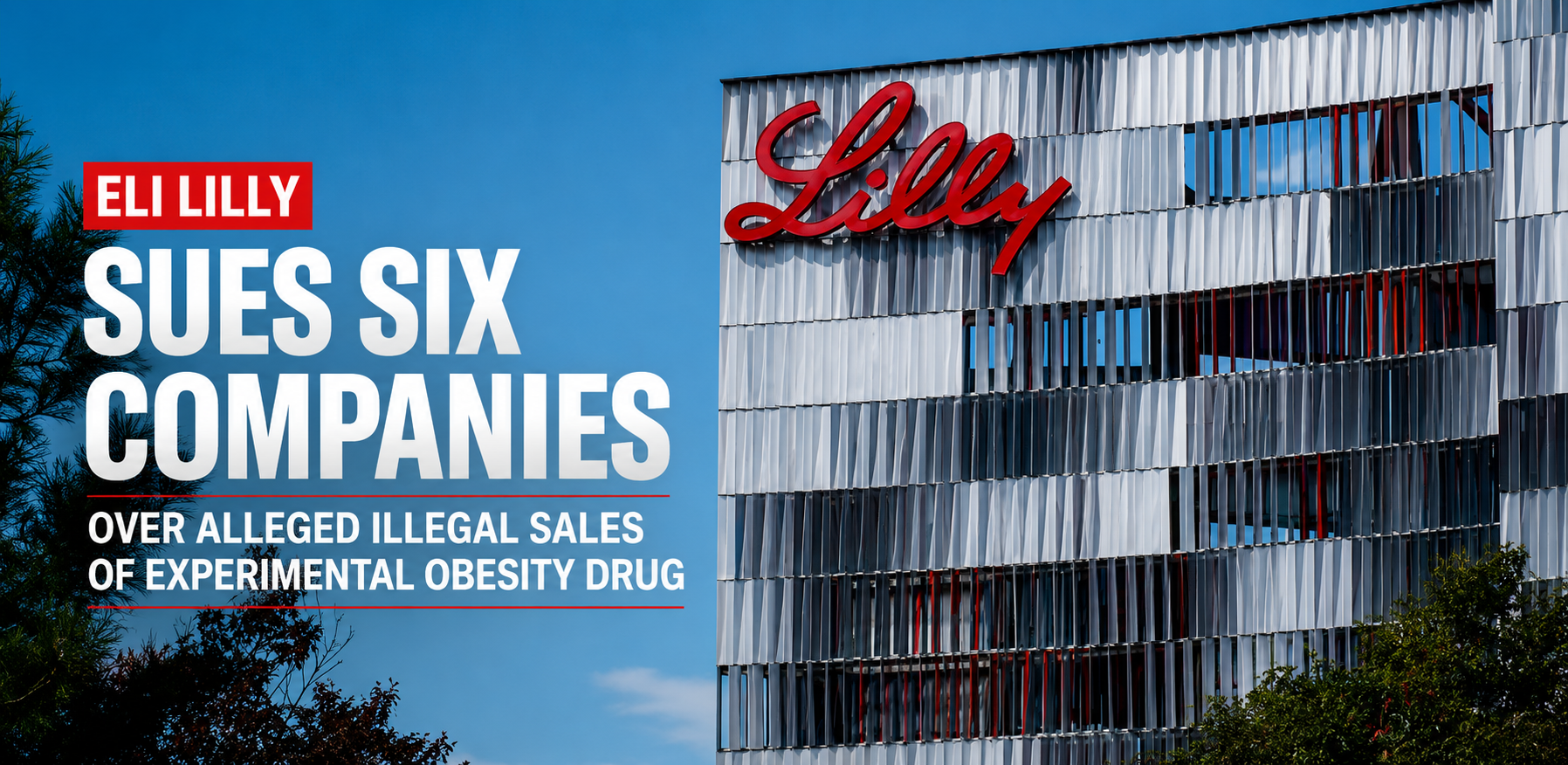
Eli Lilly has filed lawsuits against six U.S. companies accused of illegally selling black-market versions of its experimental obesity drug retatrutide, escalating efforts to stop the distribution of unapproved weight-loss treatments before the drug receives FDA approval.
The lawsuits target a mix of compounding pharmacies, medical spas, and online sellers that Lilly alleges marketed retatrutide directly to consumers even though the medicine remains in Phase 3 clinical trials for obesity, type 2 diabetes, and related conditions. Because retatrutide has not been approved by the FDA or any other regulator, its sale for human use is illegal.
Why Lilly Took Legal Action
Lilly says demand for next-generation obesity treatments has fueled a growing black market for products claiming to contain retatrutide.
According to the company:
- Some sellers promoted retatrutide through websites and social media.
- Others marketed the drug through medical spas and wellness clinics.
- Products were allegedly sourced from unregulated manufacturers.
- Some vendors labeled products as being for "research use only" while allegedly selling them for human use.
The company argues these products are unverified, unapproved, and may pose serious health risks because their quality, ingredients, and manufacturing standards cannot be confirmed.
Growing Concern Over the Illegal GLP-1 Market
The FDA has previously stated that unapproved versions of retatrutide cannot legally be compounded or sold to consumers.
Lilly said it has already:
- Referred more than 200 individuals and businesses to federal and state authorities.
- Reported over 14,000 websites, advertisements, and online listings promoting illegal retatrutide products.
- Called on social media platforms, payment processors, and shipping companies to help stop the illegal market.
The company also noted that U.S. Customs and Border Protection has sharply increased seizures of illicit GLP-1 products, reflecting rapid growth in the unauthorized market.
Industry Impact
- Pharmaceutical Companies: The lawsuits demonstrate how manufacturers are increasingly using legal action to protect investigational medicines from counterfeit and unauthorized sales before regulatory approval.
- Healthcare Providers: Physicians may need to educate patients about the risks of purchasing experimental weight-loss drugs through unauthorized online sources.
- Patients: Consumers seeking obesity treatments may unknowingly purchase products that have not been evaluated for safety, quality, or effectiveness.
- Regulators: The cases highlight growing pressure on regulators, online marketplaces, and payment providers to curb the sale of unapproved medicines through digital channels.
Looking Ahead
Retatrutide remains in late-stage clinical testing, and Lilly expects to seek FDA approval after completing its Phase 3 program.
The company says it will continue pursuing legal action against businesses selling unauthorized versions while working with regulators and technology companies to disrupt the growing black market for experimental GLP-1 medicines.
Why This Matters
The popularity of GLP-1 weight-loss drugs has created strong consumer demand, increasing the risk that patients may turn to unapproved or counterfeit products when approved therapies are unavailable or difficult to obtain.
Lilly's lawsuits highlight the importance of protecting patients from unauthorized medicines while reinforcing that investigational drugs should only be used within regulated clinical trials until they receive FDA approval.
Key Takeaways
- Eli Lilly sued six U.S. companies over alleged illegal sales of its experimental obesity drug, retatrutide.
- Retatrutide remains in Phase 3 clinical trials and has not been approved for human use.
- The lawsuits target compounding pharmacies, medical spas, and online sellers.
- Lilly has referred hundreds of suspected sellers to regulators and law enforcement.
- The company is urging stronger action to stop the growing black market for experimental GLP-1 drugs.
What This Means for Healthcare Marketers
Lilly's legal action highlights growing attention on obesity therapies, pharmaceutical compliance, patient safety, and the regulation of GLP-1 medicines. Pharmaceutical manufacturers, healthcare providers, specialty pharmacies, and regulatory organizations continue working to protect patients from counterfeit and unauthorized treatments while expanding access to approved therapies. For healthcare marketers, organizations involved in obesity care, endocrinology, pharmaceutical compliance, and patient education represent high-intent opportunities for physician engagement, scientific communications, regulatory awareness, and commercial strategy.