
FDA to Hold Advisory Committee Meeting on Grail's Multi-Cancer Blood Test
What's Happening
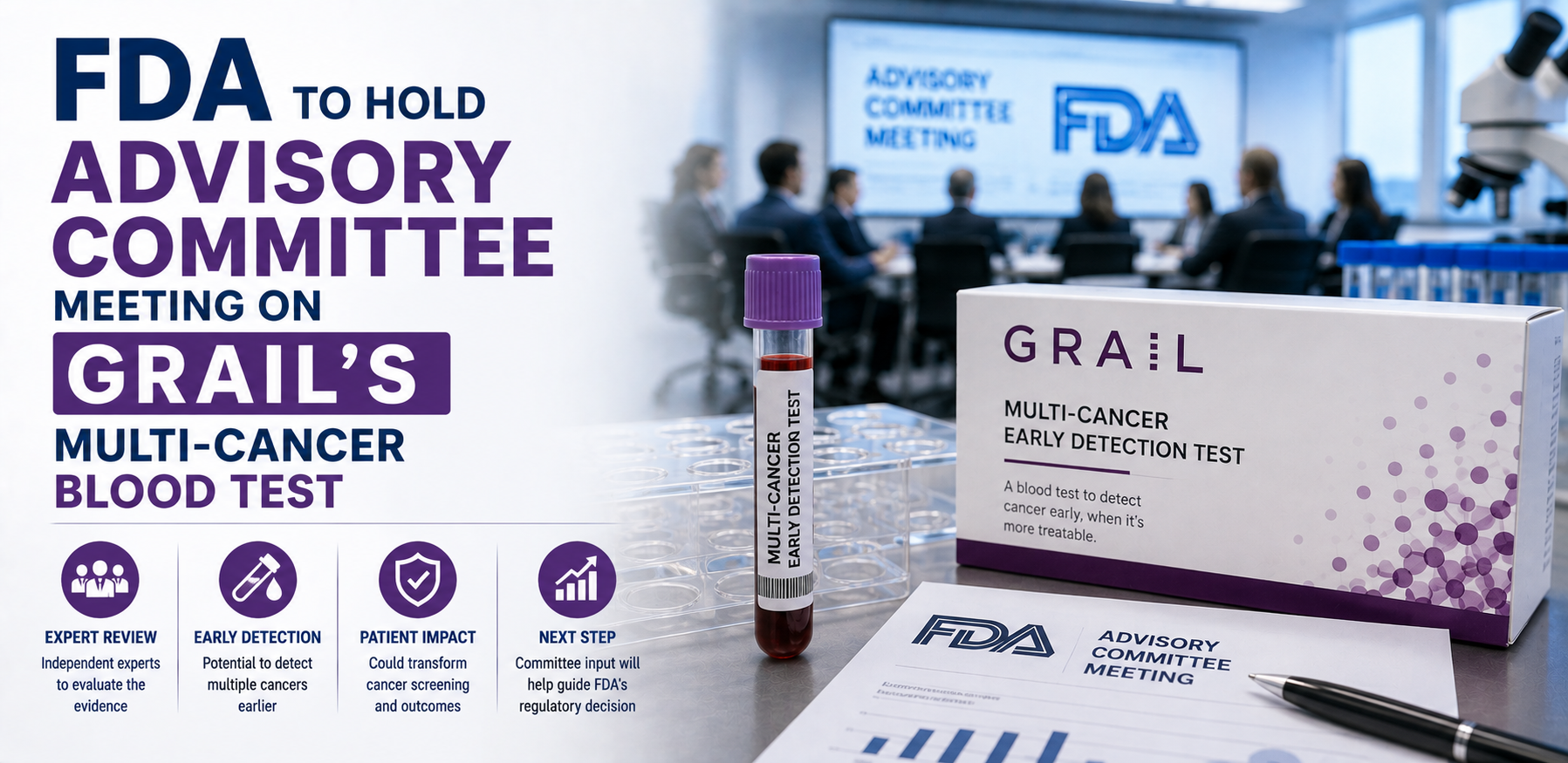
The U.S. Food and Drug Administration (FDA) will convene an advisory committee meeting to review Grail's multi-cancer early detection blood test, marking a significant step in evaluating one of the most closely watched cancer screening technologies.
The advisory committee will assess the available clinical evidence supporting the test before providing recommendations to the FDA. While the committee's vote is not binding, its recommendations often play an important role in the agency's regulatory decision-making process.
The review reflects growing interest in blood-based cancer screening tests that aim to detect multiple types of cancer before symptoms appear, potentially improving patient outcomes through earlier diagnosis.
Understanding Multi-Cancer Early Detection Tests
Multi-cancer early detection (MCED) tests are blood tests designed to identify biological signals that may indicate the presence of several different types of cancer from a single blood sample.
Unlike traditional screening methods that target one specific cancer, MCED tests aim to:
- Detect multiple cancers simultaneously.
- Identify cancers at earlier stages.
- Help guide follow-up diagnostic testing.
- Expand screening opportunities for cancers that currently lack routine screening methods.
Researchers hope these tests could complement existing cancer screening programs rather than replace them.
Why the FDA Review Matters
The advisory committee meeting represents an important milestone in evaluating the safety, effectiveness, and clinical usefulness of multi-cancer blood tests.
The committee will review evidence related to:
- Clinical accuracy.
- Benefits and risks.
- False positive and false negative results.
- Appropriate patient populations.
- Potential impact on cancer screening practices.
Its recommendations will help inform the FDA's decision on the test's future regulatory pathway.
Industry Impact
- Diagnostic Companies: The FDA's review could shape the future of multi-cancer screening technologies and influence development across the diagnostics industry.
- Healthcare Providers: Primary care physicians and oncologists are closely monitoring advances in blood-based cancer screening that could complement existing screening programs.
- Patients: If supported by sufficient clinical evidence, multi-cancer blood tests could improve opportunities for earlier cancer detection and treatment.
- Investors: The review is expected to be closely watched because it may influence the future commercial potential of multi-cancer early detection technologies.
Looking Ahead
Following the advisory committee meeting, the FDA will continue evaluating the evidence before making future regulatory decisions regarding Grail's test.
The outcome could influence the broader adoption of blood-based cancer screening technologies and shape future clinical research in early cancer detection.
Additional studies will likely continue evaluating how these tests can be integrated into routine clinical practice alongside established screening methods.
Why This Matters
Earlier cancer detection remains one of the most effective ways to improve survival and treatment outcomes.
The FDA's review of Grail's multi-cancer blood test represents an important step in determining whether emerging screening technologies can safely and effectively complement existing cancer detection strategies.
The decision may also influence future innovation in precision diagnostics and population-based cancer screening.
Key Takeaways
- The FDA will hold an advisory committee meeting to review Grail's multi-cancer early detection blood test.
- The committee will evaluate the clinical evidence supporting the test's safety and effectiveness.
- Multi-cancer blood tests aim to detect several types of cancer from a single blood sample.
- The advisory committee's recommendations will help inform future FDA regulatory decisions.
- The review could shape the future of blood-based cancer screening technologies.
What This Means for Healthcare Marketers
The FDA's review highlights continued investment in precision diagnostics, oncology, liquid biopsy technologies, and early cancer detection. Diagnostic companies, cancer centers, biotechnology firms, healthcare providers, and laboratory organizations continue advancing innovative screening tools that support earlier diagnosis and personalized care. For healthcare marketers, organizations involved in oncology diagnostics, molecular testing, precision medicine, and laboratory services represent high-intent opportunities for physician education, scientific communications, partnership development, and commercial growth.