
FDA Places Clinical Hold on Regenxbio's Gene Therapy for Hunter Syndrome
What's Happening
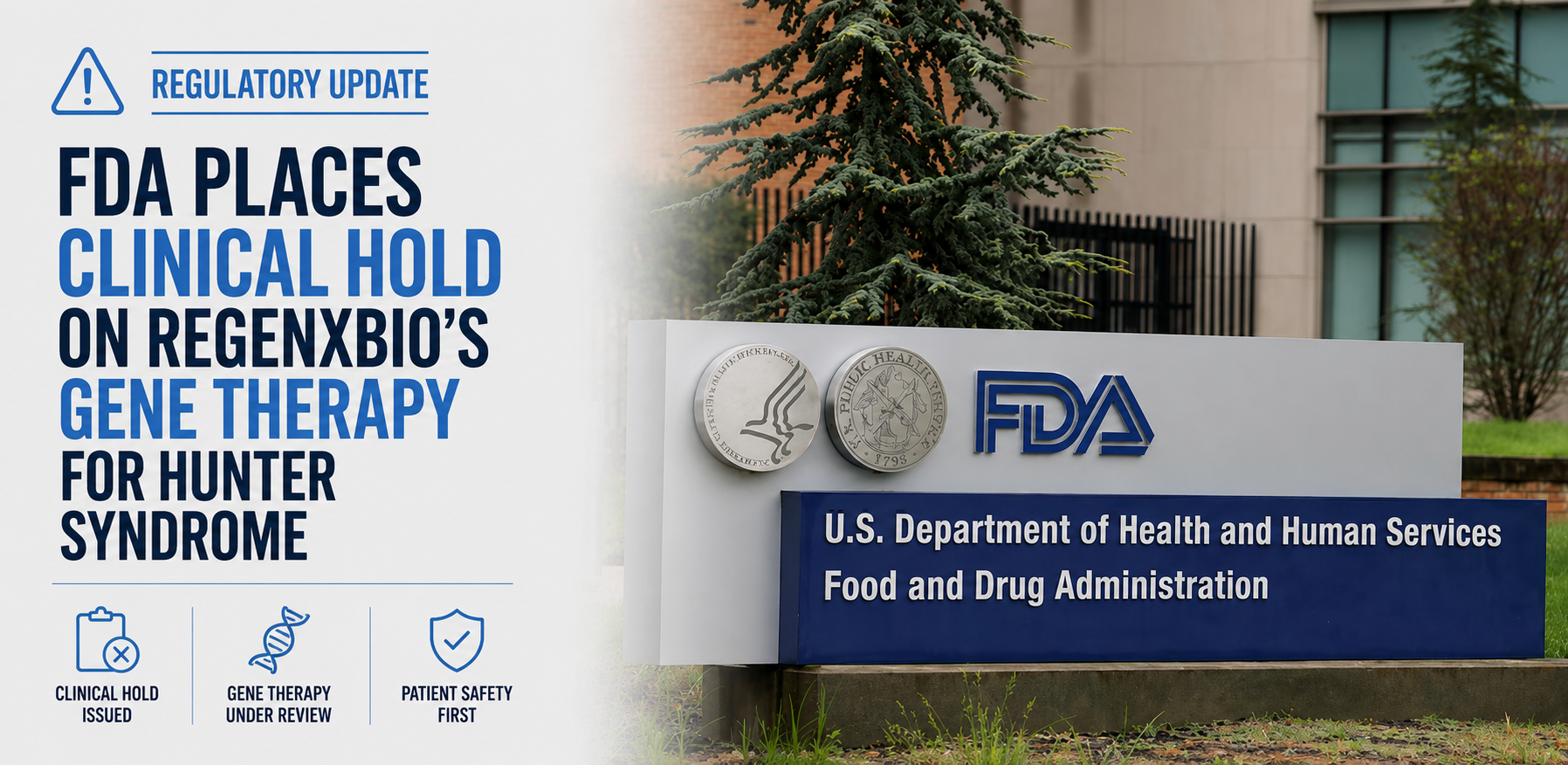
The U.S. Food and Drug Administration (FDA) has placed a clinical hold on Regenxbio's experimental gene therapy, RGX-121, intended as a one-time treatment for Hunter syndrome. The regulatory pause follows the identification of abnormalities in spinal scans from five participants who received the therapy three to six years ago, though the patients remain completely asymptomatic and clinically stable.
What Is Hunter Syndrome?
Hunter syndrome (mucopolysaccharidosis type II) is a rare genetic disorder impairing the body's ability to break down specific complex sugar molecules. The resulting systemic buildup progressively impacts cognitive development, skeletal structure, tissue integrity, and overall organ function.
What the FDA Found
Spinal imaging revealed small benign-appearing masses or fluid-filled spots in patients treated years prior. Despite investigators and radiologists viewing the findings as non-serious and the patients showing stable clinical health, with some even demonstrating cognitive gains, the FDA intervened to pause the trial for a comprehensive safety evaluation.
Industry Impact
- Patients: Ultra-rare conditions like Hunter syndrome rely heavily on innovative one-time therapies to minimize treatment burdens.
- Biotechnology Companies: Underscores the commercial and regulatory hurdles unique to long-term gene therapy development.
- Regulators: Highlights the agency's strict reliance on longitudinal safety markers and rigorous oversight across extended follow-up windows.
- Gene-Therapy Manufacturing & Development: Reinforces that successful clinical efficacy must be paired with clear, long-term safety profiles to secure regulatory greenlights.
What Happens Next
Regenxbio and its collaborator, NS Pharma, await the formal clinical-hold letter from the FDA to outline specific requirements. Given the scope of the inquiry, Regenxbio does not anticipate a near-term resubmission for approval.
Key Takeaways
- The FDA placed a clinical hold on Regenxbio's RGX-121 gene therapy trial for Hunter syndrome.
- Action was triggered by spinal scan abnormalities observed in five patients treated 3 to 6 years ago.
- Affected participants remain asymptomatic, but the agency requires further evaluation before clinical progression resumes.
What This Means for Healthcare Marketers
The development highlights opportunities around gene therapy, rare-disease treatment, clinical-trial monitoring, long-term patient surveillance, and regulatory affairs. As more one-time genetic therapies reach the market, pharmaceutical and biotech companies will increasingly need sophisticated systems for monitoring long-term outcomes and demonstrating safety to regulators. For healthcare marketers, communicating robust safety tracking and advanced clinical transparency supports critical stakeholder trust.