U.S. FDA Finalizes New Food Safety Guidance for Fresh-Cut Produce
What's Happening
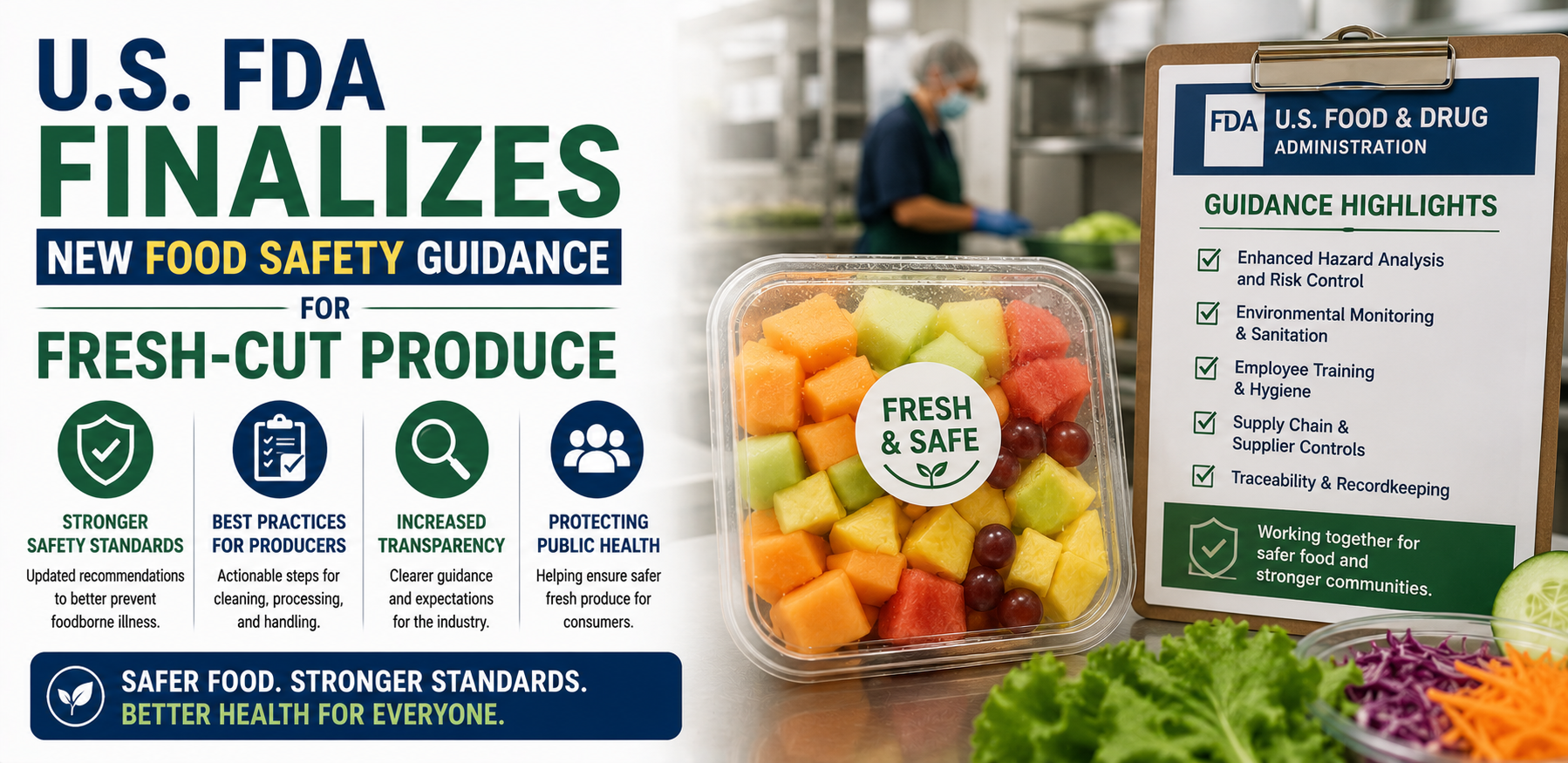
The U.S. Food and Drug Administration (FDA) has finalized new guidance for companies that prepare and package fresh-cut fruits and vegetables, strengthening recommendations to reduce the risk of foodborne illnesses linked to ready-to-eat produce.
The updated guidance comes as the United States continues responding to major outbreaks of cyclospora and salmonella associated with fresh produce, including contaminated iceberg lettuce and jalapeño peppers. The FDA said the recommendations are designed to help manufacturers identify and control biological hazards before products reach consumers.
Although the guidance is not legally binding, it outlines the FDA's current recommendations for preventing contamination during the production, processing, packaging, and distribution of fresh-cut produce.
What's Included in the New Guidance
The FDA recommends that manufacturers and processors strengthen food safety practices by:
- Improving sanitation controls.
- Verifying suppliers and supply chains.
- Maintaining proper refrigeration.
- Using safe water during processing.
- Training employees on food safety procedures.
- Designing facilities to minimize contamination risks.
- Conducting hazard analyses for pathogens such as Salmonella, Cyclospora, E. coli, and Listeria.
The guidance applies specifically to ready-to-eat fresh-cut produce with high water content, including products such as:
- Chopped lettuce.
- Sliced melons.
- Diced onions.
- Shredded carrots.
- Coleslaw mixes.
- Fresh fruit salads.
Why the Guidance Matters
Fresh-cut produce is considered higher risk because it is often consumed without cooking, eliminating an important step that would normally destroy harmful microorganisms.
The FDA noted that Cyclospora presents a particular challenge because common antimicrobial washing methods may not effectively eliminate the parasite. As a result, the agency recommends stronger supply chain controls and preventive measures throughout production and distribution.
The updated recommendations build on draft guidance first issued in 2018 but place greater emphasis on biological hazards affecting ready-to-eat produce following several large foodborne illness outbreaks.
Industry Impact
- Food Manufacturers: Fresh-cut produce processors may need to strengthen sanitation procedures, supplier oversight, and hazard prevention programs to align with the FDA's updated recommendations.
- Public Health Agencies: The guidance supports ongoing efforts to reduce foodborne illness outbreaks through stronger preventive controls and improved food safety practices.
- Healthcare Providers: Healthcare professionals may benefit from fewer foodborne illness cases if manufacturers successfully implement stronger preventive measures.
- Consumers: Improved food safety practices are intended to reduce contamination risks while maintaining confidence in fresh fruits and vegetables.
Looking Ahead
The FDA will continue monitoring foodborne illness outbreaks while encouraging industry adoption of the updated recommendations.
The agency also plans to continue research into contamination pathways for Cyclospora and other pathogens while working with growers, processors, and distributors to improve food safety across the supply chain.
Why This Matters
Recent outbreaks linked to fresh produce have highlighted the importance of preventive food safety practices throughout the supply chain.
The FDA's updated guidance aims to reduce contamination before products reach consumers by encouraging stronger sanitation, supplier verification, and hazard control measures.
The recommendations also reinforce the agency's broader focus on preventing foodborne illnesses through risk-based food safety management.
Key Takeaways
- The FDA finalized updated guidance for manufacturers of ready-to-eat fresh-cut produce.
- The recommendations focus on reducing contamination from Salmonella, Cyclospora, E. coli, and Listeria.
- Processors are encouraged to strengthen sanitation, supplier verification, refrigeration, and hazard prevention practices.
- The guidance follows major U.S. outbreaks linked to contaminated lettuce and jalapeño peppers.
- The updated recommendations are intended to improve food safety and reduce future foodborne illness outbreaks.
What This Means for Healthcare Marketers
The FDA's updated guidance highlights continued investment in food safety, public health, laboratory diagnostics, and preventive risk management. Food manufacturers, diagnostic laboratories, public health agencies, food safety technology providers, and healthcare organizations continue strengthening systems that reduce contamination and improve consumer safety. For healthcare marketers, organizations involved in food safety, laboratory testing, regulatory compliance, supply chain monitoring, and public health represent high-intent opportunities for provider education, partnership development, scientific communications, and healthcare innovation.