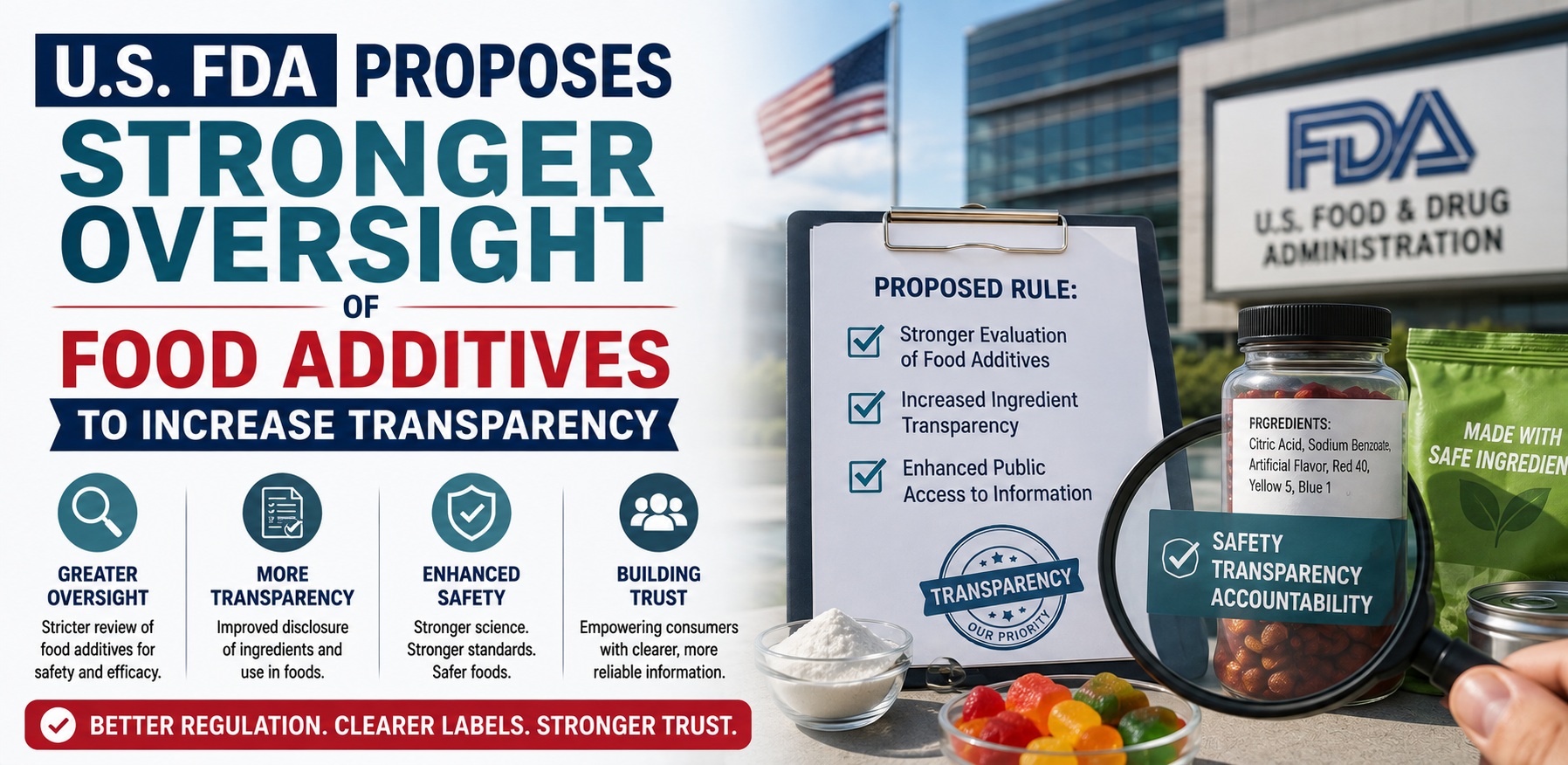
U.S. FDA Proposes Stronger Oversight of Food Additives to Increase Transparency
What's Happening
The U.S. Food and Drug Administration (FDA) has proposed a new rule that would require food manufacturers to notify the agency whenever they determine that a food ingredient is "Generally Recognized as Safe" (GRAS), ending decades of voluntary reporting.
Currently, companies can self-determine that certain ingredients are safe without being required to inform the FDA. The proposed rule would make those notifications mandatory, giving regulators greater visibility into substances entering the U.S. food supply and expanding the public database of GRAS ingredients. The proposal is part of the Trump administration's "Make America Healthy Again" (MAHA) initiative to strengthen food safety oversight and improve transparency.
Understanding the GRAS Process
The GRAS (Generally Recognized as Safe) pathway allows companies to use certain food ingredients without formal FDA approval if qualified experts conclude the ingredient is safe under its intended conditions of use.
Common GRAS ingredients include:
- Vinegar.
- Black pepper.
- Canola oil.
- Certain food enzymes.
- Flavoring agents.
- Preservatives.
Although companies are encouraged to notify the FDA of new GRAS determinations, current regulations do not require them to do so.
What's Changing
If finalized, the proposed rule would:
- Require manufacturers to notify the FDA of all new GRAS determinations.
- Expand the FDA's public inventory of GRAS notifications.
- Increase transparency around ingredients entering the food supply.
- Improve the agency's ability to monitor food safety risks.
The FDA will accept public comments on the proposal for 120 days before deciding whether to finalize the rule.
Industry Impact
- Food Manufacturers: Food companies would need to submit mandatory notifications when introducing ingredients they classify as GRAS, increasing regulatory reporting requirements.
- Public Health Agencies: The FDA would gain greater visibility into substances entering the food supply, strengthening food safety monitoring and oversight.
- Healthcare Providers: Improved transparency may support better understanding of food-related health risks and strengthen confidence in food safety regulations.
- Consumers: Greater disclosure of food ingredients could improve public confidence and provide increased transparency about substances used in processed foods.
Looking Ahead
The FDA will review public comments before deciding whether to adopt the new rule.
Federal health officials are also developing the government's first formal definition of ultra-processed foods and plan to release additional food safety guidance for fresh-cut produce following recent salmonella and cyclossporiasis outbreaks. These initiatives are expected to further shape future U.S. food safety policy.
Why This Matters
The proposed rule represents one of the most significant changes to U.S. food ingredient oversight in decades.
By requiring mandatory notification of GRAS determinations, the FDA aims to improve transparency, strengthen regulatory oversight, and provide greater visibility into chemicals entering the food supply.
The proposal also reflects growing federal attention on food safety, nutrition, and chronic disease prevention.
Key Takeaways
- The FDA has proposed requiring mandatory notification of all new GRAS food ingredient determinations.
- The rule would end decades of voluntary reporting by food manufacturers.
- The proposal aims to improve transparency and strengthen oversight of the U.S. food supply.
- The FDA will accept public comments for 120 days before finalizing the rule.
- The initiative is part of broader federal efforts to modernize food safety regulation.
What This Means for Healthcare Marketers
The proposed rule highlights growing investment in food safety, regulatory compliance, nutrition science, and public health. Food manufacturers, ingredient suppliers, diagnostic laboratories, public health agencies, and regulatory technology companies may need to adapt to increased transparency and reporting requirements. For healthcare marketers, organizations involved in food safety, regulatory affairs, nutrition, laboratory testing, and public health represent high-intent opportunities for scientific communications, stakeholder education, compliance solutions, and strategic partnerships.