
FDA Advisory Panel Recommends Adding BPC-157 to Compounding List
What's Happening
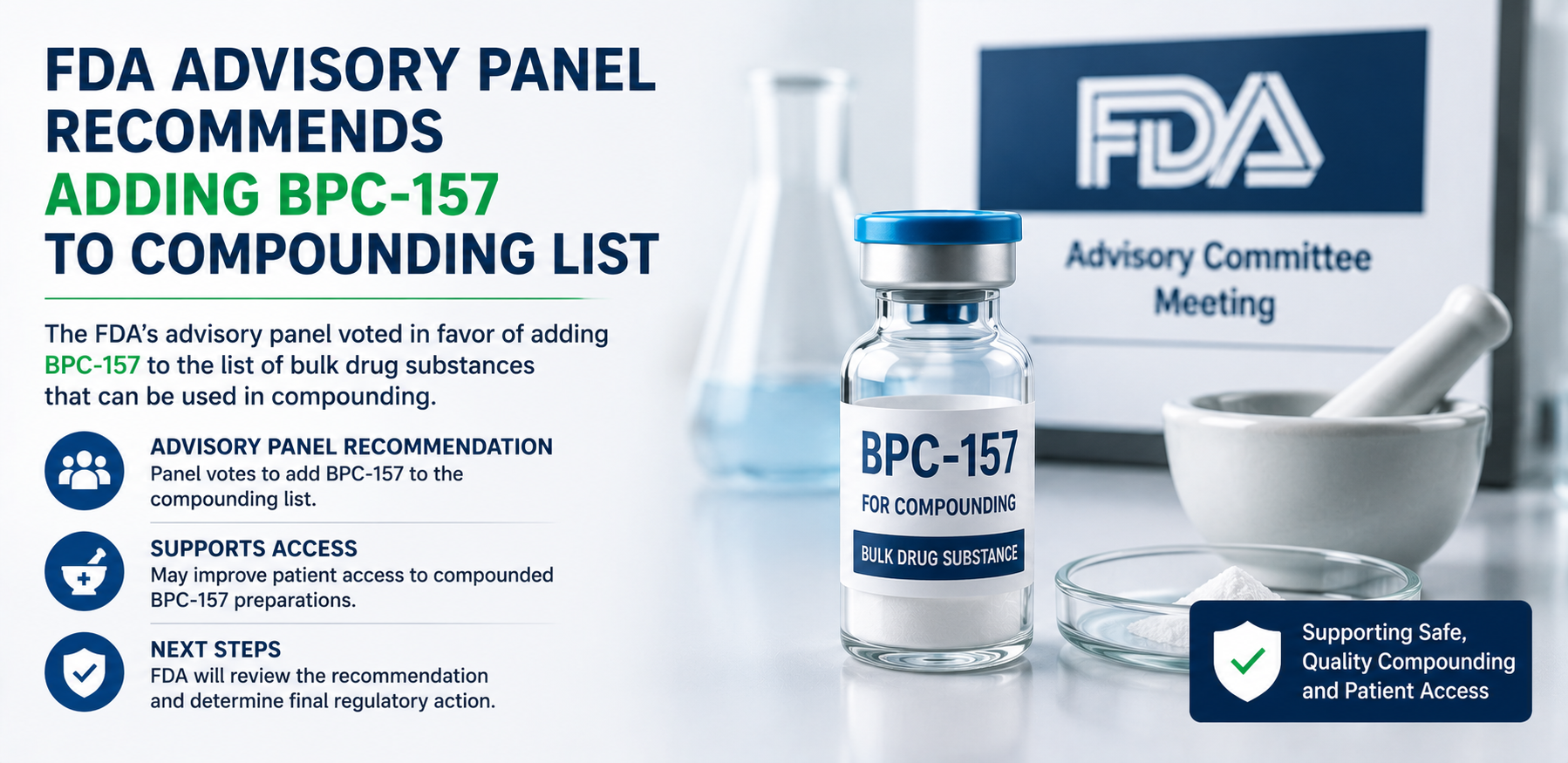
An advisory committee to the U.S. Food and Drug Administration (FDA) has voted to recommend adding BPC-157 to the agency's list of bulk drug substances that may be used by compounding pharmacies. The recommendation passed by a narrow 8-6 vote, with one abstention, marking an important step toward expanding regulated access to one of the most widely discussed peptides in the wellness and regenerative medicine market.
The vote is advisory rather than final. The FDA will review the committee's recommendation before deciding whether BPC-157 should officially be included on the 503A Bulks List, which determines which substances may legally be compounded under certain circumstances.
What Is BPC-157?
BPC-157 is a synthetic peptide derived from a naturally occurring protein found in the stomach. It has gained widespread attention for claims that it may:
- Promote wound healing.
- Support muscle and tendon recovery.
- Reduce inflammation.
- Aid recovery from sports injuries.
- Improve gastrointestinal healing.
Despite its popularity among wellness clinics, athletes, and regenerative medicine providers, BPC-157 has not been approved by the FDA for any medical indication. Current evidence supporting its use is limited, with most studies conducted in animals or small early-stage investigations rather than large clinical trials.
Why the FDA Is Reviewing It
The FDA's Pharmacy Compounding Advisory Committee is evaluating several peptides that have become increasingly popular despite lacking FDA approval.
If BPC-157 is ultimately added to the 503A Bulks List, licensed compounding pharmacies could prepare customized formulations for patients with valid prescriptions when appropriate under federal compounding regulations.
Supporters argue that allowing regulated compounding would improve product quality and reduce reliance on unregulated sources. Critics, including FDA scientists, have raised concerns about the limited clinical evidence supporting the peptide's safety and effectiveness.
Industry Impact
- Compounding Pharmacies: A final FDA decision in favor of BPC-157 could significantly expand opportunities for pharmacies specializing in personalized medicines and peptide therapies.
- Healthcare Providers: Clinicians practicing regenerative medicine, sports medicine, orthopedics, and functional medicine may gain broader access to regulated compounded formulations if the FDA adopts the committee's recommendation.
- Regulatory Agencies: The vote reflects a broader reassessment of how the FDA regulates emerging peptide therapies as demand continues to grow among patients seeking alternatives for recovery and wellness.
- Wellness and Digital Health Companies: Companies operating in telehealth, longevity, and personalized medicine may benefit from greater regulatory clarity surrounding peptide therapies, although commercial opportunities will ultimately depend on the FDA's final decision.
Why This Matters
Interest in peptide therapies has grown rapidly over the past several years, creating a rapidly expanding market that exists largely outside traditional FDA-approved pharmaceuticals.
The committee's recommendation represents an important milestone in determining how these therapies may be regulated moving forward. While inclusion on the compounding list would not make BPC-157 an FDA-approved drug, it could improve oversight of how the peptide is prepared and dispensed through licensed pharmacies.
The decision may also serve as a precedent for future reviews of other emerging peptide therapies that are increasingly being used across regenerative medicine and wellness settings.
Key Takeaways
- An FDA advisory committee voted 8-6, with one abstention, to recommend adding BPC-157 to the FDA's compounding list.
- BPC-157 is a synthetic peptide promoted for healing and recovery but is not FDA approved for any medical use.
- The recommendation does not constitute FDA approval and is not legally binding.
- The FDA will make the final determination after reviewing the committee's recommendation.
- The outcome could influence the future regulation of peptide-based therapies and the rapidly growing compounding market.
What This Means for Healthcare Marketers
The FDA's ongoing review of BPC-157 highlights the increasing intersection of personalized medicine, compounding pharmacy services, and regenerative healthcare. Organizations involved in pharmacy, musculoskeletal care, sports medicine, wellness, and precision therapeutics should closely monitor future regulatory decisions, as they may shape provider adoption and patient demand. For healthcare marketers, communicating scientific evidence, regulatory status, and clinical transparency will remain essential as peptide therapies continue to gain public attention.