
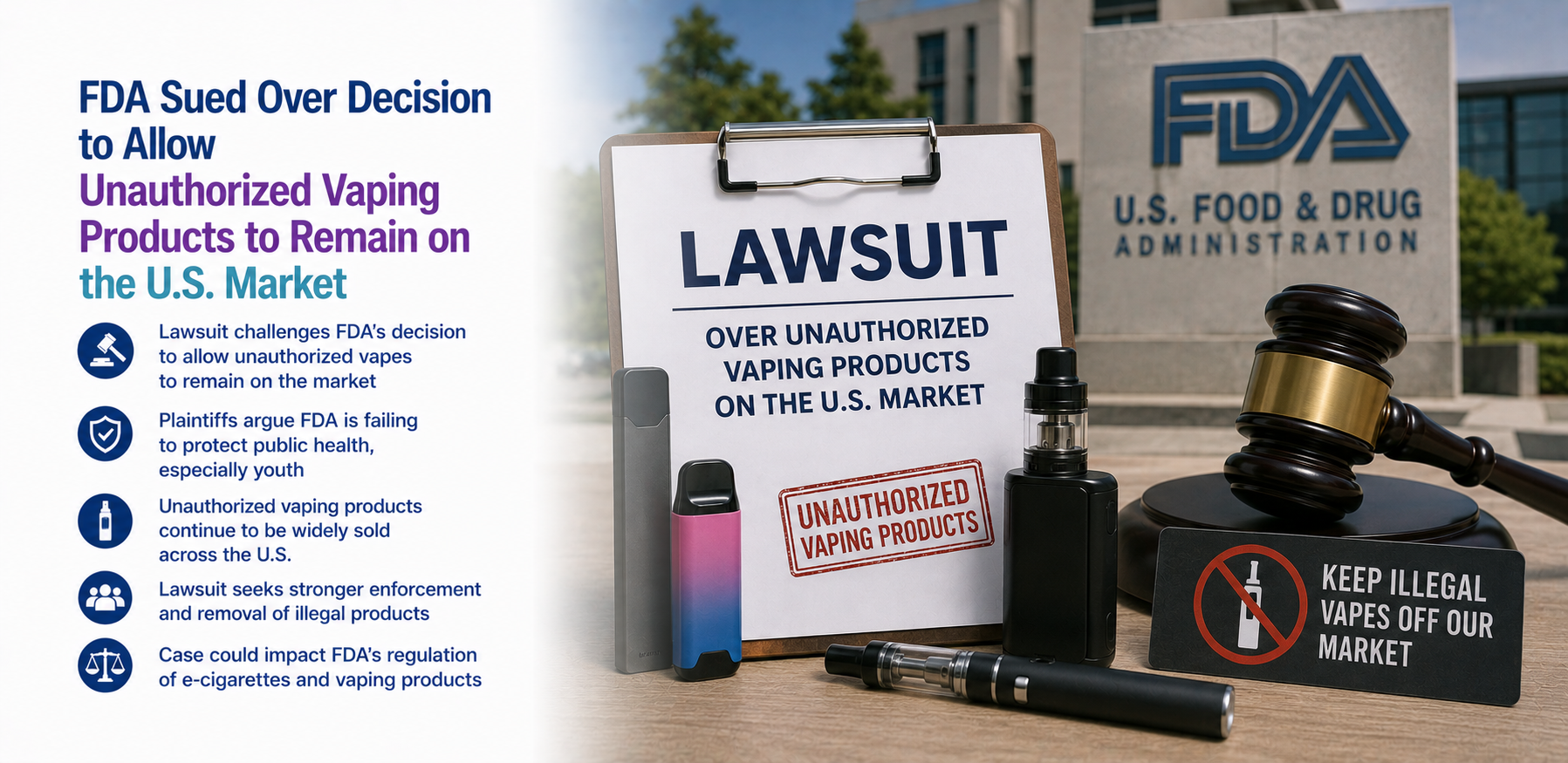
FDA Sued Over Decision to Allow Unauthorized Vaping Products to Remain on the U.S. Market
What's Happening
A coalition of public health organizations, pediatricians, and parents has filed a federal lawsuit against the U.S. Food and Drug Administration (FDA), challenging a new enforcement policy issued in May 2026. The lawsuit alleges that the agency has unlawfully allowed thousands of unauthorized vaping products and nicotine pouches to remain on the U.S. market without the legally required marketing authorization.
The plaintiffs contend that the FDA's guidance, which states the agency will not prioritize enforcement against certain products while marketing applications are under review, violates the Tobacco Control Act. By creating this "enforcement safe harbor," the lawsuit argues the FDA is permitting products, many with flavors proven to appeal to youth, to be sold indefinitely without scientific review.
The FDA maintains that it continues to prioritize enforcement based on public health considerations and resources, though it has not yet provided a formal response to the legal filing in the U.S. District Court for the District of Maryland.
How Does the FDA Regulate Vaping Products?
Electronic cigarettes and other vaping products are regulated by the FDA under the Family Smoking Prevention and Tobacco Control Act. Before a new vaping product can legally be marketed in the United States, manufacturers generally must obtain marketing authorization from the FDA.
To receive authorization, companies must provide scientific evidence demonstrating that marketing the product is appropriate for the protection of public health. The FDA evaluates factors such as:
- Product ingredients.
- Toxicology data.
- Nicotine delivery.
- Manufacturing quality.
- Potential risks and benefits.
- Likelihood of youth use.
- Impact on current smokers.
Products that do not receive authorization may be subject to enforcement actions, including warning letters, import restrictions, product seizures, or other regulatory measures.
What Is the Lawsuit About?
According to the lawsuit, thousands of vaping products remain available for sale even though they have not received FDA authorization. The plaintiffs argue that:
- Unauthorized products continue reaching consumers.
- Existing enforcement efforts have not adequately reduced illegal sales.
- Youth continue accessing flavored vaping products.
- Stronger regulatory action is needed.
The lawsuit further contends that the FDA bypassed required public notice and comment procedures under the Administrative Procedure Act and that the plan to publish a list of products exempt from enforcement will facilitate the unlawful sale of these goods.
Why Vaping Remains a Public Health Issue
E-cigarettes were originally introduced as an alternative source of nicotine for adult smokers. However, concerns have grown regarding:
- Youth nicotine use.
- Flavored vaping products.
- Long-term health effects.
- Product quality.
- Marketing practices.
Public health agencies continue balancing two important objectives: helping adult smokers transition away from combustible cigarettes where appropriate, and preventing nicotine addiction among adolescents and young adults. This balance remains a central challenge in vaping regulation.
How the FDA Enforces Tobacco Regulations
The FDA uses several tools to oversee the vaping market. These include:
- Product application reviews.
- Facility inspections.
- Warning letters.
- Import controls.
- Civil penalties.
- Product seizures.
- Coordination with customs authorities.
Because thousands of vaping products have entered the market over recent years, enforcement remains a complex regulatory challenge. The agency continues prioritizing products that may pose the greatest public health risks.
Why This Case Matters
The lawsuit comes at a time when regulators continue evaluating how best to oversee a rapidly evolving vaping industry. New vaping products frequently enter the market, requiring ongoing scientific review and regulatory monitoring. The outcome of the case could influence:
- FDA enforcement priorities.
- Manufacturer compliance expectations.
- Availability of unauthorized products.
- Future tobacco regulatory policy.
Regardless of the litigation, companies remain responsible for complying with FDA marketing authorization requirements.
Industry Impact
- Tobacco and Vaping Companies: Manufacturers may face increased regulatory scrutiny and stronger enforcement if the lawsuit leads to changes in FDA oversight.
- Retailers: Businesses selling vaping products may need to ensure the products they carry comply with federal marketing requirements.
- Public Health Agencies: The case reflects continued efforts to reduce youth nicotine use while regulating emerging tobacco products.
- Consumers: FDA oversight aims to ensure that vaping products marketed in the United States meet applicable regulatory standards and are evaluated for their impact on public health.
Why This Matters
The lawsuit highlights the continuing challenges regulators face as vaping products rapidly evolve and expand across the U.S. market. Effective regulation requires balancing scientific review, public health protection, industry innovation, and enforcement capacity.
The case also reflects broader national efforts to reduce youth nicotine use while ensuring manufacturers comply with established regulatory requirements. As courts, regulators, and manufacturers continue addressing these issues, vaping regulation is likely to remain an important area of U.S. healthcare and public health policy.
Key Takeaways
- A public health advocacy group sued the FDA over its handling of unauthorized vaping products.
- The lawsuit alleges that thousands of products remain on the market without required FDA marketing authorization.
- The FDA says it continues reviewing applications and taking enforcement action where appropriate.
- The case focuses on enforcement of federal tobacco regulations rather than the safety of any specific product.
- The outcome could influence future vaping regulation and FDA enforcement priorities.
What This Means for Healthcare Marketers
The lawsuit demonstrates how regulatory enforcement has become a critical component of public health strategy. Beyond evaluating new products, healthcare regulators increasingly face the challenge of ensuring ongoing compliance in rapidly evolving markets such as vaping and nicotine delivery systems. Organizations operating in regulated healthcare industries should recognize that enforcement actions can significantly influence market access, product availability, and consumer confidence.
For healthcare marketers, regulatory compliance is becoming an increasingly important element of brand reputation. Companies must not only develop products that meet scientific and safety standards but also demonstrate transparency, responsible marketing, and adherence to evolving regulatory requirements. Maintaining trust with healthcare providers, regulators, and consumers requires proactive compliance alongside product innovation.
For healthcare intelligence teams, the case highlights the importance of monitoring enforcement trends in addition to formal regulations. Lawsuits, FDA actions, and policy developments can provide early signals about changing regulatory priorities, helping organizations anticipate compliance expectations and adapt their commercial strategies accordingly.