
Global Drugmakers Expand U.S. Manufacturing as Tariff Threats Reshape Industry Strategy
What's Happening
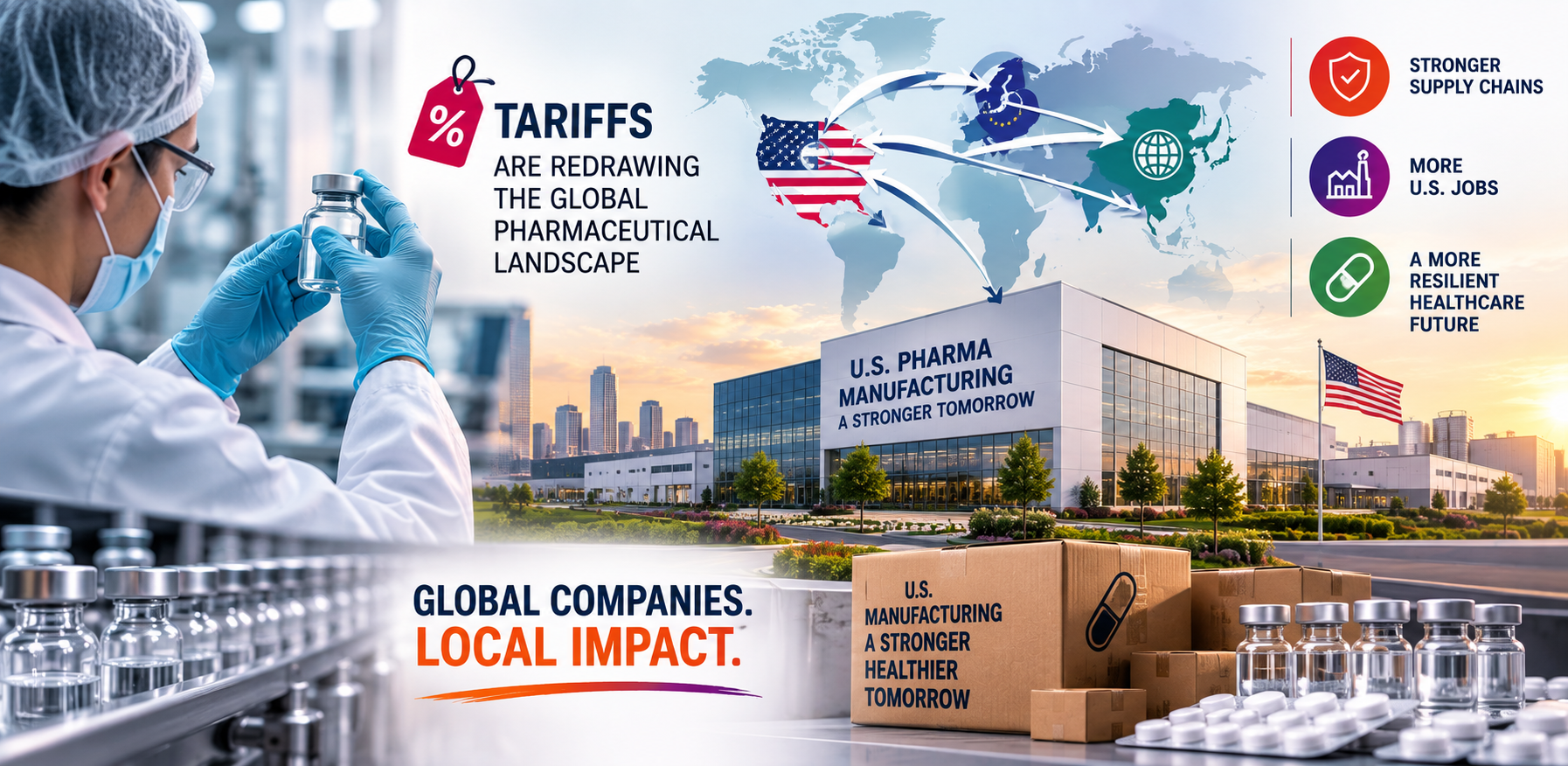
Global pharmaceutical companies are significantly expanding their manufacturing and research operations in the United States as the Trump administration's proposed pharmaceutical tariffs prompt the industry to strengthen its domestic footprint.
Major drugmakers including Pfizer, Eli Lilly, Johnson & Johnson, Roche, AstraZeneca, Merck, AbbVie, Amgen, Novartis, Sanofi, Biogen, and Gilead have collectively announced roughly $500 billion in planned U.S. investments. These projects include new manufacturing plants, research facilities, and expanded production capacity aimed at reducing supply chain risks and positioning companies for potential tariff changes.
The investment wave reflects one of the largest periods of pharmaceutical manufacturing expansion in recent years as companies seek to secure long-term access to the U.S. market.
Why Drugmakers Are Investing
The Trump administration has proposed imposing tariffs on imported branded medicines while encouraging pharmaceutical companies to manufacture more products domestically.
In response, companies are:
- Building new manufacturing facilities.
- Expanding existing production plants.
- Increasing U.S. research and development.
- Strengthening domestic supply chains.
- Reducing dependence on overseas manufacturing.
Many companies have also accelerated investment timelines to improve supply chain resilience while preparing for future policy changes.
Major Company Investments
Several leading pharmaceutical companies have announced major U.S. expansion plans, including:
- Pfizer investing $70 billion in U.S. manufacturing and research.
- Eli Lilly building multiple new manufacturing facilities across the United States.
- Johnson & Johnson increasing U.S. investments by more than 25%.
- Roche committing $50 billion toward manufacturing and diagnostics expansion.
- AstraZeneca, Merck, AbbVie, Amgen, Novartis, Sanofi, Biogen, and Gilead also expanding domestic manufacturing and research capabilities.
The investments are expected to increase production capacity while creating thousands of new jobs across the healthcare manufacturing sector.
Industry Impact
- Pharmaceutical Companies: Domestic manufacturing expansion may improve supply chain resilience while helping companies respond to evolving trade and regulatory policies.
- Healthcare Providers: Greater domestic production could strengthen medicine availability and reduce supply disruptions for hospitals, pharmacies, and healthcare systems.
- Patients: Expanded U.S. manufacturing may improve long-term access to medicines by increasing production capacity and strengthening pharmaceutical supply chains.
- Investors: The large-scale investments demonstrate the industry's long-term commitment to the U.S. market despite evolving trade policies and pricing pressures.
Looking Ahead
Pharmaceutical companies are expected to continue expanding manufacturing and research investments as they evaluate future tariff policies and growing demand for innovative medicines.
The industry is also likely to increase investments in advanced manufacturing technologies, biologics production, and supply chain modernization to improve operational resilience.
Continued domestic investment may reshape pharmaceutical manufacturing over the coming decade while supporting future drug development and commercialization.
Why This Matters
The pharmaceutical industry is making one of its largest collective investments in U.S. manufacturing and research infrastructure in response to changing trade policies and supply chain priorities.
These investments could strengthen domestic medicine production, improve supply chain security, support biomedical innovation, and create new manufacturing capacity for future therapies.
The trend also highlights the growing importance of resilient healthcare supply chains in an increasingly complex global market.
Key Takeaways
- Global pharmaceutical companies have announced approximately $500 billion in planned U.S. investments.
- Companies are expanding manufacturing and research operations in response to potential pharmaceutical tariffs.
- Major investments include new production facilities, research centers, and supply chain infrastructure.
- Domestic expansion is expected to improve medicine availability and manufacturing resilience.
- The investment wave reflects a long-term shift toward strengthening U.S. pharmaceutical production.
What This Means for Healthcare Marketers
The industry's manufacturing expansion highlights continued investment in pharmaceutical production, biologics, research and development, and healthcare infrastructure. Pharmaceutical manufacturers, contract development and manufacturing organizations (CDMOs), biotechnology firms, and healthcare supply chain partners are expanding their U.S. operations to support long-term growth and resilience. For healthcare marketers, organizations involved in pharmaceutical manufacturing, life sciences, bioprocessing, and healthcare infrastructure represent high-intent opportunities for partnership development, provider engagement, scientific communications, and commercial expansion.