Genomics & Rare Disease
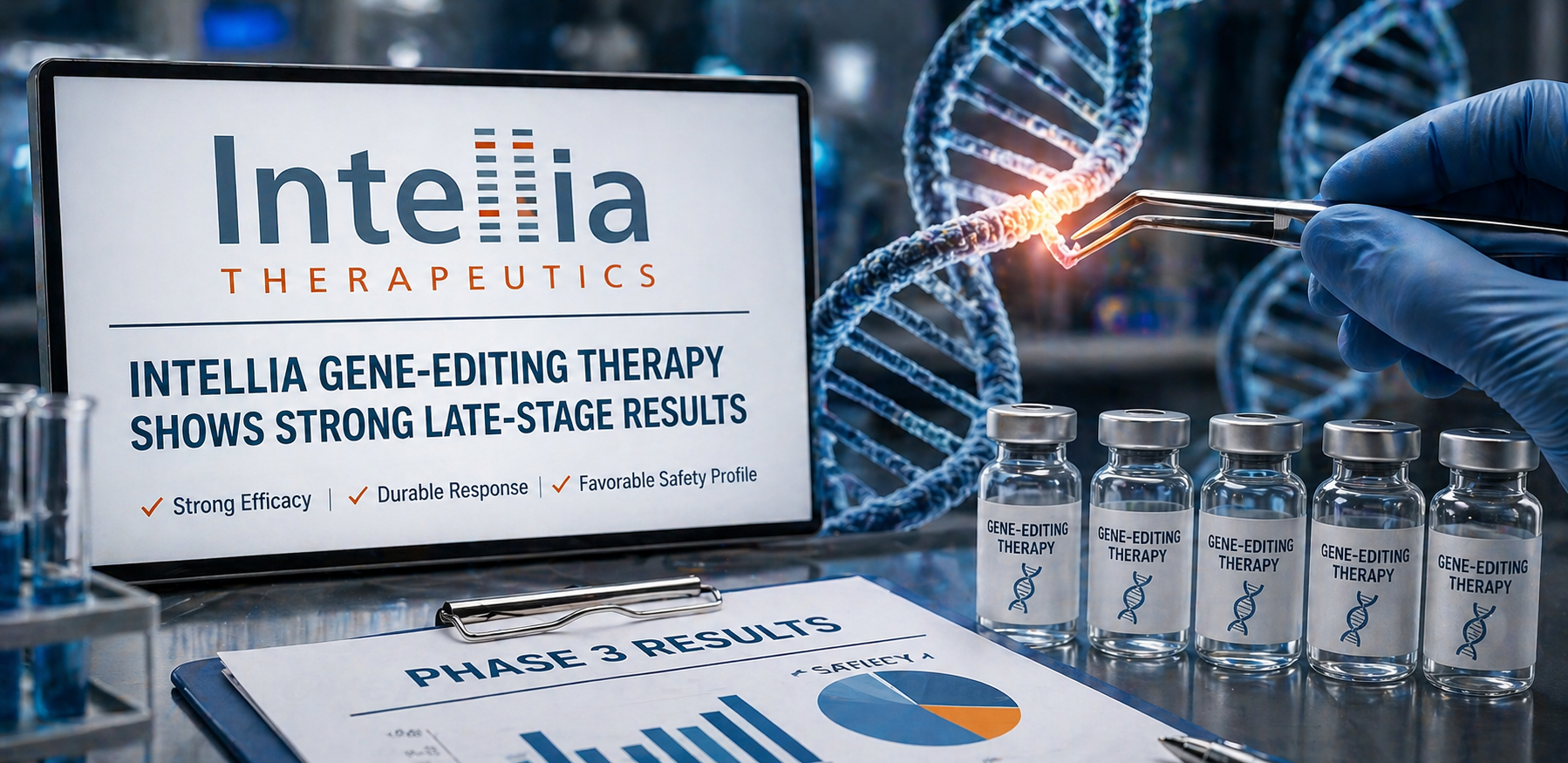
Intellia gene-editing therapy shows strong late-stage results
What's happening
Intellia Therapeutics reported today that its experimental gene-editing therapy, lonvo-z™ (lonvoguran ziclumeran), achieved an 87% reduction in swelling attacks in the Phase 3 HAELO trial for hereditary angioedema (HAE). This marks the first global Phase 3 success for an in vivo CRISPR therapy.
The study found that 62% of patients were completely attack-free and required no further therapy during the observation period. Intellia has immediately initiated a rolling biologics license application (BLA) with the FDA, targeting a potential U.S. launch in the first half of 2027.
What's changing / Business impact
-
Advances CRISPR-based gene editing toward commercialization: Lonvo-z is poised to be the first therapy edited inside the body (in vivo) to reach the market.
-
Moves closer to: one-time treatments and durable disease control that eliminates the need for chronic, lifelong medications.
-
Strengthens investor confidence: Success in HAE validates Intellia's modular platform and mitigates safety concerns following previous clinical holds on other programs.
-
Signals upcoming FDA pipeline activity: The rolling submission utilizes RMAT and Orphan Drug designations to expedite the regulatory path.
Why this matters
Gene editing represents a shift from treatment → potential cure models.
This shows:
-
Innovation is moving toward single-intervention therapies that could disrupt the multibillion-dollar market for daily HAE prophylactics.
-
Late-stage success is a key trigger for regulatory action and significant capital inflow into the genetic medicine sector.
-
Future treatment economics may shift from chronic revenue streams to high-value, one-time outcomes, forcing payers to rethink reimbursement structures.