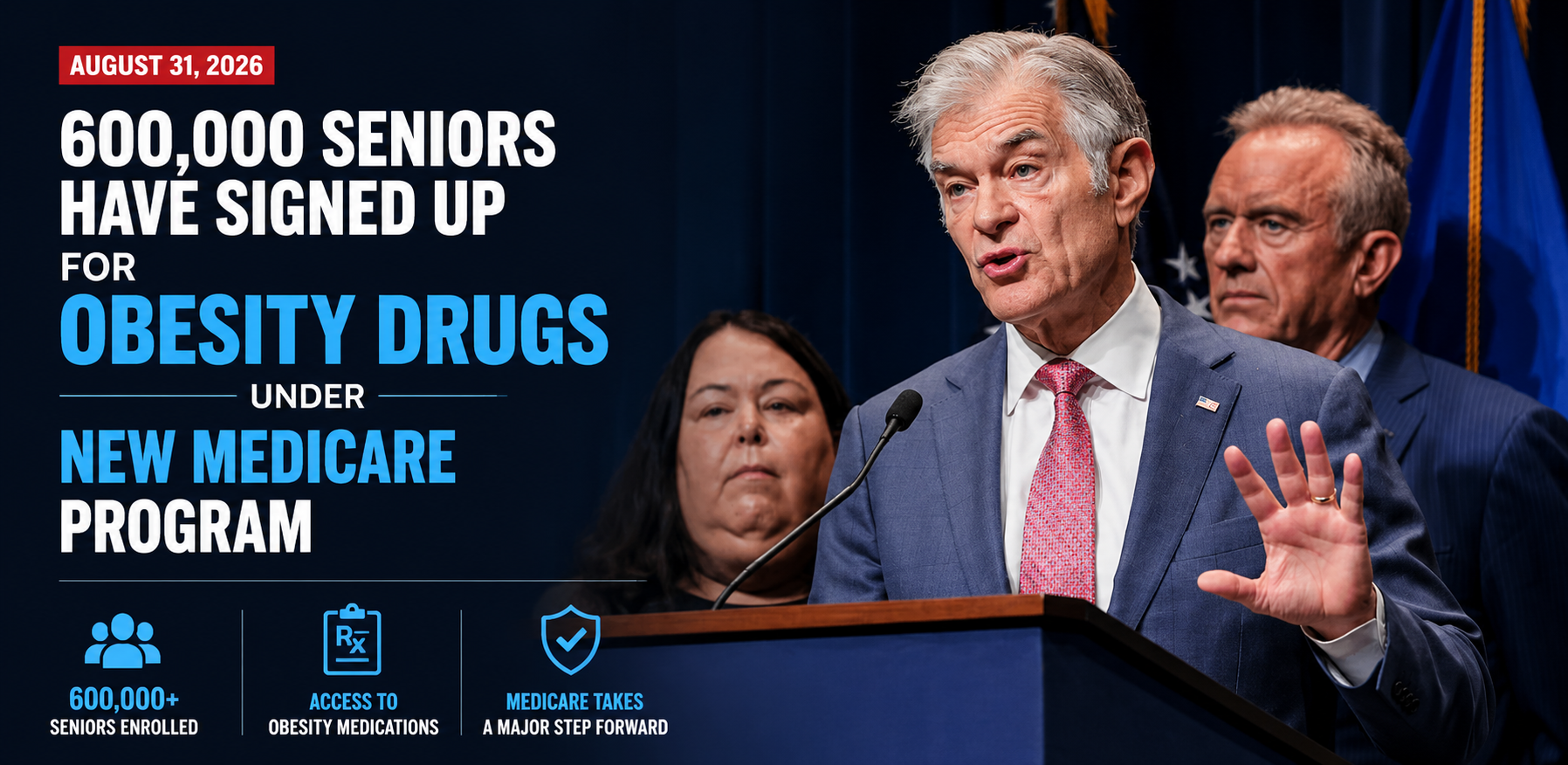
600,000 Seniors Have Signed Up for Obesity Drugs Under New Medicare Program
What's Happening
About 600,000 seniors have signed up to receive GLP-1 weight-loss medications during the first two months of a new federal program designed to expand access to obesity treatments for older Americans. (reuters.com)
The Medicare Bridge program, which launched in July, allows millions of eligible older Americans to obtain obesity medications for $50 per month. (reuters.com)
The enrollment figure was announced by Centers for Medicare and Medicaid Services Administrator Mehmet Oz on August 31.
What Is the Medicare Bridge Program?
The program is a federal initiative designed to make popular GLP-1 obesity medications more affordable for Medicare beneficiaries.
GLP-1 drugs have become some of the most sought-after medicines in the U.S. because of their ability to produce significant weight loss.
The new program lowers the financial barrier for eligible seniors by offering qualifying obesity treatments at a substantially reduced monthly cost.
Why GLP-1 Drugs Matter
GLP-1 medications were initially developed primarily for diabetes treatment, but their weight-loss effects have made them increasingly important in obesity care.
Obesity is associated with numerous serious health conditions, including:
- Type 2 diabetes.
- Cardiovascular disease.
- High blood pressure.
- Sleep apnea.
- Joint and musculoskeletal problems.
- Other chronic conditions.
Expanding access to effective obesity treatments could therefore affect healthcare spending beyond the cost of the medication itself.
The Scale of Enrollment
The program has attracted 600,000 seniors in just two months, demonstrating substantial demand for affordable obesity treatment among older Americans. (reuters.com)
The enrollment figure also indicates that cost has been a significant barrier for some patients seeking GLP-1 medications.
Reducing the monthly price to $50 could make these treatments accessible to patients who previously could not afford them.
Impact on Medicare
The program could have significant implications for Medicare spending.
On one hand, covering expensive GLP-1 medications could increase pharmaceutical spending.
On the other hand, successful obesity treatment could potentially reduce spending associated with obesity-related diseases over the longer term.
The key question will be whether the healthcare savings generated by improved weight management eventually offset some of the cost of providing the medications.
Impact on Pharmaceutical Companies
The expansion of Medicare access could substantially increase the potential patient population for GLP-1 manufacturers.
Companies developing and selling obesity medications now have access to a much larger insured population if their products qualify under the program.
This could influence:
- Drug pricing.
- Manufacturer negotiations.
- Production capacity.
- Market share.
- Payer relationships.
- Future obesity-drug development.
Impact on Patients
For eligible seniors, the program could significantly change access to obesity treatment.
A $50 monthly cost is substantially lower than the prices many patients have historically faced for GLP-1 medications outside insurance coverage.
Lower costs could also improve treatment continuity by reducing the number of patients who stop taking medication because of affordability.
The Broader GLP-1 Market
The development comes as GLP-1 drugs increasingly move beyond diabetes and weight loss into other areas of healthcare.
Drugmakers are studying these medicines for potential benefits involving:
- Cardiovascular disease.
- Kidney disease.
- Liver disease.
- Sleep apnea.
- Other obesity-related conditions.
This is transforming GLP-1 medicines from a niche category into one of the most important areas of pharmaceutical development.
Healthcare Industry Impact
- Medicare: The program could significantly expand Medicare's role in obesity treatment and influence future coverage decisions.
- Pharmaceutical Companies: Greater access could increase demand for GLP-1 medications and create a much larger commercial market.
- Providers: Doctors may see more older patients seeking obesity treatment and will need to manage eligibility, prescribing, monitoring and long-term treatment.
- Public Health: Greater access to effective obesity treatment could potentially improve outcomes for a population at high risk of chronic disease.
A Major Question: Long-Term Cost
The biggest unanswered question is whether broader access to GLP-1 medications will ultimately reduce overall healthcare spending.
The drugs themselves can be expensive, even when patients pay relatively little out of pocket.
The economic case for widespread coverage therefore depends partly on whether treating obesity reduces future spending on diabetes, cardiovascular disease, sleep apnea and other complications.
Why This Matters
This is a major U.S. healthcare industry and public-health story because 600,000 seniors have already enrolled in a new federal program that could substantially change access to obesity medications.
It also represents a major shift in how the U.S. healthcare system approaches obesity as a chronic disease requiring long-term medical treatment rather than simply a lifestyle issue.
Looking Ahead
Enrollment will be closely watched as the program expands.
The key questions will be:
- How many additional seniors enroll?
- Which GLP-1 medications are most widely used?
- How much will Medicare ultimately spend?
- Will patients remain on treatment long term?
- Will obesity-related medical costs decline?
- Will the program influence broader Medicare coverage policy?
Key Takeaways
- 600,000 seniors have enrolled in the new Medicare Bridge program in its first two months. (reuters.com)
- The program launched in July 2026.
- Eligible seniors can receive obesity medications for $50 per month. (reuters.com)
- The program is designed to expand access to GLP-1 weight-loss medications.
- GLP-1 drugs could potentially improve obesity-related health outcomes beyond weight loss.
- The program could significantly expand the U.S. market for obesity medicines.
- Its long-term economic impact will depend on whether improved obesity treatment offsets some of the healthcare costs associated with obesity-related diseases.
What This Means for Healthcare Marketers
The development is highly relevant to pharmaceuticals, obesity care, Medicare, endocrinology, primary care, cardiovascular health, metabolic health and payer strategy. The rapid enrollment demonstrates substantial demand for affordable obesity treatment among seniors and could reshape how pharmaceutical companies, providers and payers approach the rapidly expanding GLP-1 market.