Meta Agrees to Pay Up to $18 Billion to Settle U.S. Lawsuits Over Children's Social Media Addiction
What's Happening
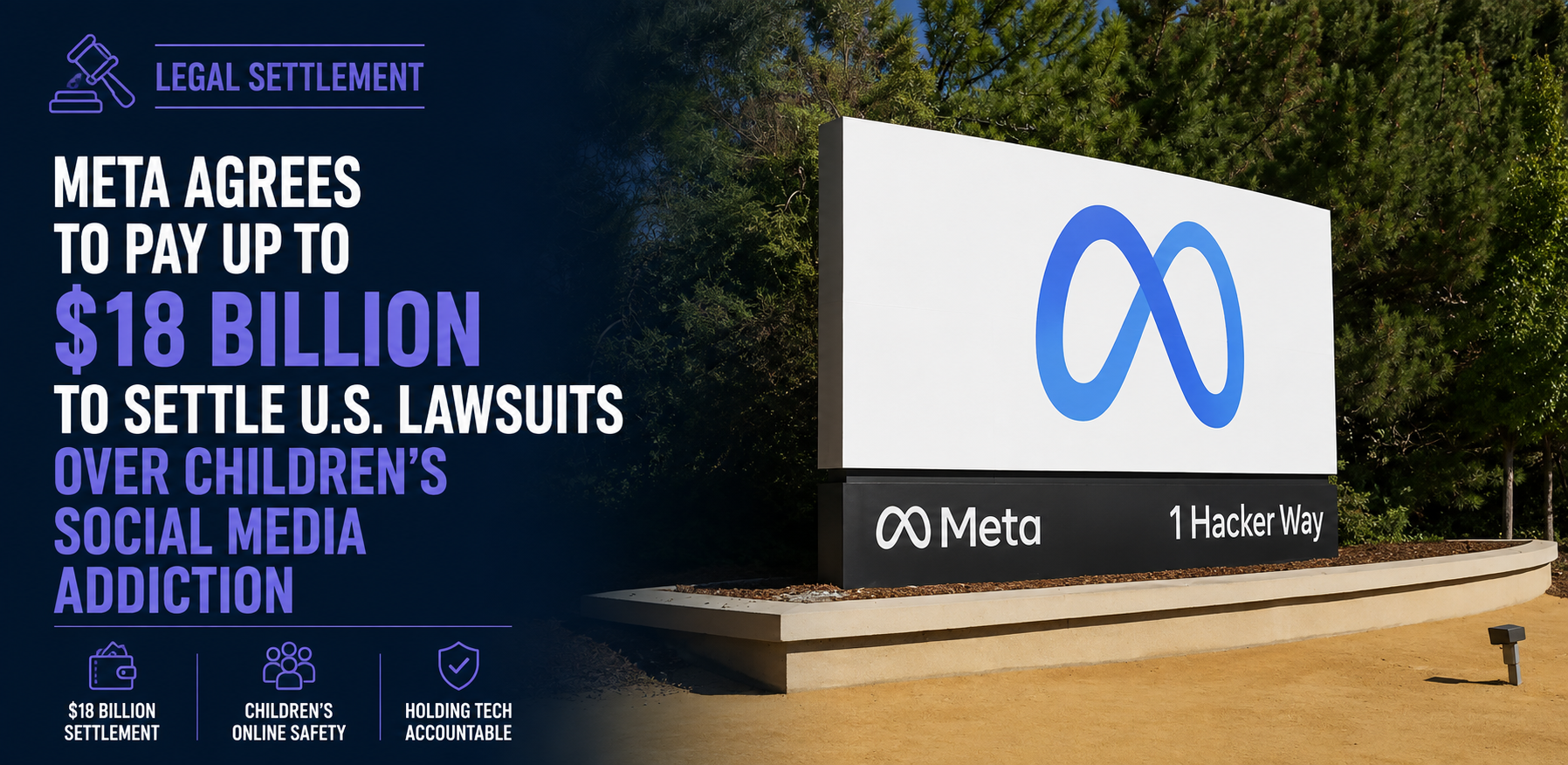
Meta Platforms has agreed to pay up to $18 billion over the next decade and make major changes to how teenagers use Facebook and Instagram to settle claims brought by nearly all U.S. states.
The lawsuits alleged that Meta deliberately designed its platforms to addict children, misled consumers about their safety, and improperly collected children's personal data. The settlement ends a major federal trial that was examining whether Meta's products contributed to harms among young users. (reuters.com)
Our Article: Reuters article
What Meta Agreed To
Under the settlement, Meta will introduce several restrictions for teenage users over the next decade.
These include:
- Limiting teenagers' use of Facebook and Instagram to two hours per day.
- Blocking use between midnight and 6 a.m., unless a parent gives consent.
- Disabling most push notifications to teenagers between 8 a.m. and 3 p.m. during school hours.
- Strengthening measures designed to prevent children from accessing age-restricted content. (reuters.com)
The restrictions could become stricter if other major social-media platforms, including TikTok, Snapchat and YouTube, adopt similar safeguards. (reuters.com)
The Financial Settlement
Meta will make maximum payments of approximately $16.7 billion to 47 U.S. states, Washington, D.C., Puerto Rico, American Samoa and the Northern Mariana Islands.
The overall agreement can reach approximately $18 billion because an additional portion is contingent on whether competing platforms adopt similar protections. (reuters.com)
The settlement includes:
- Approximately $12.7 billion in guaranteed payments.
- Up to another $5 billion depending on whether TikTok, Snapchat and YouTube implement comparable protections.
- $459 million to resolve separate state privacy claims connected to the Cambridge Analytica scandal. (reuters.com)
California could receive approximately $2.2 billion, while New York could receive about $1.1 billion. Texas reached a separate settlement worth more than $1 billion. (reuters.com)
Meta Did Not Admit Wrongdoing
Meta denied wrongdoing as part of the settlement.
The company also does not have to fundamentally change its business model. The agreement does not require Meta to eliminate personalized recommendations or targeted advertising. (reuters.com)
It also does not address every type of content that Meta's own researchers have identified as potentially problematic for young users, including content related to body image. (reuters.com)
Why This Is a Public-Health Story
The lawsuits are closely tied to concerns about a youth mental-health crisis.
Social-media companies face thousands of lawsuits alleging that their products and engagement-focused designs contribute to problems including:
- Anxiety.
- Depression.
- Suicidal behavior.
- Social-media addiction.
- Other mental-health harms among children and teenagers. (reuters.com)
The settlement therefore goes beyond a conventional technology lawsuit. It represents a major U.S. policy and public-health intervention into how children interact with social-media platforms.
The Impact on Teenagers
The new restrictions could significantly change how teenagers use Facebook and Instagram.
The two-hour daily limit and overnight restrictions are intended to reduce excessive engagement.
The school-hour notification restrictions could also reduce interruptions during the school day.
However, the settlement does not eliminate teenagers' access to the platforms or fundamentally change Meta's recommendation systems. (reuters.com)
Impact on Healthcare
- Youth Mental Health: Some states will earmark portions of their settlement payments specifically for children's mental-health programs. (reuters.com)
- Pediatric Healthcare: The development could increase attention from pediatricians and mental-health professionals toward social-media exposure as part of adolescent health discussions.
- Behavioral Health: The case strengthens the connection between digital behavior and behavioral-health policy, potentially creating more demand for interventions focused on adolescent social-media use.
- Public Health: Government intervention into social-media design could become an increasingly important component of youth-health policy.
A Potential Model for Other Cases
The settlement could become a template for resolving thousands of other lawsuits against Meta and other social-media companies.
Meta, TikTok, YouTube and Snapchat continue to face extensive litigation from:
- Individuals.
- Parents and families.
- School districts.
- Municipalities.
- State governments.
Many of these cases allege that the companies intentionally designed their platforms to maximize engagement among young users and contributed to a broader youth mental-health crisis. (reuters.com)
Not Every State Settled
The settlement does not resolve all U.S. litigation.
New Mexico and Florida did not participate in Wednesday's settlement.
Florida said it intends to continue litigating, while New Mexico has already obtained significant penalties against Meta in its separate case. (reuters.com)
Looking Ahead
The settlement still leaves thousands of individual and institutional lawsuits pending.
Judge Yvonne Gonzalez Rogers, who oversaw the federal trial, approved the main settlement on Wednesday. Instagram chief Adam Mosseri had already begun testifying, and Meta CEO Mark Zuckerberg had been expected to testify before the settlement ended the trial. (reuters.com)
The next major trials involving Meta are expected to continue in other jurisdictions.
Why This Matters
This is a significant U.S. health-related and public-health story because the settlement directly addresses concerns about the impact of social media on children's mental health.
More importantly, it represents a major shift toward treating the design of digital platforms as a youth health and safety issue, rather than simply a technology or consumer-protection issue.
Key Takeaways
- Meta agreed to pay up to $18 billion over the next decade.
- The settlement resolves claims from nearly all U.S. states alleging harm to children.
- Teenagers will face a two-hour daily usage limit on Facebook and Instagram.
- Usage will be blocked from midnight to 6 a.m. without parental consent.
- Most push notifications to teens will be disabled during school hours.
- Meta denied wrongdoing and does not have to eliminate personalized recommendations or targeted advertising. (reuters.com)
- Some settlement funds will go toward children's mental-health programs.
- Thousands of other lawsuits against Meta and other social-media companies remain pending. (reuters.com)
What This Means for Healthcare Marketers
This development is highly relevant to behavioral health, adolescent mental health, pediatric care, digital health and population health. The settlement could accelerate demand for solutions that help identify, monitor and address digital-behavior-related health risks among young people, while also directing significant public funding toward youth mental-health initiatives.