
Cyclosporiasis Cases in Michigan Climb to Over 14,700
What's Happening
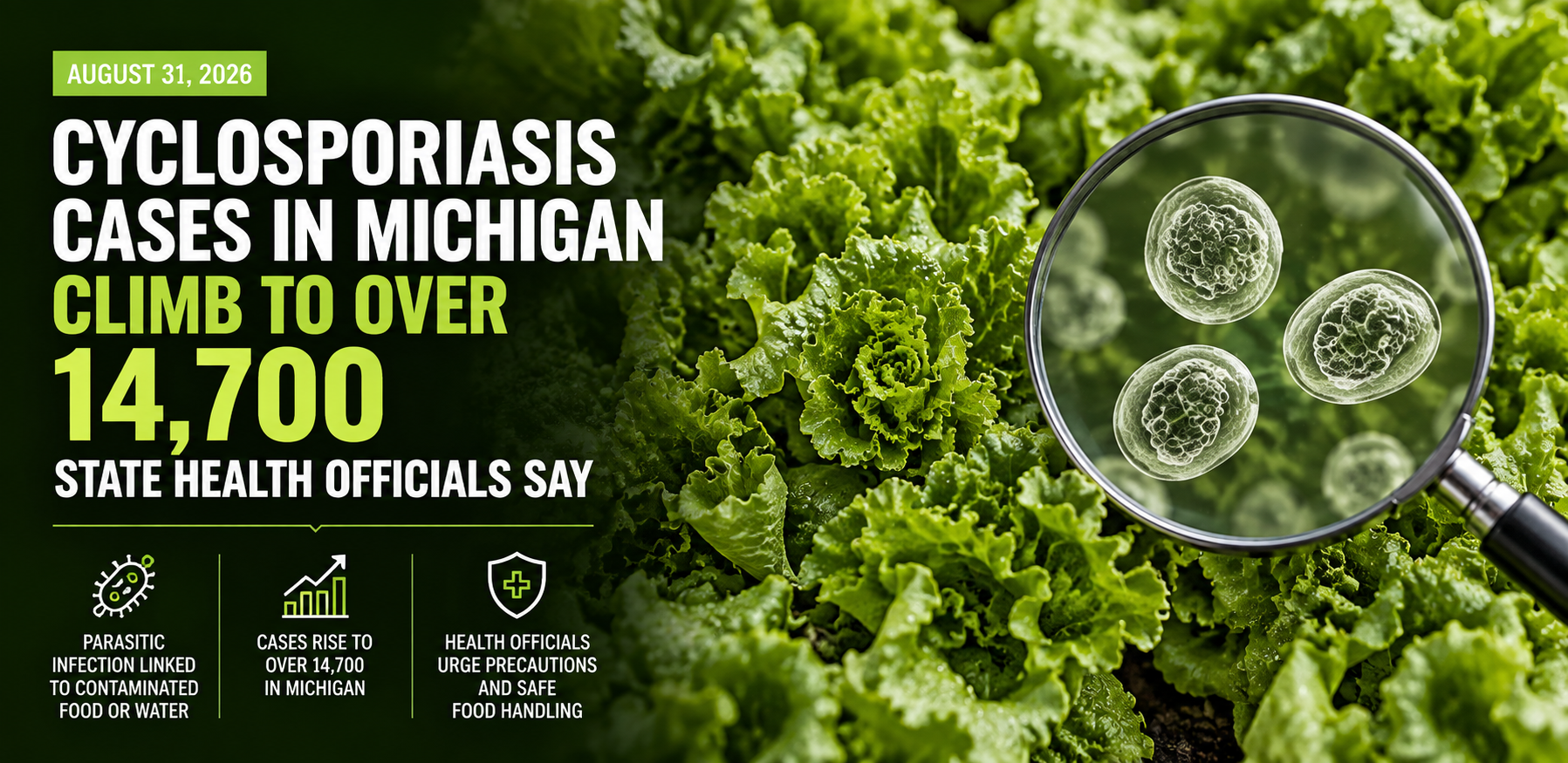
Michigan's outbreak of cyclosporiasis, a gastrointestinal infection caused by the Cyclospora parasite, has grown to 14,718 reported cases as of September 3, 2026, according to the state's health department.
That represents an increase of 208 cases in one week. The outbreak has also resulted in 366 hospitalizations in Michigan. (Reuters)
Michigan remains the hardest-hit state in what has become one of the largest foodborne illness outbreaks in recent U.S. history. The outbreak has also raised concerns about consumer confidence in fresh produce and the safety of foods served by major restaurant chains. (Reuters)
Michigan Is Bearing the Brunt of the Outbreak
Cases continue to rise
The latest Michigan figures show that the outbreak has not simply stabilized after the initial surge.
Health officials recorded another 208 cases during the week leading up to September 3, bringing the cumulative total to 14,718. (Reuters)
The state has also reported 366 hospitalizations, showing that the outbreak is producing a meaningful burden on the healthcare system rather than consisting only of mild or self-limited infections. (Reuters)
Two deaths have been reported
Michigan reported two deaths linked to the outbreak last month.
Both people who died had significant underlying health conditions, according to state health officials. (Reuters)
While most people with cyclosporiasis recover, severe illness can become more concerning for people who are already medically vulnerable.
The Outbreak Is Affecting the Entire United States
More than 18,000 confirmed cases nationwide
Michigan's outbreak is part of a much larger increase in cyclosporiasis across the country.
The U.S. Centers for Disease Control and Prevention had received reports of 18,445 laboratory-confirmed cases acquired in the United States as of September 1. (Reuters)
That national figure puts Michigan's 14,718 reported cases in perspective. The state accounts for a very large share of the confirmed cases being tracked across the country.
Cases have been rising steadily across the United States in recent months. (Reuters)
What Is Cyclosporiasis?
A parasite-associated intestinal infection
Cyclosporiasis is caused by the Cyclospora parasite and primarily affects the digestive system.
People can develop symptoms including:
- Diarrhea
- Nausea
- Other gastrointestinal symptoms
The infection can be contracted by consuming food or water contaminated with feces. Raw fruits and vegetables are common vehicles for transmission. (Reuters)
That makes the outbreak particularly relevant to the fresh-produce supply chain, restaurants and food-service businesses.
FDA Investigation Points to Iceberg Lettuce
Taco Bell-linked lettuce is one identified source
The FDA has linked the multistate outbreak, which has expanded to 20 states, to iceberg lettuce served at Taco Bell restaurants. (Reuters)
The lettuce was sourced from operations run by Taylor Farms in central Mexico.
However, authorities are still investigating whether there are additional sources contributing to the outbreak. (Reuters)
That distinction is important because the discovery of one contaminated food source does not necessarily explain every case being reported nationwide.
Taylor Farms Took Action
The company recalled the lettuce
Taylor Farms recalled all iceberg lettuce sourced from central Mexico on July 17 following the investigation. (Reuters)
The company also temporarily suspended operations at its processing facility in central Mexico.
However, a later test at the facility was determined to have been a false positive. (Reuters)
The recall and processing suspension illustrate the type of supply-chain intervention that can occur when regulators trace a foodborne illness outbreak to a specific ingredient or processing operation.
Fresh Produce Is Facing a Confidence Problem
The outbreak has commercial consequences
The outbreak is not only a public-health event. It is also affecting consumer confidence in fresh produce.
When consumers hear that a foodborne outbreak has been connected to a commonly consumed ingredient such as lettuce, they may become more cautious about eating salads, raw vegetables or restaurant foods that contain fresh produce.
That can create consequences throughout the food ecosystem, including restaurants, grocery stores, farmers, processors and distributors.
The Reuters report describes the outbreak as one of the largest foodborne illness events in recent U.S. history and says it has shaken consumer confidence around fresh produce. (Reuters)
Restaurants Are Part of the Exposure Chain
Food-service operators face additional scrutiny
The investigation's connection to lettuce served at Taco Bell highlights how a contamination event can move through a complex food-service network.
A restaurant may not grow or process the ingredient itself. Instead, it depends on suppliers, distributors and processors to maintain food safety across multiple stages.
That means a contamination problem upstream can eventually become a consumer-facing issue for a major restaurant brand.
For restaurant operators, the incident reinforces the importance of supplier traceability, food-safety procedures and the ability to quickly remove potentially affected ingredients.
Why the Source Investigation Is Still Important
One confirmed connection may not explain every case
The FDA has connected the multistate outbreak to the Taco Bell iceberg lettuce supply chain, but investigators are continuing to look for other potential sources. (Reuters)
That suggests public-health officials are not assuming that every reported case has necessarily come from the same exposure.
Continued investigation is important because Cyclospora can spread through contaminated food and water, and identifying every relevant source is essential to stopping additional infections.
Healthcare System Impact
Hospitalizations show a real burden
The 366 hospitalizations in Michigan demonstrate that the outbreak is generating enough illness to require hospital-level care for some patients. (Reuters)
For healthcare systems, a large foodborne outbreak can create additional demands on emergency departments, primary-care practices, diagnostic laboratories and infectious-disease resources.
It can also require health departments to devote significant resources to case investigation, exposure tracing and public communication.
Vulnerable patients face greater risks
The two Michigan deaths occurred in people with significant underlying health conditions, indicating that the consequences of infection can be more serious for medically vulnerable populations. (Reuters)
That makes outbreak communication particularly important for older adults and people whose existing health conditions could make gastrointestinal illness more difficult to manage.
Supply-Chain Traceability Becomes Critical
The outbreak highlights how modern food supply chains can complicate public-health investigations.
A single ingredient can travel from a farm through a processor and distributor before eventually appearing in restaurants or stores across multiple states.
When illnesses begin appearing in different locations, investigators have to work backward through those networks to identify common exposures.
The identification of the iceberg lettuce supply chain demonstrates the importance of being able to trace ingredients quickly and accurately.
Why This Matters
The Michigan outbreak is significant because it combines public-health risk, food-supply-chain disruption and consumer confidence concerns.
More than 14,700 cases and 366 hospitalizations in one state represent a substantial healthcare burden, while the national total has reached more than 18,000 laboratory-confirmed U.S.-acquired cases. (Reuters)
The outbreak also shows how a food-safety problem can quickly become a business issue.
A contamination event involving an ingredient used by a major restaurant chain can affect restaurants, suppliers, food processors, farmers and consumers simultaneously.
Looking Ahead
The immediate priority for state and federal health authorities is continuing to identify cases, monitor hospitalizations and determine whether there are additional sources of contamination.
The FDA's investigation remains open beyond the iceberg lettuce connection, meaning the final explanation for the nationwide increase in cyclosporiasis may involve more than one exposure source. (Reuters)
Michigan's case count will also be closely watched. Another increase after the latest weekly update would indicate that transmission or exposure is continuing despite earlier supply-chain interventions.
For the food industry, restoring consumer confidence will depend on effective outbreak control, transparent communication and confidence that contaminated products have been removed from circulation.
Key Takeaways
- Michigan reported 14,718 cyclosporiasis cases as of September 3, 2026, an increase of 208 cases in one week. (Reuters)
- The outbreak has resulted in 366 hospitalizations in Michigan. (Reuters)
- Michigan reported two related deaths, both involving people with significant underlying health conditions. (Reuters)
- The CDC had received reports of 18,445 laboratory-confirmed U.S.-acquired cases nationwide as of September 1. (Reuters)
- The multistate outbreak has expanded to 20 states. (Reuters)
- The FDA has linked the outbreak to iceberg lettuce served at Taco Bell, sourced from Taylor Farms operations in central Mexico. (Reuters)
- Taylor Farms recalled affected iceberg lettuce on July 17 and temporarily suspended operations at the relevant processing facility.
- Authorities are still investigating other potential sources.
- Cyclosporiasis is caused by a parasite and can produce diarrhea, nausea and other gastrointestinal symptoms. (Reuters)
- The outbreak is creating concerns about consumer confidence in fresh produce.
What This Means for Healthcare Marketers
This outbreak shows how quickly a public-health signal can become a market signal.
For hospitals, laboratories, food-service healthcare partners and public-health organizations, rising case counts can indicate changing demand for testing, treatment, patient education and outbreak-response resources.
For companies operating around food safety, diagnostics or healthcare services, the important signals extend beyond the headline case count. Hospitalizations, geographic spread, identified exposure sources and consumer behavior can reveal how an outbreak is evolving and where demand or operational pressure is likely to emerge next.