
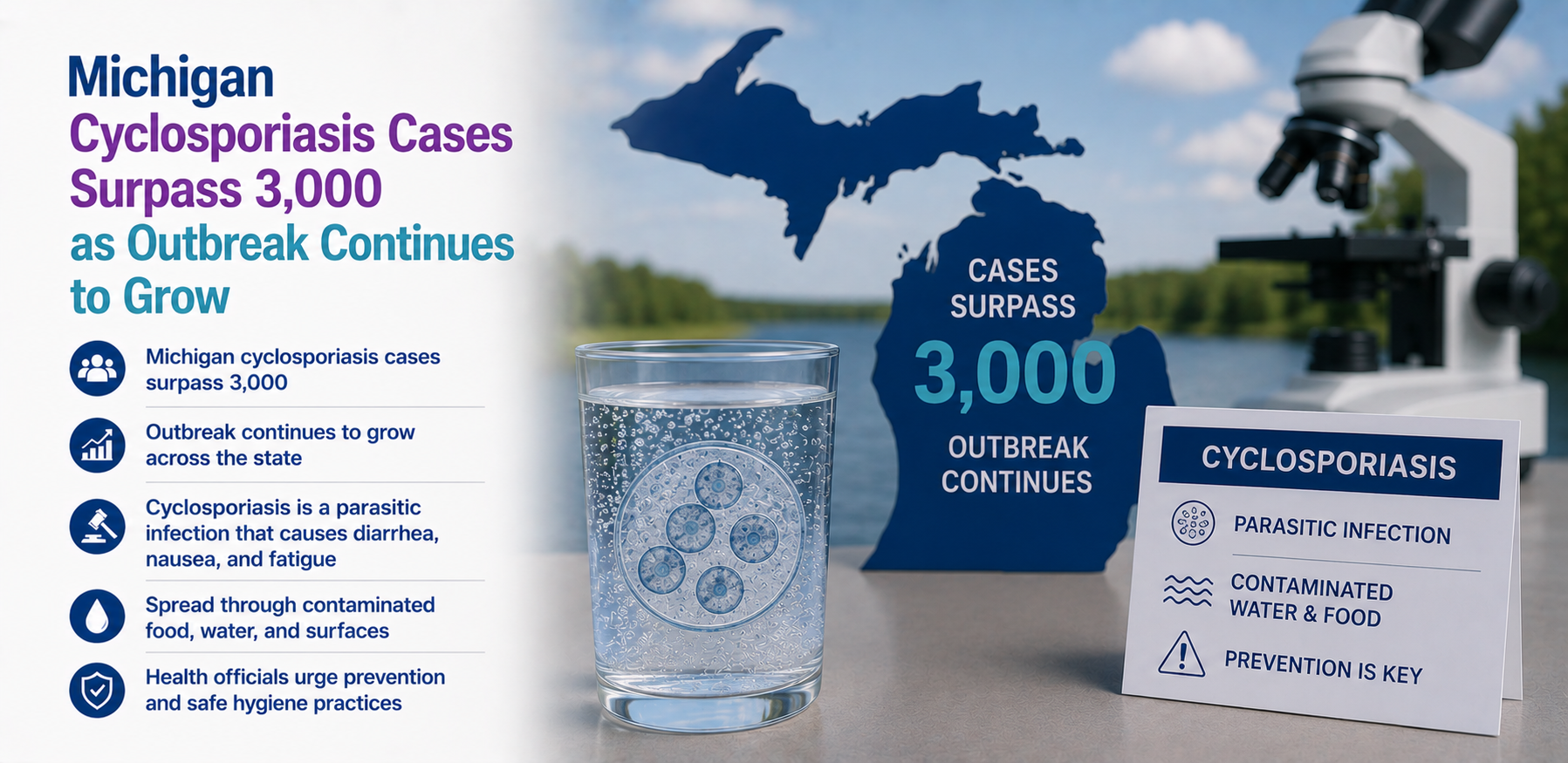
Michigan Cyclosporiasis Cases Surpass 3,000 as Outbreak Continues to Grow
What's Happening
Michigan health officials say the number of cyclosporiasis cases linked to an ongoing outbreak has climbed to more than 3,000, making it one of the state's largest outbreaks of the intestinal illness in recent years.
The increase comes as state investigators continue working with the U.S. Centers for Disease Control and Prevention (CDC) and other public health agencies to determine the source of the outbreak. Officials are tracing food exposures, analyzing laboratory data, and investigating whether contaminated fresh produce is responsible for the growing number of infections. Because new cases continue to be identified, health authorities expect the investigation to remain active until the contamination source is confirmed.
Why Are Cases Still Increasing?
Several factors contribute to the rising number of confirmed cases. These include:
- Delays between infection and symptom onset.
- Time required for laboratory confirmation.
- Ongoing reporting from healthcare providers.
- Continued public health investigations.
As a result, outbreak totals often continue increasing even after contaminated food products are no longer being sold. Health officials continue encouraging healthcare providers to test patients with persistent gastrointestinal symptoms so infections can be confirmed and reported promptly.
What Is Cyclosporiasis?
Cyclosporiasis is an intestinal illness caused by the parasite Cyclospora cayetanensis. People usually become infected after consuming food or water contaminated with the parasite.
Unlike many infectious diseases, Cyclospora is not typically spread directly from one person to another because it must mature outside the body before becoming infectious. Previous outbreaks have commonly been linked to fresh produce such as:
- Leafy greens.
- Cilantro.
- Basil.
- Salad mixes.
- Snow peas.
- Certain berries.
Because these foods are widely distributed, outbreaks can affect large numbers of people across multiple states.
Symptoms to Watch For
Symptoms generally begin about one week after exposure. Common symptoms include:
- Watery diarrhea.
- Stomach cramps.
- Nausea.
- Fatigue.
- Loss of appetite.
- Weight loss.
- Bloating.
- Low-grade fever.
Without treatment, symptoms may persist for several weeks and sometimes return after temporarily improving. Individuals with weakened immune systems may experience more severe illness.
How Health Officials Investigate the Outbreak
To identify the source of the outbreak, investigators are:
- Interviewing infected individuals.
- Comparing foods consumed before illness.
- Reviewing laboratory test results.
- Tracing produce distribution networks.
- Coordinating investigations with federal agencies.
- Monitoring for additional reported cases.
If a common food source is identified, health officials may issue recalls or public health advisories to help prevent additional infections.
How Can People Protect Themselves?
Although it may not always be possible to prevent infection, consumers can lower their risk by:
- Washing fresh fruits and vegetables before eating.
- Practicing good hand hygiene.
- Following food recall notices and public health advisories.
- Seeking medical care if diarrhea lasts several days.
Because Cyclospora can be difficult to remove from contaminated produce, preventing contamination during farming, harvesting, processing, and distribution remains the most effective way to reduce outbreaks.
Industry Impact
- Public Health Agencies: State and federal officials continue expanding surveillance while working to identify the contamination source.
- Food Industry: Growers, distributors, and retailers may face additional inspections and traceability reviews during the investigation.
- Healthcare Providers: Clinicians are encouraged to consider cyclosporiasis in patients with prolonged diarrhea, particularly during seasonal outbreaks.
- Consumers: Public awareness and early diagnosis can help reduce complications while supporting outbreak investigations.
Why This Matters
The continued rise in Michigan's cyclosporiasis cases demonstrates how foodborne outbreaks can expand rapidly before investigators identify the contaminated source. The outbreak also highlights the importance of coordinated surveillance, laboratory testing, and collaboration among healthcare providers, public health agencies, and the food industry.
As investigators continue tracing the source, the findings may help strengthen future food safety practices while reducing the risk of similar outbreaks.
Key Takeaways
- Michigan has reported more than 3,000 cyclosporiasis cases as the outbreak continues.
- Health officials are investigating whether contaminated fresh produce is responsible.
- Cyclosporiasis is caused by the parasite Cyclospora cayetanensis and commonly causes prolonged diarrhea and other gastrointestinal symptoms.
- State and federal agencies continue working together to identify the outbreak source.
- The outbreak underscores the importance of disease surveillance, laboratory testing, and food safety monitoring.
What This Means for Healthcare Marketers
The growing outbreak highlights the critical role of disease surveillance and coordinated public health response in identifying and containing foodborne illnesses. As outbreaks become more complex, healthcare organizations increasingly rely on laboratory diagnostics, epidemiological analysis, and real-time reporting systems to detect patterns, identify contamination sources, and protect public health.
For healthcare marketers, the event reinforces the importance of technologies that strengthen laboratory testing, food safety monitoring, public health surveillance, and outbreak management. Organizations supporting these areas can demonstrate how their solutions improve response times, enhance data sharing, and enable faster public health decision-making across healthcare and food safety systems.
For healthcare intelligence teams, the expanding outbreak provides valuable insight into emerging food safety risks and surveillance priorities. Monitoring case trends, laboratory reporting, regulatory investigations, and food supply chain developments can help organizations anticipate evolving public health needs while supporting innovation in disease detection, prevention, and population health management.