Michigan Cyclosporiasis Outbreak Grows by 1,400 Cases as Officials Say New Infections Are Slowing
What's Happening
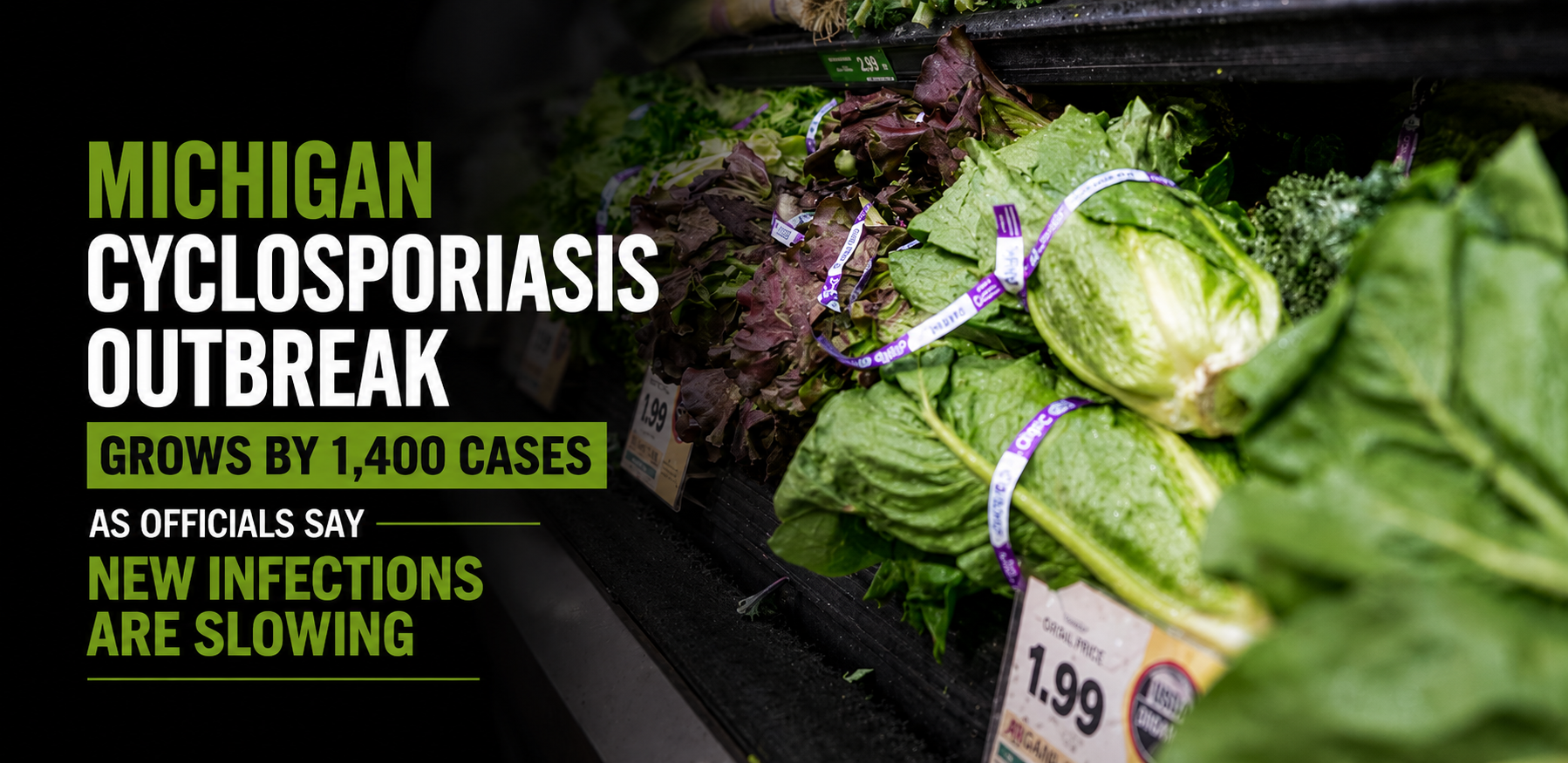
Michigan health officials reported 13,909 confirmed cases of cyclosporiasis, an increase of roughly 1,400 cases from the previous week, making it the largest recorded outbreak of the parasitic illness in the state.
Despite the sharp increase, the Michigan Department of Health and Human Services (MDHHS) said much of the rise reflects a backlog in laboratory testing rather than a sudden spike in new infections. Officials believe the outbreak may be beginning to slow as most of the contaminated iceberg lettuce linked to the outbreak is no longer available in the food supply.
The Centers for Disease Control and Prevention (CDC) also expanded the multistate outbreak to 17 states, adding Maine and Massachusetts to the list of affected states.
Understanding the Outbreak
Cyclosporiasis is an intestinal illness caused by the parasite Cyclospora cayetanensis, which is typically spread through contaminated fresh produce or water.
The current multistate outbreak has been linked to iceberg lettuce traced to Taylor Farms de Mexico. Symptoms commonly include:
- Severe diarrhea.
- Nausea.
- Loss of appetite.
- Fatigue.
- Stomach cramps.
Because the parasite has an incubation period of up to two weeks and cannot be identified through standard genetic fingerprinting methods, outbreaks are particularly difficult to investigate and control.
Why Officials Are Optimistic
Although the total case count continues to rise, health officials believe the outbreak is improving.
According to MDHHS:
- Many newly reported cases were delayed because of laboratory backlogs.
- Most contaminated lettuce has likely already been removed from stores and restaurants.
- Reports of new infections are beginning to slow.
Michigan previously reported two deaths associated with the outbreak, both involving individuals with significant underlying health conditions.
Industry Impact
- Public Health Agencies: State and federal health agencies continue monitoring the outbreak while updating surveillance data and coordinating with the FDA and CDC on food safety investigations.
- Healthcare Providers: Hospitals and laboratories continue managing increased testing demand, although officials expect turnaround times to improve as the outbreak subsides.
- Food Industry: The outbreak has significantly affected consumer confidence in fresh produce, particularly iceberg lettuce, leading to lower sales and increased food safety scrutiny across the supply chain.
- Consumers: Health officials say consumers can generally resume eating fresh produce because the recalled lettuce is no longer expected to be in circulation, while continuing to follow food recall announcements.
Looking Ahead
Public health officials will continue monitoring new cases over the coming weeks as delayed laboratory reports are processed.
Researchers and regulators are also working to better understand how the contamination occurred and improve future detection of Cyclospora, a pathogen that remains difficult to trace using conventional outbreak investigation methods.
Why This Matters
The outbreak demonstrates the challenges of responding to foodborne illnesses with long incubation periods and delayed laboratory confirmation.
While case numbers remain high, slowing reports of new infections suggest that public health interventions, product recalls, and supply chain controls are beginning to reduce transmission. The outbreak also underscores the importance of rapid food traceability and coordinated surveillance across state and federal health agencies.
Key Takeaways
- Michigan reported 13,909 cyclosporiasis cases, about 1,400 more than the previous week.
- Officials say the increase largely reflects laboratory reporting delays rather than accelerating transmission.
- The CDC expanded the multistate outbreak to 17 states.
- Most contaminated iceberg lettuce is believed to have been removed from the food supply.
- Health officials believe the outbreak may be entering a slower phase despite continued reporting of additional cases.
What This Means for Healthcare Marketers
The ongoing outbreak highlights the importance of food safety surveillance, infectious disease monitoring, laboratory diagnostics, and public health response. Healthcare organizations, diagnostic laboratories, food safety technology providers, public health agencies, and healthcare data companies continue investing in faster outbreak detection, traceability, and surveillance systems. For healthcare marketers, organizations involved in epidemiology, laboratory testing, food safety, public health, and healthcare analytics represent high-intent opportunities for provider education, scientific communications, and population health initiatives.