Michigan Reports More Than 7,600 Cyclospora Cases as Foodborne Outbreak Continues
What's Happening
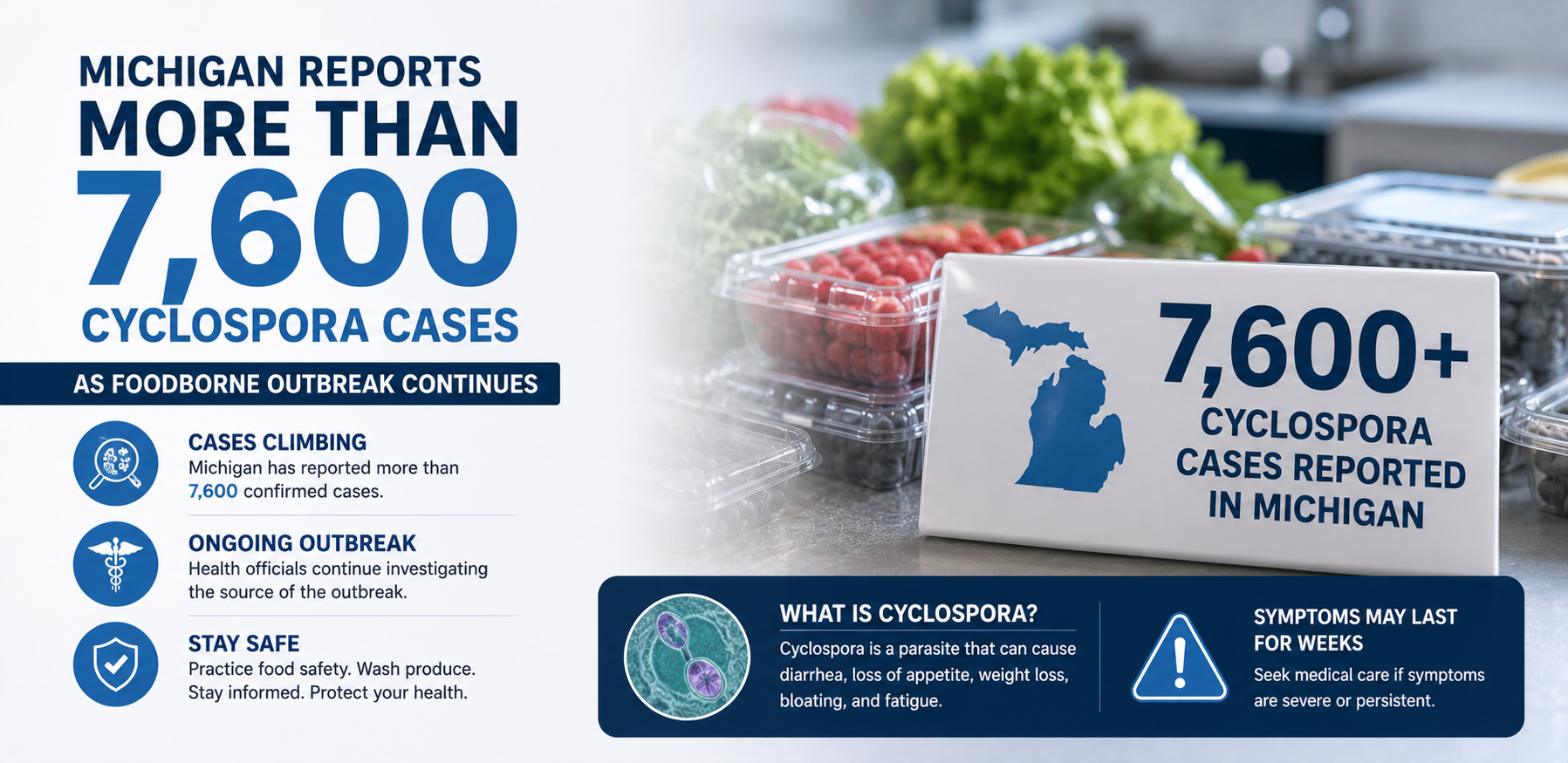
Michigan health officials have reported 7,644 confirmed cases of cyclosporiasis, making the state one of the hardest hit by an ongoing foodborne illness outbreak linked to contaminated produce.
The outbreak is caused by Cyclospora cayetanensis, a microscopic parasite that spreads through food or water contaminated with human fecal matter. Investigators continue working to identify the full supply chain responsible for the outbreak while public health agencies monitor additional cases across the United States.
The latest update comes just days after reports that the outbreak affected restaurant chains and food suppliers, highlighting how a single contamination event can ripple through the nation's food distribution system.
Although most people recover with appropriate treatment, the outbreak has renewed attention on food safety, produce traceability, and the growing importance of surveillance systems that detect outbreaks before they become widespread.
What Is Cyclospora?
Cyclospora is a parasite that infects the small intestine after a person consumes contaminated food or water.
Unlike bacteria such as Salmonella or E. coli, Cyclospora cannot spread directly from one infected person to another because the parasite requires time outside the body to become infectious. Instead, outbreaks are typically linked to contaminated fresh produce, particularly fruits and vegetables that are eaten raw.
Foods previously associated with Cyclospora outbreaks include:
- Leafy greens.
- Lettuce.
- Cilantro.
- Basil.
- Raspberries.
- Snow peas.
- Fresh herbs.
Because many of these foods are distributed nationwide, a single contamination source can lead to illnesses across multiple states before the problem is identified.
Recognizing the Symptoms
Symptoms usually appear about one week after exposure, although the timing can vary.
Common symptoms include:
- Frequent watery diarrhea.
- Loss of appetite.
- Weight loss.
- Stomach cramps.
- Bloating.
- Nausea.
- Fatigue.
- Low-grade fever.
Without treatment, symptoms can persist for several weeks or even recur after temporarily improving.
Most healthy individuals recover completely, but prolonged illness can lead to dehydration and may be more serious for older adults, young children, and people with weakened immune systems.
The infection is typically treated with antibiotics, making early diagnosis important for reducing illness duration and preventing complications.
Why Produce-Linked Outbreaks Are Difficult to Control
Fresh produce presents unique food safety challenges because it is often consumed without cooking, eliminating an important step that would otherwise kill harmful pathogens.
Modern food supply chains are also highly interconnected.
A single farm may distribute produce to:
- Grocery retailers.
- Restaurant chains.
- Food distributors.
- Hospitals.
- Schools.
- Long-term care facilities.
If contamination occurs early in the supply chain, thousands of consumers across multiple states may be exposed before investigators recognize a common source.
Tracing contaminated produce is particularly challenging because fresh vegetables and herbs move rapidly through the supply chain and often have a relatively short shelf life.
This is why public health officials increasingly rely on advanced surveillance systems, laboratory testing, and supply chain tracking technologies to identify outbreaks more quickly.
Public Health Response
State and federal health agencies continue investigating the outbreak to determine its origin and prevent additional illnesses.
Public health officials typically respond by:
- Interviewing infected patients about recent food consumption.
- Collecting laboratory samples for confirmation.
- Working with retailers and distributors to trace products.
- Coordinating recalls when contaminated foods are identified.
- Issuing public health advisories when necessary.
These investigations often involve collaboration between state health departments, the Centers for Disease Control and Prevention (CDC), and the U.S. Food and Drug Administration (FDA).
Rapid reporting from hospitals, laboratories, and healthcare providers plays an essential role in helping investigators detect emerging outbreak patterns.
Industry Impact
- Healthcare Providers: Physicians, urgent care centers, and emergency departments should remain alert for patients presenting with persistent gastrointestinal symptoms, particularly when multiple cases appear within the same community. Early diagnosis allows timely treatment and helps public health agencies identify outbreak clusters.
- Food Manufacturers and Distributors: The outbreak highlights the importance of robust food safety programs, supplier oversight, sanitation practices, and end-to-end traceability. Companies with stronger visibility across their supply chains are generally better positioned to identify contamination quickly and limit widespread distribution.
- Restaurants and Retailers: Businesses that depend on fresh produce may face temporary supply disruptions, increased inspections, or product recalls while investigators work to identify the contamination source. Maintaining consumer trust requires transparent communication and rapid action when food safety concerns arise.
- Public Health Agencies: Large outbreaks place additional demands on surveillance systems, laboratory capacity, epidemiological investigations, and public communication. The event underscores the continued need for investment in disease monitoring and coordinated response capabilities.
Why This Matters
Foodborne illnesses remain a significant public health challenge despite advances in food safety and supply chain oversight.
As agricultural production and food distribution become increasingly global and interconnected, contamination events have the potential to affect thousands of people across multiple regions before they are detected.
The Michigan outbreak demonstrates why early surveillance, rapid laboratory reporting, and coordinated investigations are essential to limiting the spread of foodborne disease.
Beyond the immediate health impact, outbreaks can also have substantial economic consequences for growers, distributors, restaurants, healthcare systems, and consumers.
Improving food traceability, strengthening preventive safety measures, and accelerating outbreak detection will remain priorities as public health agencies work to reduce the burden of foodborne illness in the years ahead.
Key Takeaways
- Michigan has reported 7,644 confirmed cases of cyclosporiasis as investigators continue responding to an ongoing outbreak.
- Cyclospora is a foodborne parasite most commonly linked to contaminated fresh produce.
- Symptoms primarily include prolonged diarrhea and gastrointestinal illness, with antibiotics typically providing effective treatment.
- The outbreak highlights the importance of food safety, produce traceability, and rapid public health surveillance.
- Continued collaboration between healthcare providers, laboratories, regulators, and the food industry is critical to limiting additional illnesses.
What This Means for Healthcare Marketers
Large foodborne outbreaks illustrate the growing importance of public health surveillance, laboratory diagnostics, and data-driven outbreak response. Healthcare organizations involved in infectious disease testing, public health analytics, laboratory services, food safety technologies, and population health can play a vital role in helping communities detect and respond to emerging threats. For healthcare marketers, organizations investing in disease surveillance, diagnostic innovation, and supply chain transparency represent valuable opportunities as public health agencies continue strengthening their preparedness for future outbreaks.