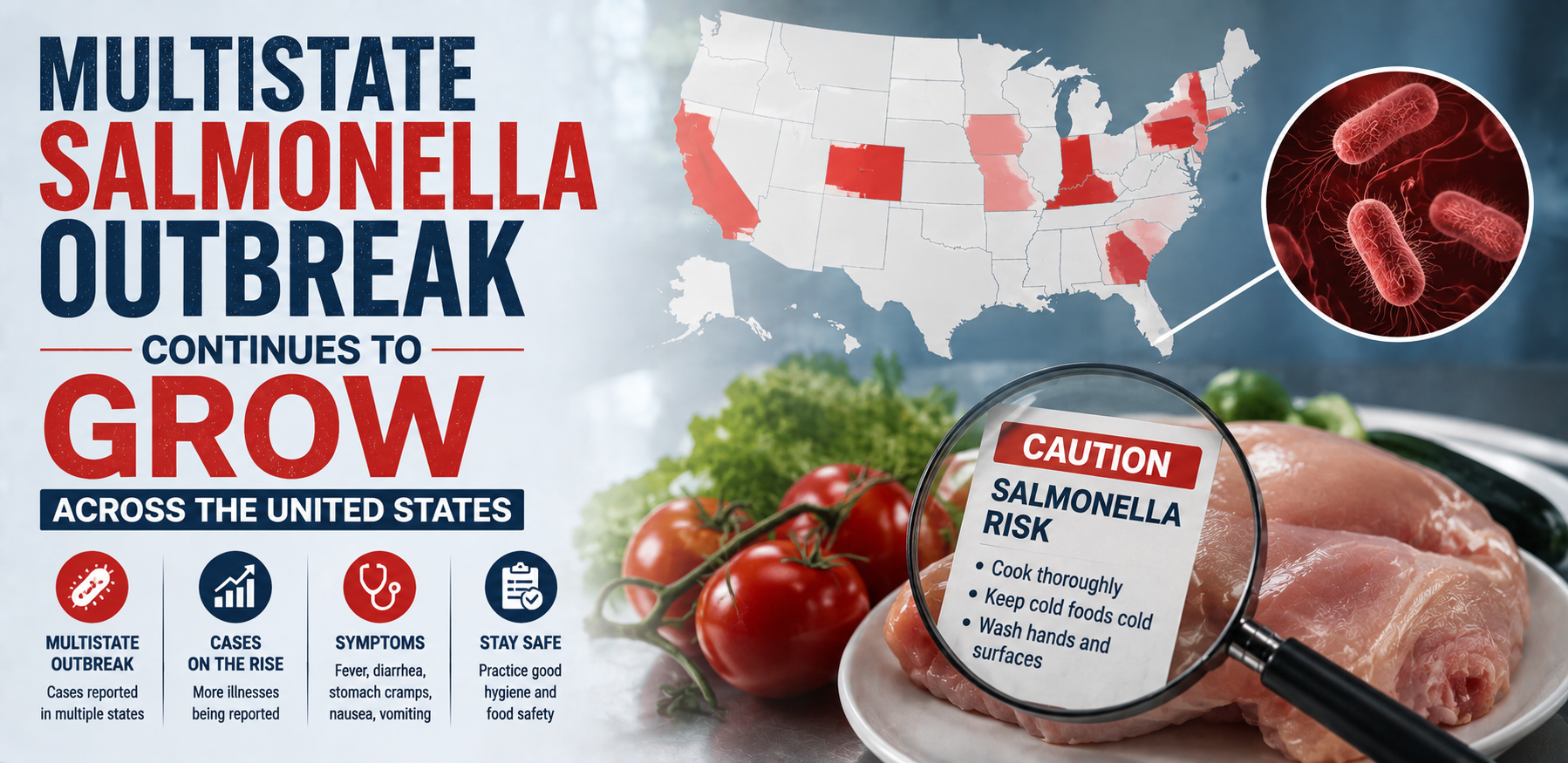
Multistate Salmonella Outbreak Continues to Grow Across the United States
What's Happening
A multistate salmonella outbreak linked to contaminated jalapeño peppers continues to spread across the United States, with hundreds of confirmed illnesses reported as public health officials work to identify the source and prevent additional infections.
The U.S. Centers for Disease Control and Prevention (CDC), the Food and Drug Administration (FDA), and state health departments are investigating the outbreak by tracing food distribution networks, interviewing affected individuals, and testing food samples. Health officials have linked many of the reported illnesses to contaminated jalapeño peppers served at restaurants and sold through various food suppliers.
The investigation remains active as authorities continue monitoring new cases and determining whether additional products may be affected.
Understanding Salmonella
Salmonella is a bacterial infection that spreads primarily through contaminated food or water.
Common sources include:
- Fresh produce.
- Poultry.
- Eggs.
- Meat.
- Dairy products.
- Contaminated spices.
Symptoms typically begin within six hours to six days after exposure and may include:
- Diarrhea.
- Fever.
- Stomach cramps.
- Nausea.
- Vomiting.
While most people recover without treatment, severe infections may require hospitalization, particularly among young children, older adults, and individuals with weakened immune systems.
How the Investigation Is Being Conducted
Federal and state health officials are using several methods to identify the contaminated source, including:
- Interviewing infected individuals.
- Tracing food purchases.
- Testing food and environmental samples.
- Reviewing restaurant supply chains.
- Monitoring laboratory-confirmed cases across multiple states.
These efforts help identify contaminated products quickly and reduce the risk of additional illnesses.
Industry Impact
- Public Health Agencies: The outbreak requires extensive coordination among federal, state, and local health agencies to strengthen surveillance, laboratory testing, and outbreak response.
- Food Industry: Growers, distributors, restaurants, and retailers may face increased inspections and supply chain reviews while investigators determine the source of contamination.
- Healthcare Providers: Clinicians are encouraged to consider salmonella infection when evaluating patients with gastrointestinal symptoms and to report confirmed cases promptly.
- Consumers: Consumers are advised to follow public health guidance, practice safe food handling, and pay attention to food recalls and outbreak updates.
Looking Ahead
The CDC and FDA will continue investigating until the contaminated source is confirmed and appropriate control measures are implemented.
Additional recalls or public health advisories may be issued if investigators identify more contaminated products or suppliers.
The findings are also expected to support improvements in food safety monitoring and outbreak prevention across the United States.
Why This Matters
Foodborne disease outbreaks can spread rapidly through complex food distribution networks, making early detection and coordinated public health action essential.
The ongoing salmonella outbreak highlights the importance of disease surveillance, laboratory diagnostics, food traceability, and rapid communication between healthcare providers, regulators, and the food industry.
It also reinforces the need for continued investment in food safety systems that help protect public health.
Key Takeaways
- The multistate salmonella outbreak linked to jalapeño peppers continues to affect people across the United States.
- Federal and state health agencies are investigating the source of the contamination.
- Salmonella commonly spreads through contaminated food and can cause severe illness in vulnerable individuals.
- Healthcare providers are encouraged to report confirmed infections promptly.
- The outbreak underscores the importance of food safety, disease surveillance, and coordinated public health response.
What This Means for Healthcare Marketers
The ongoing outbreak highlights continued investment in infectious disease surveillance, laboratory diagnostics, food safety monitoring, and public health infrastructure. Public health agencies, diagnostic laboratories, healthcare providers, food safety organizations, and health technology companies continue strengthening outbreak detection and response capabilities. For healthcare marketers, organizations involved in laboratory testing, epidemiology, food safety analytics, and public health technology represent high-intent opportunities for provider education, partnership development, and healthcare innovation.